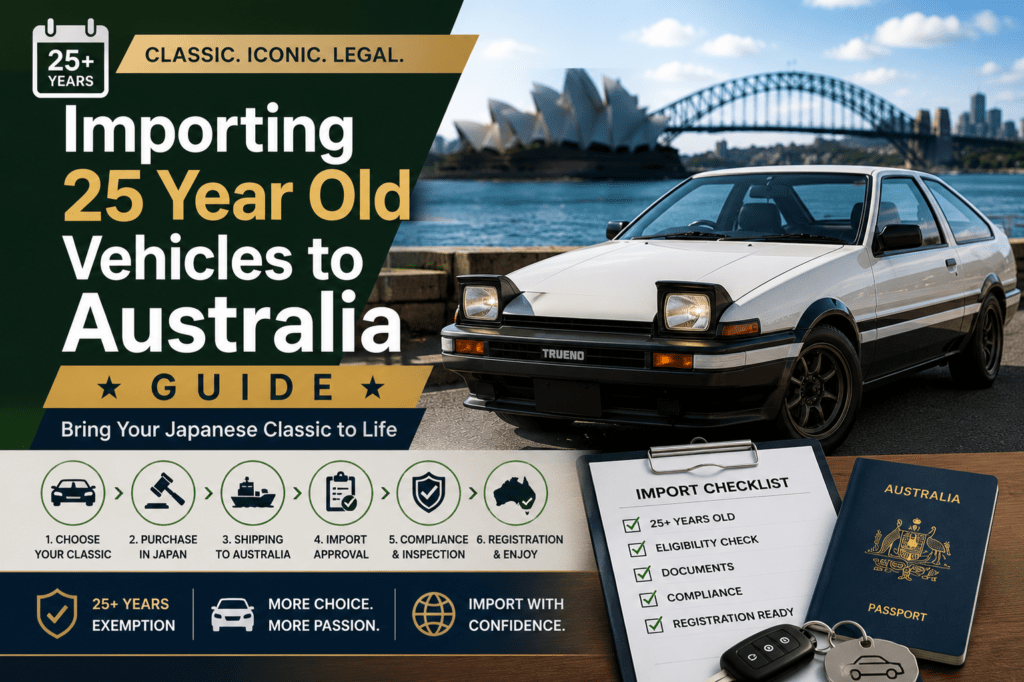

Importing Vehicles That Are 25 Years Old or Older: Complete Guide for Australian Buyers of Classic Japanese Vehicles
Japanese classic vehicles continue to attract buyers across Australia. Many enthusiasts dream of owning iconic Japanese sports cars, classic SUVs, vintage trucks, and collectible vehicles that are no longer available through local dealerships.
Fortunately, importing vehicles that are 25 years old or older can provide exciting opportunities for Australian buyers.
These vehicles offer unique styling, historical value, and an authentic driving experience. In addition, many Japanese classics continue to increase in popularity among collectors and enthusiasts.
However, importing an older vehicle still requires planning and preparation.
This guide explains how the process works, why Japanese classic vehicles remain in high demand, and how buyers can successfully import vehicles that are 25 years old or older into Australia.
Why 25-Year-Old Japanese Vehicles Are So Popular
Classic Japanese vehicles have gained worldwide attention in recent years.
Many buyers appreciate these vehicles because they offer something different from modern cars.
Furthermore, Japanese manufacturers produced many legendary models during the 1980s and 1990s.
As a result, demand continues to grow.
Popular reasons include:
- Unique designs
- Strong reliability
- Collectible value
- Enthusiast appeal
- Historical significance
- Limited availability
Consequently, many Australian buyers actively search for classic Japanese imports.
Benefits of Importing Older Japanese Vehicles
There are many advantages to importing older vehicles directly from Japan.
Access to Rare Models
Many desirable vehicles never received official Australian releases.
Therefore, importing directly from Japan may be the only way to own them.
Better Vehicle Selection
Japan offers one of the largest supplies of classic vehicles in the world.
As a result, buyers often find better examples and more specifications.
Strong Collector Interest
Many classic Japanese vehicles attract passionate enthusiasts.
Consequently, well-maintained examples often remain highly desirable.
Authentic Ownership Experience
Imported vehicles allow enthusiasts to experience original Japanese engineering and design.
Therefore, ownership often feels more special.
Popular Japanese Vehicles Over 25 Years Old
Several classic models remain extremely popular among Australian buyers.
Sports Cars
Japanese sports cars continue to attract collectors worldwide.
Popular examples include:
- Toyota Supra
- Nissan Skyline GT-R
- Mazda RX-7
- Nissan Silvia
- Honda NSX
SUVs and 4WD Vehicles
Classic Japanese off-road vehicles remain highly sought after.
Examples include:
- Toyota Land Cruiser
- Toyota Prado
- Nissan Patrol
- Mitsubishi Pajero
Commercial Vehicles
Many businesses and collectors also import:
- Classic Japanese trucks
- Utility vehicles
- Vintage vans
- Specialty work vehicles
As a result, demand extends far beyond sports cars.
Understanding Vehicle Eligibility
Before purchasing any vehicle, buyers should confirm eligibility.
Although older vehicles may qualify under different pathways, requirements still apply.
Therefore, eligibility verification should always come first.
This simple step helps avoid unnecessary expenses later.
Furthermore, it creates confidence before making a purchase.
Why Japan Is the Best Source for Classic Vehicles
Japan remains one of the world's best markets for used vehicles.
Several factors contribute to this reputation.
Excellent Maintenance Culture
Japanese owners often maintain their vehicles carefully.
Therefore, many older vehicles remain in surprisingly good condition.
Lower Mileage
Compared with many international markets, Japanese vehicles frequently have lower mileage.
Consequently, buyers often find well-preserved examples.
Large Auction Network
Japanese vehicle auctions provide access to thousands of vehicles every week.
As a result, buyers enjoy exceptional choice.
Detailed Inspection Reports
Auction reports help buyers understand vehicle condition before bidding.
Therefore, purchasing decisions become more transparent.
Step 1: Choose the Right Vehicle
The first step involves selecting the vehicle that matches your goals.
Consider factors such as:
- Vehicle condition
- Mileage
- Parts availability
- Budget
- Intended use
Additionally, review photographs and inspection reports carefully.
This helps reduce purchasing risk.
Step 2: Verify Vehicle History
Vehicle history remains extremely important.
Buyers should review:
- Ownership records
- Service history
- Accident history
- Auction inspection reports
Furthermore, professional inspections can provide additional confidence.
The more information available, the better the purchasing decision.
Step 3: Purchase Through a Trusted Exporter
A professional exporter can simplify the process considerably.
Experienced exporters can help with:
- Vehicle sourcing
- Auction bidding
- Inspections
- Documentation
- Shipping arrangements
As a result, buyers avoid many common mistakes.
Working with trusted exporters often improves the overall experience.
Step 4: Arrange Shipping
After purchasing the vehicle, shipping arrangements can begin.
Two popular shipping methods include:
RORO Shipping
Roll-On Roll-Off shipping remains a popular choice.
Benefits include:
- Lower costs
- Efficient handling
- Reliable transport
Container Shipping
Container shipping offers additional protection.
Advantages include:
- Better security
- Protection from weather
- Space for spare parts
Therefore, buyers can choose the option that best suits their needs.
Step 5: Prepare Import Documentation
Proper documentation supports a smooth import process.
Important documents may include:
- Export certificate
- Commercial invoice
- Bill of Lading
- Vehicle information records
- Ownership documents
Consequently, document preparation should begin early.
Organized paperwork often speeds up processing.
Step 6: Complete Approval Requirements
Imported vehicles must satisfy applicable approval requirements.
Therefore, buyers should understand all requirements before shipment.
Early planning helps prevent delays.
Furthermore, it allows buyers to budget more accurately.
Step 7: Vehicle Registration
After import procedures are complete, registration becomes the final step.
Requirements vary between Australian states and territories.
Generally, buyers may need:
- Ownership documents
- Vehicle inspection records
- Approval documentation
- Identification documents
Once registration is complete, the vehicle can legally operate on Australian roads.
Common Mistakes to Avoid
Many first-time importers encounter avoidable challenges.
Fortunately, proper planning reduces risk.
Buying Based Only on Appearance
Photographs do not always reveal every detail.
Therefore, inspections remain important.
Ignoring Documentation Requirements
Incomplete paperwork often causes delays.
Consequently, document preparation should never be overlooked.
Choosing the Cheapest Vehicle
Price alone should not determine value.
Instead, consider condition, maintenance history, and future reliability.
Failing to Research Parts Availability
Older vehicles sometimes require specialty parts.
Therefore, research support availability before purchasing.
Why Classic Japanese Vehicles Continue to Increase in Value
Many classic Japanese vehicles have become highly collectible.
Several factors contribute to rising demand.
Limited Supply
Production ended many years ago.
As a result, good examples become harder to find.
Global Enthusiast Demand
Interest continues to grow worldwide.
Consequently, prices often increase.
Historical Importance
Many vehicles represent important milestones in automotive history.
Therefore, collectors actively seek them out.
Strong Community Support
Owners often benefit from active enthusiast communities.
This helps preserve vehicle knowledge and support.
Why Buy Through Japanese Vehicle Auctions?
Japanese auctions remain one of the best sources for classic vehicles.
Benefits include:
- Huge inventory
- Transparent condition reports
- Competitive pricing
- Access to rare vehicles
- Nationwide vehicle sourcing
As a result, many Australian buyers purchase directly through auction networks.
How EVERY TRADING Supports Australian Buyers
EVERY TRADING helps buyers import classic Japanese vehicles safely and confidently.
Our services include:
- Access to Japanese vehicle auctions
- Professional vehicle inspections
- Export documentation support
- Vehicle sourcing assistance
- Worldwide shipping arrangements
- Fast communication and customer support
Additionally, our experienced team helps buyers locate rare and collectible Japanese vehicles.
This creates a smoother and more reliable importing experience.
Conclusion
Importing vehicles that are 25 years old or older offers Australian buyers exciting opportunities to own classic Japanese vehicles.
From legendary sports cars to rugged SUVs and vintage trucks, Japan provides access to some of the world's most desirable collector vehicles.
However, successful importing requires proper planning. Buyers should verify eligibility, review vehicle history, prepare documentation, and work with trusted exporters.
Furthermore, purchasing through Japanese vehicle auctions provides access to exceptional inventory and competitive pricing.
If you are searching for a rare Japanese classic vehicle, EVERY TRADING is ready to help you source, inspect, and import the perfect vehicle directly from Japan.


Browse Reliable Used Trucks & Buses from Japan
Carefully selected vehicles ready for export worldwide
Search 100,000+ Dealer Stock Vehicles from Japan
Access a wide selection of vehicles from Japanese dealers nationwide. Updated daily.
