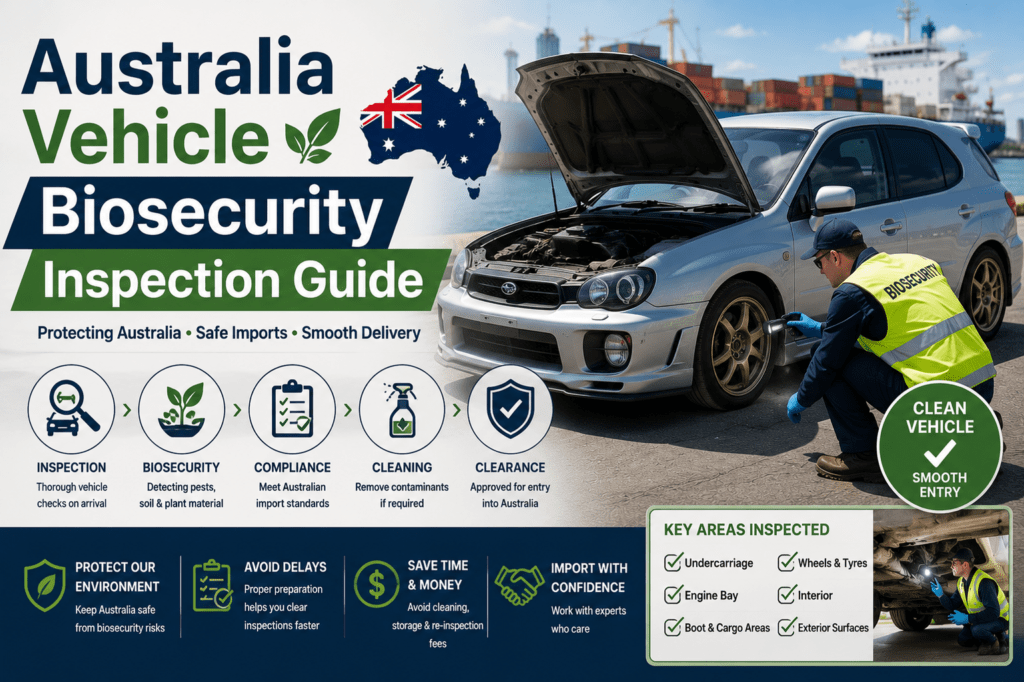

Biosecurity and Inspection Requirements for Imported Vehicles: Complete Australia Import Guide
Australia is one of the world's strictest countries when it comes to biosecurity. The government works hard to protect local agriculture, native plants, animals, and the environment from harmful pests, diseases, and contaminants.
As a result, every imported vehicle must meet specific biosecurity and inspection requirements before it can enter Australia.
Many buyers focus on vehicle selection, shipping, and import approval. However, biosecurity inspections are equally important. A vehicle that fails inspection may face delays, cleaning costs, storage charges, or additional inspections.
Fortunately, proper preparation can make the process simple and smooth.
This guide explains Australia's biosecurity requirements, vehicle inspection procedures, and practical steps that help importers avoid costly delays.
Why Biosecurity Is So Important in Australia
Australia has a unique ecosystem.
Unlike many countries, Australia remains free from numerous pests and diseases found elsewhere around the world.
Therefore, authorities carefully inspect imported goods, including vehicles.
Even small amounts of soil, plant material, seeds, insects, or animal contamination can create serious risks.
Consequently, strict inspections help protect:
- Agriculture
- Livestock industries
- Native wildlife
- Forests
- Water resources
- Local ecosystems
Because of these risks, imported vehicles receive close attention upon arrival.
Which Vehicles Require Biosecurity Inspection?
Biosecurity requirements apply to almost every imported vehicle.
Examples include:
- Passenger cars
- SUVs
- Pickup trucks
- Commercial trucks
- Vans
- Buses
- Construction equipment
- Farm machinery
- Motorcycles
Therefore, all importers should understand the inspection process before shipping.
Why Japanese Vehicles Perform Well During Inspections
Japanese used vehicles remain highly popular in Australia.
One reason is their generally excellent condition.
Japanese owners often maintain their vehicles carefully.
Furthermore, Japanese exporters typically prepare vehicles thoroughly before shipment.
As a result, many Japanese vehicles pass inspections with fewer issues.
This helps reduce delays and additional costs.
Common Biosecurity Risks Found on Imported Vehicles
Inspectors look for any contamination that could introduce unwanted biological material.
Common risks include:
Soil and Mud
Soil is one of the most common reasons for inspection failures.
Mud often collects:
- Under wheel arches
- On suspension components
- Under the chassis
- Around tires
Therefore, thorough cleaning is essential.
Plant Material
Leaves, grass, seeds, and small branches can remain hidden in many areas.
Inspectors carefully check:
- Engine bays
- Cargo areas
- Undercarriages
- Interior compartments
Consequently, even small debris can create problems.
Insects and Pests
Authorities monitor imported vehicles for insects and other pests.
Therefore, vehicles should be inspected carefully before shipping.
Animal Contamination
Animal hair, nests, feathers, and waste products may trigger additional inspections.
As a result, vehicles should be cleaned completely before export.
Understanding Australia's Vehicle Inspection Process
Once a vehicle arrives in Australia, biosecurity officers may inspect it before release.
The inspection process usually includes:
- Document review
- Visual inspection
- Contamination assessment
- Clearance approval or cleaning instructions
Therefore, preparation before shipping plays a major role in success.
Step 1: Vehicle Cleaning Before Export
Professional cleaning is one of the most important steps.
A clean vehicle significantly improves the chances of passing inspection.
Recommended cleaning areas include:
- Exterior body
- Wheels and tires
- Chassis
- Engine compartment
- Cargo areas
- Interior surfaces
Additionally, hidden areas deserve special attention.
This simple investment can prevent expensive delays later.
Step 2: Undercarriage Cleaning
The undercarriage receives particular attention during inspections.
This area often collects:
- Dirt
- Mud
- Grass
- Seeds
- Organic material
Therefore, pressure washing the underbody is strongly recommended.
Many import delays occur because this step was overlooked.
Step 3: Interior Preparation
The vehicle interior should also remain clean and free from contamination.
Inspectors may check:
- Floor mats
- Seats
- Storage compartments
- Trunk areas
- Tool compartments
Consequently, removing personal items and debris is important.
A clean interior demonstrates proper preparation.
Step 4: Engine Bay Inspection
Engine compartments can trap leaves, dust, insects, and plant material.
Therefore, cleaning the engine bay before shipment is recommended.
However, cleaning should be performed carefully to avoid damaging electrical components.
Professional preparation often provides the best results.
Step 5: Documentation Preparation
Accurate documentation supports a smoother import process.
Common documents may include:
- Commercial invoice
- Bill of Lading
- Export certificate
- Vehicle information records
- Import approval documentation
Furthermore, organized paperwork helps authorities process shipments efficiently.
What Happens If a Vehicle Fails Inspection?
Inspection failures do occur.
Fortunately, most issues can be corrected.
Common outcomes include:
Additional Cleaning
Authorities may require professional cleaning before release.
Re-Inspection
After cleaning, the vehicle may undergo another inspection.
Additional Charges
Cleaning, storage, and handling fees can increase import costs.
Therefore, prevention is always the better option.
Biosecurity Requirements for Commercial Trucks
Commercial vehicles often receive extra attention.
This is because trucks may operate in:
- Farms
- Construction sites
- Industrial facilities
- Rural environments
As a result, contamination risks can be higher.
Truck buyers should pay special attention to:
- Chassis cleaning
- Wheel wells
- Cargo beds
- Tool storage areas
Thorough preparation helps avoid delays.
Biosecurity Requirements for Machinery and Equipment
Heavy equipment often faces stricter inspections.
Examples include:
- Excavators
- Tractors
- Loaders
- Agricultural machinery
These machines frequently work in soil-rich environments.
Consequently, cleaning requirements may be more extensive.
Professional preparation is highly recommended.
Common Mistakes Importers Make
Many inspection issues result from avoidable mistakes.
Ignoring Hidden Areas
Some buyers clean visible surfaces only.
However, inspectors examine many hidden locations.
Waiting Until the Last Minute
Cleaning should occur before shipping.
Therefore, planning ahead is important.
Incomplete Documentation
Missing paperwork may create unnecessary delays.
Consequently, document preparation should begin early.
Choosing Inexperienced Suppliers
Professional exporters understand Australian inspection expectations.
As a result, experienced support can reduce risk significantly.
Tips for Passing Inspection Successfully
Several simple strategies improve success rates.
Use Professional Cleaning Services
Expert cleaning often identifies contamination that owners may miss.
Request Detailed Photos
Photographs help confirm vehicle condition before shipment.
Inspect the Vehicle Carefully
Check both visible and hidden areas.
Work With Experienced Exporters
Professional exporters understand Australian biosecurity expectations.
Therefore, they can help prevent common mistakes.
Why Australian Buyers Choose Japanese Vehicle Exporters
Japanese vehicle exporters offer several advantages.
These include:
- High-quality vehicle preparation
- Detailed inspections
- Professional documentation
- Reliable communication
- Access to auction inventory
Furthermore, experienced exporters understand international shipping requirements.
This helps simplify the entire import process.
How EVERY TRADING Supports Australian Buyers
EVERY TRADING helps customers import vehicles from Japan safely and efficiently.
Our services include:
- Access to Japanese vehicle auctions
- Professional vehicle inspections
- Export documentation support
- Vehicle preparation assistance
- Worldwide shipping arrangements
- Fast customer communication
Additionally, our team helps ensure vehicles are properly prepared before export.
This support helps reduce biosecurity risks and improves inspection outcomes.
Frequently Asked Questions
Do All Imported Vehicles Need Inspection?
Most imported vehicles are subject to biosecurity assessment.
Therefore, preparation is important regardless of vehicle type.
Can a Clean Vehicle Still Be Inspected?
Yes. Authorities may inspect vehicles even when they appear clean.
Who Pays for Additional Cleaning?
Importers generally pay any cleaning, storage, or re-inspection costs.
Therefore, proper preparation is the most cost-effective approach.
Are Japanese Vehicles Easier to Import?
Many Japanese vehicles arrive in excellent condition.
Consequently, they often perform well during inspection processes.
Conclusion
Australia's biosecurity system plays a vital role in protecting the country's agriculture, environment, and natural resources.
As a result, imported vehicles must meet strict inspection requirements before entering the market.
Fortunately, most inspection issues can be avoided through proper preparation. Thorough cleaning, accurate documentation, and professional export support greatly improve the chances of smooth clearance.
By understanding Australia's biosecurity requirements and working with experienced exporters, buyers can import Japanese vehicles confidently and efficiently.
If you are looking for quality Japanese vehicles, professional inspections, export support, and worldwide shipping services, EVERY TRADING is ready to help you import vehicles from Japan with confidence.


Browse Reliable Used Trucks & Buses from Japan
Carefully selected vehicles ready for export worldwide
Search 100,000+ Dealer Stock Vehicles from Japan
Access a wide selection of vehicles from Japanese dealers nationwide. Updated daily.
