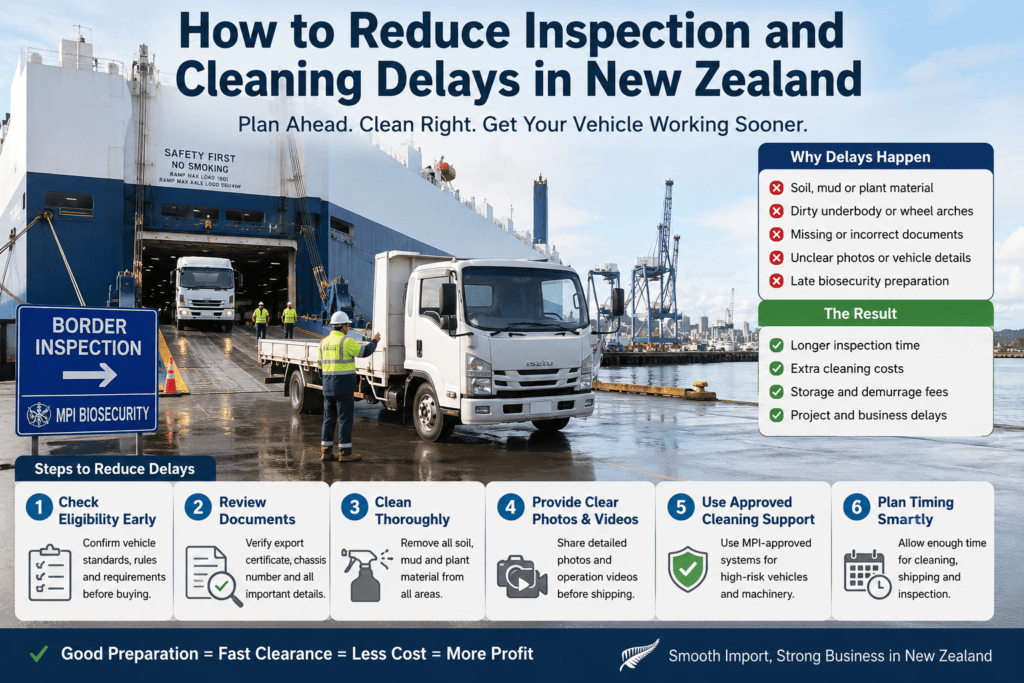

How to Avoid NZ Inspection and Cleaning Delays
Import delays can cost money.
A truck cannot work while it waits.
A tractor cannot support farm jobs.
A bus cannot carry passengers.
Also, machinery cannot start a project.
For New Zealand buyers, this matters a lot.
Used vehicles from Japan can offer strong value. They are right-hand drive, practical, and available in many body types. However, buyers must prepare carefully before shipping.
New Zealand has clear import steps. NZTA explains that used imported vehicles must meet relevant standards, complete border inspection, pass entry certification, and then receive registration and licensing if they will be used on New Zealand roads.
Also, MPI manages biosecurity requirements for vehicles, machinery, parts, and tyres. MPI explains that these items can carry soil, plant matter, animals, pests, and diseases.
Therefore, inspection and cleaning delays often start before the vehicle arrives.
The good news is simple.
Many delays can be reduced with early planning.
This guide explains how New Zealand buyers can reduce inspection and cleaning delays when importing used vehicles from Japan.
Why Delays Happen in New Zealand Imports
New Zealand protects its roads, farms, and environment carefully.
Because of this, imported vehicles need more than shipping space.
They need correct documents.
They need clean condition.
They need clear vehicle identity.
They also need proof for road-use requirements.
Delays can happen for many reasons.
Common causes include:
- Soil under the chassis
- Mud in wheel arches
- Seeds in the cabin
- Plant matter in cargo areas
- Dirty tractor implements
- Rust concerns
- Missing export documents
- Incorrect chassis details
- Weak photos before purchase
- Unclear vehicle standard evidence
- Late biosecurity preparation
For commercial buyers, even a short delay can create pressure.
A construction company may wait for a dump truck.
A farmer may need a tractor before the season starts.
A transport company may need a delivery truck for a contract.
A tourism operator may need a bus before peak travel dates.
So, preparation is not just a technical step.
It protects business timing.
Understand the Two Main Inspection Areas
New Zealand import preparation has two major sides.
First, there is biosecurity.
Second, there is road-use compliance.
Biosecurity focuses on contamination. This includes soil, seeds, insects, plant material, and other pests.
Road-use compliance focuses on standards, documents, identity, safety, emissions, and entry certification.
MPI says importers should make sure vehicles, machinery, and parts are clean and meet import requirements before they arrive. MPI also says importers may need to submit required information through the Trade Single Window before arrival.
Meanwhile, NZTA says used vehicles from Japan need evidence that they meet approved standards before registration for road use.
So, buyers should prepare both sides at the same time.
A clean truck can still face document delay.
A well-documented tractor can still face cleaning delay.
A good bus can still need more checks if details are unclear.
Therefore, a smooth import starts before purchase.
1. Confirm Eligibility Before Buying
The first way to reduce delays is to check eligibility early.
Do not wait until the vehicle arrives in New Zealand.
Before buying a used truck, bus, van, tractor, or machinery unit from Japan, confirm the basic details.
Check:
- Chassis number
- Model code
- Year
- Engine model
- Fuel type
- Gross vehicle mass
- Vehicle category
- Export certificate details
- Auction sheet details
- Odometer information
- Standard evidence, when needed
This is especially important for commercial vehicles.
A light truck, heavy truck, bus, and special body vehicle may have different requirements.
For road vehicles, New Zealand entry certification can check identity, standards, structure, safety items, and documents. NZTA lists border inspection, entry certification, registration, and licensing as key import steps for used vehicles.
Therefore, buyers should ask questions before bidding.
A cheap vehicle can become expensive if it creates compliance problems later.
2. Check the Japanese Export Certificate Carefully
Document mistakes can create delays.
For vehicles from Japan, the export certificate is a key document. NZTA’s vehicle inspection portal provides reference material for Japanese export certificates, and NZTA also notes that used vehicles from Japan need evidence before registration.
Before shipping, check that the document details match the vehicle.
Look at:
- Chassis number
- Vehicle make
- Model code
- Year or first registration
- Engine size
- Body type
- Odometer details
- Owner/export information, if relevant
Also, check the auction sheet against the export certificate.
If the model code or chassis number does not match, ask before shipment.
Small differences can create big delays.
Therefore, documents should be checked as early as possible.
3. Clean the Vehicle Before Shipping
Cleaning before shipping is one of the best ways to reduce biosecurity delays.
MPI says vehicles, machinery, and parts often carry soil, plant matter, and animals. It also provides import tools and guidance for meeting biosecurity requirements.
So, do not rely on a quick exterior wash.
Biosecurity cleaning should focus on hidden areas.
Important cleaning areas include:
- Underbody
- Wheel arches
- Tyres
- Spare tyre area
- Mud flaps
- Chassis rails
- Engine bay
- Cabin floor
- Cargo bed
- Box body floor
- Dump body
- Crane base
- Tool boxes
- Tractor linkage
- Machinery tracks
- Buckets and attachments
Many delays happen because soil remains in hard-to-see places.
For example, a dump truck can hold mud near the hinges. A tractor can hold soil around PTO and linkage parts. An excavator can hold dirt inside tracks.
Therefore, clean deeply.
Then inspect again.
4. Use Approved Cleaning Support When Needed
Some vehicles need special cleaning.
This is common with tractors, machinery, 4WD trucks, farm vehicles, and construction units.
MPI keeps a list of approved vehicle systems and cleaning providers. These can help importers meet New Zealand biosecurity requirements.
This is useful when the vehicle has higher risk.
Examples include:
- Used tractors
- Rotary tillers
- Excavators
- Wheel loaders
- Farm mini trucks
- Dump trucks
- Crane trucks
- 4WD vehicles
- Machinery with tracks
- Vehicles stored outdoors
A normal car wash may not reach hidden contamination.
So, use the right cleaning process for the vehicle type.
Also, ask for after-cleaning photos.
This helps confirm the work before shipping.
5. Request Detailed Photos Before Purchase
Photos reduce risk.
They also help buyers find problems early.
Before buying, ask for clear photos of:
- Exterior
- Interior
- Dashboard
- Odometer
- Engine bay
- Underbody
- Wheel arches
- Tyres
- Cargo area
- Spare tyre area
- Chassis rails
- Body underside
- Rust spots
- Special equipment
- Attachments
For trucks, ask for body-specific photos.
A flat deck needs deck and underside photos.
A dump truck needs bed, hinge, and hydraulic photos.
A crane truck needs crane base and outrigger photos.
A refrigerated truck needs cooling unit and drain photos.
For tractors, ask for tyres, PTO, linkage, engine bay, implements, and underbody photos.
For buses, ask for luggage bay, seat rails, steps, and underbody photos.
Good photos help buyers decide faster.
They also prevent surprises after arrival.
6. Ask for Videos When the Vehicle Has Moving Equipment
Some problems cannot be seen in photos.
Videos help.
Ask for videos of:
- Engine start
- Idle sound
- Short movement
- Gear shifting
- Dump operation
- Crane operation
- Power gate operation
- Refrigeration test
- 4WD engagement
- Tractor PTO operation
- Hydraulic lift
- Excavator boom movement
- Loader bucket movement
This is very important for special body vehicles.
A truck may look good, but the dump body may not lift well. A crane may look complete, but the outriggers may be weak. A refrigerated truck may look clean, but the cooling unit may not work.
Therefore, videos reduce risk.
They also support better inspection preparation.
7. Check Rust Before Shipping
Rust can create major inspection and repair delays.
New Zealand has many coastal areas, rural roads, and wet conditions. So, buyers should care about chassis condition.
Check:
- Chassis rails
- Cross members
- Cab floor
- Door bottoms
- Battery area
- Suspension mounts
- Rear frame
- Dump hinge area
- Crane base
- Body underside
- Spare tyre carrier
Surface rust may be manageable.
However, structural corrosion can become serious.
Ask for close-up photos. Also, ask the exporter to explain any visible rust.
A truck with a cheap price may cost more later if rust repairs delay entry certification.
So, check before buying.
8. Prepare Body-Specific Checks
New Zealand buyers import many body types from Japan.
Each body type has different delay risks.
Flat Deck Trucks
Flat decks are common for farms, trades, and construction.
Check:
- Deck floor
- Side panels
- Tailgate
- Tie-down points
- Under deck frame
- Rust
- Hidden plant material
Flat decks collect dirt because they are open.
So, clean the surface and underside.
Dump Trucks
Dump trucks often work in soil and construction areas.
Check:
- Dump bed
- Hydraulic cylinder
- PTO
- Tailgate
- Hinge area
- Rear frame
- Chassis
- Mud under bed
Ask for a lifting video.
Also, clean around the dump hinge and underbody.
Crane Trucks
Crane trucks need extra checks.
Check:
- Crane base
- Boom
- Outriggers
- Hydraulic hoses
- Remote control
- Rust near mounts
- Load chart
- Operation video
Mud can hide around outriggers and stabilizer areas.
So, clean carefully.
Refrigerated Trucks
Refrigerated trucks support food delivery.
Check:
- Cooling unit
- Temperature display
- Door seals
- Drain areas
- Body insulation
- Rear floor
- Operation hours
- Test video
Organic material can hide in drains and seals.
Therefore, clean these areas well.
Box Trucks and Vans
Box bodies protect cargo.
However, they can hide seeds, dirt, and insects.
Check:
- Cargo floor
- Door tracks
- Side panels
- Roof leaks
- Step area
- Drain holes
- Underbody
A clean cargo area can reduce delay and improve resale appeal.
9. Prepare for Biosecurity Risk by Vehicle Type
Different vehicles have different risk levels.
Used Trucks
Trucks can carry dirt under the chassis and around the cargo body.
Dump trucks and 4WD trucks need extra care.
Used Buses
Buses need interior and luggage bay checks.
Passengers can bring soil and seeds inside.
Tractors
Tractors need serious cleaning.
Tyres, mudguards, PTO, linkage, loader buckets, and implements can hold soil.
Construction Machinery
Machinery with tracks can hold heavy mud.
Excavators, loaders, and bulldozers need detailed undercarriage cleaning.
Mini Trucks
Mini trucks often work on private property.
Check cargo beds, wheel arches, underbody, and 4WD parts.
10. Plan Timing Around Shipping and Seasonal Demand
Timing also affects delays.
New Zealand businesses often need vehicles for specific seasons.
Farmers may need tractors before seasonal work.
Tourism operators may need buses before peak travel.
Construction companies may need trucks before a project starts.
Freight companies may need delivery vehicles for contracts.
Therefore, buyers should not plan too tightly.
Allow time for:
- Vehicle selection
- Inspection photos
- Cleaning
- Document review
- Shipping booking
- Transit time
- Arrival processing
- Biosecurity clearance
- Entry certification
- Local delivery
A rushed purchase can create mistakes.
Instead, start early.
This gives time to check and fix issues before shipment.
11. Communicate Clearly with the Exporter
Good communication reduces delays.
Before buying, tell the exporter how the vehicle will be used in New Zealand.
For example:
- Farm use
- Construction work
- Food delivery
- Tourism shuttle
- Regional freight
- Private property work
- Public road use
- Off-road machinery use
This helps the exporter understand what to check.
Also, ask direct questions.
Good questions include:
- Are there underbody photos?
- Is there visible rust?
- Has the vehicle been cleaned?
- Are there signs of soil or plant matter?
- Can you provide a start video?
- Can you provide an operation video?
- Are the documents clear?
- Does the chassis number match?
- Are attachments included?
- Can you check high-risk cleaning areas?
Clear questions create clear answers.
That helps reduce import risk.
12. Keep a Final Pre-Shipment Checklist
Before shipment, use a final checklist.
Document Checklist
Confirm:
- Invoice
- Export certificate
- Auction sheet
- Chassis number
- Model code
- Engine details
- Bill of lading details
- Cleaning evidence, when available
- Compliance evidence, when needed
Cleaning Checklist
Confirm:
- Underbody cleaned
- Wheel arches cleaned
- Tyres cleaned
- Engine bay checked
- Cabin checked
- Cargo area cleaned
- Spare tyre checked
- Attachments cleaned
- Photos after cleaning received
Condition Checklist
Confirm:
- Engine starts well
- No serious warning lights
- Transmission works
- Brakes checked
- Tyres checked
- Body equipment works
- Rust condition understood
- Videos received, if needed
This final step can prevent many problems.
How Delays Affect New Zealand Businesses
Inspection and cleaning delays can affect real operations.
For farmers, a delayed tractor may miss farm work.
For builders, a delayed dump truck may slow a site.
For transport firms, a delayed truck may affect delivery contracts.
For tourism companies, a delayed bus may hurt bookings.
For small businesses, every extra cost matters.
So, delay prevention is part of business planning.
A well-prepared vehicle can move faster through the process.
It also gives buyers more confidence.
Why Japanese Used Vehicles Remain Attractive
Even with inspection and cleaning needs, Japanese used vehicles remain attractive for New Zealand.
Japan offers many right-hand-drive vehicles. Buyers can find light trucks, medium trucks, buses, tractors, mini trucks, and machinery.
Popular options include:
- Isuzu Elf
- Toyota Dyna
- Mitsubishi Canter
- Hino Dutro
- Isuzu Forward
- Hino Ranger
- Mitsubishi Fighter
- Toyota Coaster
- Mitsubishi Rosa
- Kubota tractors
- Yanmar tractors
- Suzuki Carry mini trucks
- Daihatsu Hijet mini trucks
- Japanese mini excavators
For New Zealand buyers, this variety is valuable.
However, preparation matters.
A good vehicle should come with clear details, clean condition, and correct documents.
Why Buy New Zealand-Bound Vehicles from EVERY
EVERY helps overseas buyers find reliable Japanese used vehicles, trucks, buses, tractors, and machinery.
For New Zealand buyers, we understand that inspection and cleaning preparation are very important.
You need more than a good vehicle.
You need clear photos.
You need accurate documents.
You need cleaning awareness.
You also need smooth communication before shipment.
EVERY can help with:
- Japanese used vehicle sourcing
- Auction stock search
- Truck, bus, tractor, and machinery support
- Detailed photos and videos
- Vehicle condition checking
- Export document preparation
- Shipping support from Japan
- Body type advice
- Cleaning awareness before shipment
- Communication before purchase
- New Zealand-bound vehicle guidance
A smooth import starts before the vehicle leaves Japan.
Therefore, careful preparation matters.
Final Thoughts
Inspection and cleaning delays in New Zealand can be reduced with early planning.
First, confirm eligibility. Next, check documents. Then, clean the vehicle properly. Also, inspect underbody, rust, tyres, cargo areas, and body equipment before shipment.
For higher-risk vehicles, use stronger cleaning support.
This is especially important for tractors, machinery, dump trucks, 4WD vehicles, mini trucks, and farm-use vehicles.
A Japanese used vehicle can become a strong asset for New Zealand farms, builders, transport companies, tourism operators, and small businesses.
However, the best result comes from preparation.
Check early.
Clean carefully.
Confirm documents.
Ask for photos and videos.
Then ship with confidence.
With the right exporter and the right process, New Zealand buyers can reduce delays and receive vehicles ready for real work.


Browse Reliable Used Trucks & Buses from Japan
Carefully selected vehicles ready for export worldwide
Search 100,000+ Dealer Stock Vehicles from Japan
Access a wide selection of vehicles from Japanese dealers nationwide. Updated daily.
