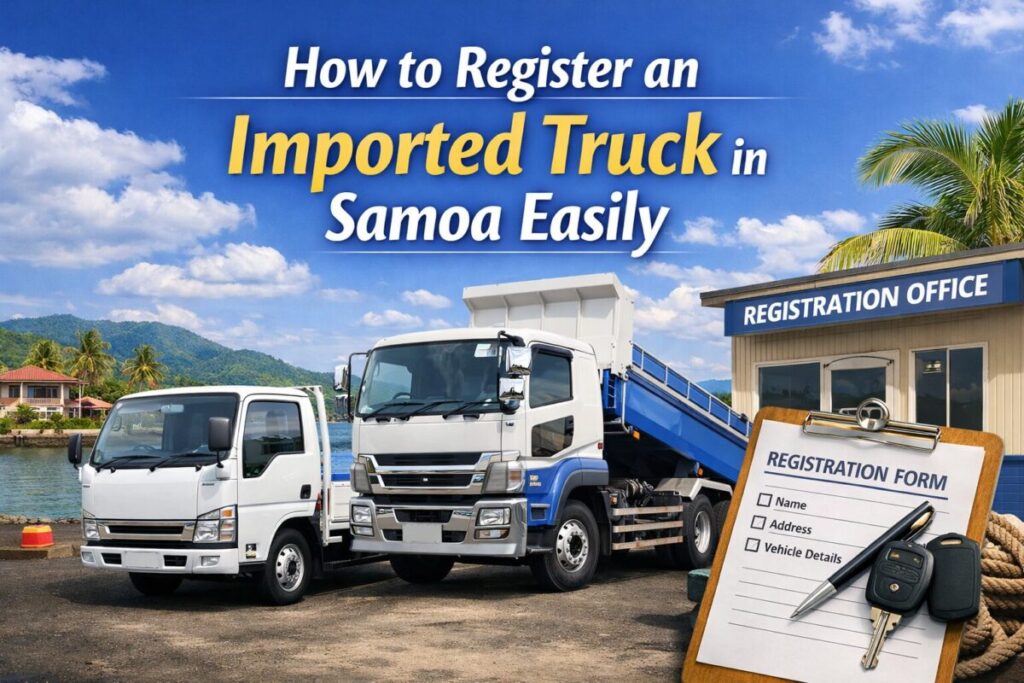

How to Register an Imported Truck in Samoa: A Complete Step-by-Step Guide for Fast and Hassle-Free Registration
Importing a used truck from Japan is a smart investment for businesses and individuals in Samoa. Japanese trucks are well known for their excellent reliability, fuel efficiency, affordable prices, and long service life. However, after your truck arrives in Samoa, you must complete the registration process before you can legally drive it on public roads.
Many first-time importers worry about registration because they are unfamiliar with the required procedures. Fortunately, the process becomes simple when you prepare the correct documents and understand each step in advance.
This complete guide explains how to register an imported truck in Samoa, including the documents you need, inspections, registration procedures, common mistakes to avoid, and practical tips for a smooth experience.
Why Import Japanese Trucks to Samoa?
Japanese commercial vehicles continue to be popular across Samoa because they offer outstanding value for money.
Importers enjoy many advantages, including:
- Excellent build quality
- Reliable diesel engines
- Affordable purchase prices
- Low maintenance costs
- Strong resale value
- Easy access to spare parts
- Long operating life
As a result, many companies rely on Japanese trucks for construction, agriculture, logistics, tourism, retail, and municipal services.
Why Truck Registration Is Important
Vehicle registration is a legal requirement in Samoa.
Without registration, you cannot:
- Drive on public roads
- Obtain valid vehicle insurance
- Complete legal ownership
- Operate a commercial transport business
- Renew annual vehicle licensing
Therefore, registration should begin as soon as customs clearance is complete.
Step 1: Complete Customs Clearance
Your truck must successfully clear customs before registration.
Customs officials verify:
- Import documents
- Bill of Lading
- Vehicle Identification Number (VIN)
- Engine number
- Customs duties
- Tax payments
Once customs releases your truck, you receive the documents required for registration.
Step 2: Prepare All Required Documents
Proper document preparation makes registration much faster.
Typical registration documents include:
- Original Bill of Lading
- Commercial Invoice
- Japanese Export Certificate
- Customs Clearance Certificate
- Import Duty Payment Receipt
- Proof of Ownership
- Personal Identification
Keep both printed and digital copies whenever possible.
Organized paperwork helps avoid unnecessary delays.
Step 3: Verify Vehicle Information
Before submitting your application, carefully review every vehicle detail.
Check the following:
- VIN number
- Engine number
- Chassis number
- Manufacturer
- Model
- Year of manufacture
- Engine capacity
Every document should contain identical information.
Even a small mistake may delay approval.
Step 4: Arrange Vehicle Insurance
Insurance is an important part of responsible vehicle ownership.
Depending on local requirements, you may need insurance before completing registration.
Insurance provides financial protection against:
- Traffic accidents
- Third-party liability
- Property damage
- Commercial vehicle risks
Choosing suitable coverage protects both your truck and your business.
Step 5: Complete the Vehicle Inspection
Your imported truck may require an inspection before registration.
Inspectors usually examine:
- Brake performance
- Steering system
- Suspension
- Tires
- Headlights
- Turn signals
- Overall roadworthiness
Japanese trucks generally perform well because they receive regular maintenance before export.
Step 6: Submit Your Registration Application
Once your documents are complete, submit your registration application to the appropriate Samoan authority.
Officials review:
- Ownership documents
- Customs paperwork
- Inspection results
- Insurance information
- Vehicle specifications
Accurate applications usually move through the process more quickly.
Step 7: Pay Registration Fees
After your application receives approval, pay the required registration fees.
The amount may depend on:
- Vehicle type
- Truck size
- Registration category
- Current regulations
Always keep payment receipts for future reference.
Step 8: Receive Your Registration Certificate
Once registration is approved, you receive your official registration certificate.
This document confirms:
- Legal ownership
- Registration approval
- Vehicle identification
Store the certificate safely inside your truck.
You may need it during inspections or insurance claims.
Step 9: Install Your Number Plates
Next, install your official number plates.
Check that the plates are:
- Securely attached
- Clearly visible
- Clean and readable
Proper installation helps avoid unnecessary traffic violations.
Step 10: Start Using Your Truck
After completing registration, your truck is ready for daily operation.
Many businesses immediately begin using imported Japanese trucks for:
- Construction work
- Cargo transport
- Agricultural deliveries
- Wholesale distribution
- Tourism support
- Local business operations
A properly registered truck allows you to begin earning income immediately.
Common Registration Mistakes
Many registration delays happen because of simple errors.
Fortunately, they are easy to avoid.
Missing Documents
Incomplete paperwork remains one of the biggest causes of registration delays.
Always check your document checklist before visiting the registration office.
Incorrect Vehicle Numbers
VIN numbers, engine numbers, and chassis numbers must match every document.
Review every number carefully.
Delayed Insurance
Waiting until the last minute to arrange insurance may slow your registration.
Prepare insurance early whenever possible.
Outstanding Customs Charges
Registration cannot proceed until all customs duties and taxes have been paid.
Complete customs procedures first.
Waiting Too Long
Begin registration soon after customs clearance.
Quick action helps reduce storage costs and unnecessary delays.
Tips for Faster Registration
Experienced importers follow several simple strategies.
Prepare Documents Before Arrival
Collect your paperwork while your truck is still on the ship.
Early preparation saves valuable time.
Work with a Trusted Japanese Exporter
Experienced exporters understand export documents and shipping requirements.
Professional support reduces paperwork mistakes.
Keep Backup Copies
Store printed and digital copies of every important document.
Backup files provide extra protection if originals are misplaced.
Double-Check Every Detail
Review names, dates, VIN numbers, and engine numbers before submission.
Small corrections today prevent major delays later.
Ask Questions Early
If you are unsure about any registration requirement, contact the appropriate authority before submitting your application.
Early communication makes the process smoother.
Best Japanese Trucks for Samoa
Several Japanese truck models have earned an excellent reputation throughout Samoa.
Toyota Dyna
Reliable, economical, and ideal for everyday commercial use.
Toyota ToyoAce
A practical truck offering low operating costs and dependable performance.
Isuzu Elf
One of the world's most trusted light-duty commercial trucks.
Mitsubishi Fuso Canter
Popular for durability, fuel efficiency, and easy maintenance.
Nissan Atlas
Excellent for local deliveries and business transportation.
Hino Dutro
A dependable truck designed for demanding commercial work.
These vehicles continue to support businesses across Samoa every day.
Why Choose EVERY TRADING?
EVERY TRADING has helped customers around the world import quality Japanese vehicles for many years.
Our professional services include:
- Access to thousands of Japanese auction vehicles
- Professional vehicle inspections
- Complete export documentation
- Worldwide shipping
- Customs support
- Fast customer communication
- Reliable after-sales assistance
Whether you are importing your first truck or expanding a commercial fleet, our experienced team supports you throughout every step of the process.
Frequently Asked Questions
How long does truck registration take in Samoa?
The registration timeline depends on document preparation, inspections, and payment completion. Well-prepared applications usually move faster.
Can I register a used truck imported from Japan?
Yes. Japanese used trucks are widely imported and registered throughout Samoa every year.
Do I need insurance before registration?
Insurance requirements may vary depending on local regulations. Preparing insurance early helps avoid delays.
What happens if my documents contain errors?
Incorrect information can delay approval. Always verify every document before submission.
Why are Japanese trucks so popular in Samoa?
Japanese trucks offer excellent reliability, fuel efficiency, affordable maintenance, strong resale value, and long-term durability.
Final Thoughts
Registering an imported truck in Samoa becomes simple when you understand the process and prepare your documents before your vehicle arrives. Careful planning, accurate paperwork, and timely inspections help you complete registration quickly while avoiding unnecessary delays.
Japanese used trucks continue to provide exceptional value for businesses across Samoa because they combine quality, affordability, and dependable performance. By partnering with EVERY TRADING, you receive expert support from vehicle selection in Japan to shipping, customs clearance, and successful registration in Samoa.


Browse Reliable Used Trucks & Buses from Japan
Carefully selected vehicles ready for export worldwide
Search 100,000+ Dealer Stock Vehicles from Japan
Access a wide selection of vehicles from Japanese dealers nationwide. Updated daily.
