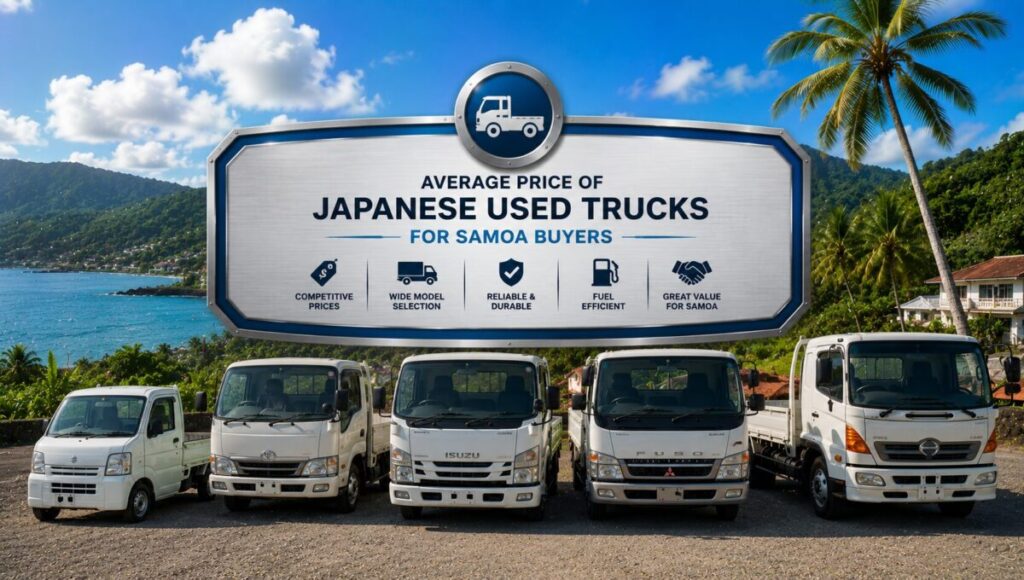

Average Price of Japanese Used Trucks for Samoa Buyers
Buying a Japanese used truck is one of the smartest investments for businesses in Samoa. Whether you operate a construction company, manage agricultural transportation, deliver products to local shops, or support tourism businesses, Japanese trucks offer outstanding reliability, excellent fuel economy, and long-term value.
However, one of the first questions every buyer asks is:
"How much does a Japanese used truck actually cost?"
The answer depends on several factors, including the truck model, manufacturing year, mileage, condition, body type, engine size, and shipping costs.
Fortunately, Japan has one of the world's largest used commercial vehicle markets. Because thousands of trucks become available every week, buyers can choose from a wide range of vehicles at competitive prices.
This guide explains the average prices of Japanese used trucks for Samoa buyers and shows how to purchase quality commercial vehicles directly from Japan.
Why Samoa Imports Japanese Trucks
Samoa relies heavily on imported commercial vehicles.
Japanese trucks support many industries, including:
- Agriculture
- Fisheries
- Tourism
- Construction
- Wholesale distribution
- Retail businesses
- Government services
- Community transportation
Businesses regularly transport:
- Fresh produce
- Building materials
- Hotel supplies
- Machinery
- Food products
- Consumer goods
Because dependable transportation is essential, Japanese trucks continue to be the preferred choice.
Factors That Affect Truck Prices
No two used trucks have exactly the same value.
Several factors influence export prices.
These include:
- Manufacturer
- Model
- Year of manufacture
- Mileage
- Engine condition
- Transmission type
- Drive system
- Body style
- Maintenance history
- Overall condition
Understanding these factors helps buyers compare vehicles more accurately.
Average Export Prices
Below are typical export price ranges for popular Japanese trucks.
| Model | Typical Export Price (USD) |
|---|---|
| Suzuki Carry Truck | $2,500 – $8,000 |
| Daihatsu Hijet Truck | $2,500 – $7,500 |
| Toyota Dyna | $6,000 – $22,000 |
| Toyota Toyoace | $6,000 – $20,000 |
| Isuzu Elf | $5,000 – $20,000 |
| Hino Dutro | $6,500 – $22,000 |
| Mitsubishi Fuso Canter | $6,500 – $24,000 |
| Nissan Atlas | $5,500 – $18,000 |
| Isuzu Forward | $12,000 – $38,000 |
| Hino Ranger | $14,000 – $40,000 |
| Mitsubishi Fuso Fighter | $15,000 – $42,000 |
These prices represent average export values before shipping and local import costs.
Why Prices Vary
A truck manufactured recently usually costs more than an older model.
Similarly, vehicles with:
- Lower mileage
- Better maintenance records
- Cleaner interiors
- Newer engines
- Excellent inspection results
often command higher prices.
Although these trucks may cost more initially, they frequently reduce long-term maintenance expenses.
Best Value Light Trucks
Many Samoa businesses choose compact light-duty trucks because they offer excellent operating efficiency.
Popular choices include:
Isuzu Elf
Ideal for:
- Retail deliveries
- Food distribution
- Municipal services
- Small businesses
Toyota Dyna
Perfect for:
- Agriculture
- Hardware stores
- Building materials
- Local logistics
Mitsubishi Fuso Canter
Excellent for:
- Construction
- Contractors
- Equipment transport
- Commercial deliveries
These trucks provide an excellent balance between purchase price and long-term reliability.
Medium-Duty Truck Prices
Businesses transporting larger cargo often purchase medium-duty trucks.
Popular options include:
- Isuzu Forward
- Hino Ranger
- Mitsubishi Fuso Fighter
These vehicles cost more initially but provide:
- Greater payload
- Stronger chassis
- Higher productivity
- Longer service life
For expanding businesses, they often represent excellent long-term value.
Mini Trucks Remain Affordable
Japanese Kei trucks continue growing in popularity throughout Samoa.
Popular models include:
- Suzuki Carry
- Daihatsu Hijet
- Honda Acty
- Subaru Sambar
- Mitsubishi Minicab
Typical export prices range between $2,500 and $8,000, depending on condition and age.
These compact trucks are ideal for:
- Village deliveries
- Farm work
- Landscaping
- Property maintenance
- Small businesses
Their affordability makes them an attractive first commercial vehicle.
Shipping Costs
Shipping costs vary depending on:
- Vehicle size
- Shipping method
- Departure port
- Freight market conditions
Most commercial trucks are transported using Roll-on/Roll-off (RORO) shipping because it offers excellent value.
Container shipping is also available for selected vehicles.
Requesting a complete quotation before purchasing helps buyers understand the total investment.
Additional Import Costs
Besides the truck price, buyers should also budget for:
- Ocean freight
- Marine insurance
- Import duties
- Taxes
- Port charges
- Customs clearance
- Vehicle registration
- Local transportation
Calculating the total landed cost provides a more accurate budget.
Fuel Efficiency Saves Money
Purchase price is only one part of ownership.
Japanese trucks also help businesses reduce long-term operating costs through:
- Excellent diesel fuel economy
- Reliable engines
- Lower maintenance expenses
- Longer service life
Over several years, these savings often exceed the initial purchase price difference.
Easy Maintenance
Japanese commercial vehicles remain popular worldwide.
Consequently:
- Spare parts are widely available.
- Repairs are straightforward.
- Mechanics are familiar with major brands.
This reduces downtime while lowering maintenance costs.
Strong Resale Value
Japanese trucks retain excellent resale values.
Brands such as:
- Isuzu
- Toyota
- Hino
- Mitsubishi Fuso
continue enjoying strong international demand.
Therefore, businesses often recover a significant portion of their investment when upgrading fleets.
Why Buying Directly from Japan Saves Money
Many buyers purchase directly from Japanese exporters.
Advantages include:
- Lower prices
- Larger inventory
- Better maintained vehicles
- Professional inspections
- Verified vehicle history
- Transparent pricing
Direct purchasing also reduces unnecessary middleman costs.
Consequently, buyers often receive higher-quality vehicles at more competitive prices.
Choosing the Right Truck
Before purchasing, consider:
Business Type
Select a truck appropriate for your daily operations.
Payload Capacity
Choose enough carrying capacity for future growth.
Fuel Economy
Efficient engines reduce long-term expenses.
Budget
Consider total ownership costs instead of only purchase price.
Planning carefully results in better long-term value.
Why Choose EVERY Japan?
Since 2006, EVERY Japan has exported quality Japanese commercial vehicles to more than 100 countries worldwide.
We provide:
- Professional vehicle inspections
- Transparent pricing
- Detailed photographs
- Export documentation
- International shipping
- Responsive customer support
Our experienced export specialists help every customer purchase with confidence.
Find the Best Value Japanese Truck for Your Business
Japanese used trucks continue helping businesses throughout Samoa improve productivity while reducing transportation costs.
Whether you need a Suzuki Carry, Toyota Dyna, Isuzu Elf, Mitsubishi Fuso Canter, Hino Ranger, or Isuzu Forward, importing directly from Japan gives you access to reliable commercial vehicles at competitive prices.
With outstanding durability, excellent fuel efficiency, low maintenance costs, and strong resale value, Japanese trucks remain one of the smartest investments for businesses across Samoa.
Contact EVERY Japan today and let our experienced export specialists help you find the perfect Japanese used truck at the best possible price for your business in Samoa.


Browse Reliable Used Trucks & Buses from Japan
Carefully selected vehicles ready for export worldwide
Search 100,000+ Dealer Stock Vehicles from Japan
Access a wide selection of vehicles from Japanese dealers nationwide. Updated daily.
