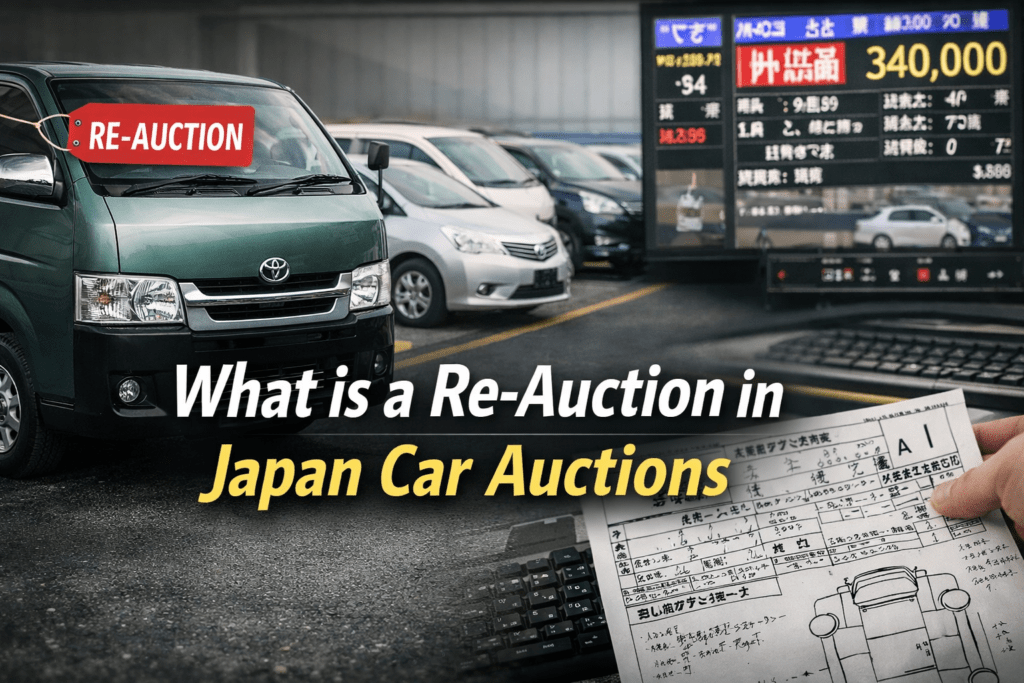

What is a Re-Auction in Japan Car Auctions
Japanese car auctions are one of the largest used vehicle sourcing channels in the world. The EVERYCAR auction guide index includes “What is a Re-Auction in Japan Car Auctions” as one of its Auction System Guides for overseas buyers. :contentReference[oaicite:0]{index=0}
For many first-time buyers, the word re-auction can sound confusing. They may think it means a special auction type or a separate sales system. In reality, a re-auction usually means that a vehicle was listed once before, did not complete a sale in the expected way, and then appeared again in auction.
This is an important topic for international buyers. A re-auction can create both opportunity and risk. Sometimes it gives buyers a second chance on a useful vehicle. In other cases, it may show that something about the vehicle, the pricing, or the seller’s expectations did not match the market the first time.
In this guide, you will learn how the Japanese auction system works, what a re-auction means, why vehicles return to auction, how overseas buyers can benefit, what cautions to watch, and why working with a professional export company makes the process safer and easier.
Search available auction vehicles here:
Browse Auction Vehicles
Understanding the Japanese Car Auction System
Japanese used car auctions are wholesale marketplaces where licensed dealers and exporters buy and sell vehicles through a bidding system. These auctions are not usually open to ordinary public buyers. Because of that, overseas customers normally use a Japanese export company or auction agent to access the system. This dealer-only structure is part of the auction guide collection published by EVERYCAR for international buyers. :contentReference[oaicite:1]{index=1}
Every week, large numbers of passenger cars, SUVs, vans, trucks, buses, tractors, and commercial vehicles move through auction houses across Japan. Auction houses inspect vehicles, prepare auction sheets, upload photos, and place units into live bidding lanes or digital sale systems. The size of this market is one reason overseas importers rely on Japan auctions for regular vehicle sourcing. :contentReference[oaicite:2]{index=2}
Main parts of the system
- Auction house: The company that organizes inspection, listing, and bidding
- Seller: The dealer, leasing company, fleet owner, or business offering the vehicle
- Buyer: A licensed dealer or exporter placing bids
- Auction sheet: The inspection report showing condition and notes
- Starting price: The opening point of bidding
- Reserve price: The minimum level the seller hopes to accept
In most cases, the highest acceptable bid wins. However, not every listing results in a completed sale. That is where the idea of a re-auction becomes important.
What Is a Re-Auction?
A re-auction is a vehicle that appears in auction again after a previous auction attempt did not end in a completed sale, or after the vehicle was returned to the auction market for another sale attempt.
In simple terms, the vehicle is being auctioned again. The same unit may appear at the same auction house or at a different one. It may come back with a new auction date, a different starting price, a different reserve strategy, updated comments, or even new photos.
For overseas buyers, a re-auction does not always mean there is a problem. Sometimes the vehicle simply did not meet the seller’s expected price the first time. In other cases, buyer interest was weak on that day, or the unit was listed among stronger competing vehicles.
Simple definition
- A vehicle was listed before
- The earlier sale did not complete in the expected way
- The vehicle is listed again for another auction attempt
That is the core meaning of re-auction in the Japanese auction business.
Why Vehicles Go to Re-Auction
There are several common reasons why a vehicle may return to auction. Understanding these reasons helps buyers judge whether a re-auction unit is a second chance or a sign that extra caution is needed.
1. The reserve price was not reached
This is one of the most common reasons. Bidding happened, but the highest bid did not meet the seller’s minimum acceptable price. As a result, the car stayed unsold and later returned to auction.
2. Demand was weak on that auction day
Even a decent vehicle may receive little attention if market demand is soft, too many similar units appear at once, or buyers focus on other vehicles in the same lane.
3. The seller changed strategy
After seeing the first result, the seller may lower expectations, adjust the starting price, or try again at a different auction house with a new plan.
4. The first deal did not finish smoothly
Sometimes a vehicle is won at auction but the transaction later fails for practical or business reasons. In that case, the car may return to the market again.
5. The vehicle is being tested again in a different market setting
Some sellers believe a different auction date, auction group, or vehicle mix may create stronger bidding the next time.
Because of these possibilities, buyers should never assume that every re-auction vehicle has hidden trouble. Still, they should also never assume the opposite.
Benefits of Re-Auction Vehicles for Overseas Buyers
Re-auctions can create useful opportunities for importers, dealers, and professional buyers. In fact, experienced exporters often watch re-auction vehicles carefully because they sometimes offer better buying chances than first-time listings.
1. A second chance to buy a missed vehicle
A buyer may lose a vehicle the first time because of timing, budget pressure, or a high reserve. If that same vehicle returns, the buyer may have another opportunity to secure it.
2. Better price potential
If a vehicle failed to sell because the seller’s expectation was too high, the next listing may come with a more realistic reserve or opening strategy. That can improve buying value.
3. Better market reading
Re-auction vehicles help buyers understand how the market reacted the first time. This can be useful when deciding whether to bid again, negotiate more carefully, or move on.
4. Less emotional bidding pressure
When buyers know that some vehicles may return, they are less likely to overbid in a fast live auction just because they fear losing the unit forever.
5. More flexibility in sourcing
For regular import businesses, re-auctions add another layer of supply. Instead of focusing only on fresh listings, buyers can also monitor useful returning stock.
How Overseas Buyers Purchase Re-Auction Vehicles
The buying flow for a re-auction vehicle is similar to the normal auction process. However, careful review becomes even more important, because buyers should compare the current listing with the earlier result if that information is available.
Step 1: Search the vehicle
The exporter searches the auction system for units that match the buyer’s market, budget, and target model. A re-auction vehicle may appear just like any other listing in the search system.
Step 2: Review the auction sheet and photos
The buyer and exporter check the current condition, comments, equipment, mileage, and visible damage. If there are signs that the vehicle was listed before, they look carefully for changes.
Step 3: Compare the new listing with the likely past result
This step is very useful. Buyers should check whether the starting price looks different, whether comments changed, and whether the seller may be using a new pricing approach.
Step 4: Set a maximum bid
The maximum bid should be based on full landed cost, not on the idea that a re-auction automatically means a bargain. Shipping, repair cost, inland transport, and destination charges still matter.
Step 5: Bid or negotiate if needed
The exporter places the bid during the live auction. If the vehicle still does not sell, there may be a chance to negotiate after the auction depending on the auction house and seller response.
Step 6: Complete payment and export
If the purchase succeeds, the exporter handles payment, domestic transport in Japan, documents, booking, and shipment to the destination country.
Important Points to Watch with Re-Auction Vehicles
Re-auction vehicles can be useful, but buyers should stay careful. A returning unit deserves extra attention because there is usually a reason it came back.
Do not assume re-auction means cheap
Some re-auction vehicles still carry unrealistic seller expectations. Even if the car returns, the reserve may still be too high.
Do not assume re-auction means bad
On the other hand, a re-auction car is not automatically a weak or damaged unit. It may simply have missed the market the first time.
Check for changes in condition notes
If the sheet, comments, or photos look different, ask why. A vehicle that has been moved, stored, or handled again may show new details.
Watch buyer psychology
Some buyers become too aggressive because they believe the vehicle should be easier to win the second time. That can still lead to overpaying.
Focus on total business value
The best question is not, “Why is this car back?” The better question is, “Does this car still make sense for my market at the full landed cost?”
Why Professional Export Companies Are So Important
For overseas buyers, re-auction vehicles are much easier to judge when a professional export company is involved. Auction access is only one part of the service. The real value is knowing how to interpret the vehicle’s return to market.
They understand auction behavior
Experienced exporters know that re-auctions happen for different reasons. They can often judge whether the return is linked to reserve price, weak demand, seller strategy, or something else.
They help compare listing changes
A good exporter checks whether the current auction sheet, photos, grade, or notes look different from what would normally be expected. This protects buyers from missing important details.
They support better bid planning
Instead of reacting emotionally to a second chance, exporters help buyers set a realistic maximum bid based on market demand and total export cost.
They handle negotiation and export procedures
If the re-auction vehicle remains unsold again, the exporter may still help through post-auction negotiation. If the buyer wins, the exporter manages the full process through shipment.
- Access to dealer-only auction stock
- Practical reading of auction behavior
- Clear advice on whether a re-auction is a good opportunity
- Support with bidding, negotiation, and risk control
- Full export handling from Japan to destination
Simple Tips for Overseas Buyers
If you want to use re-auction vehicles well, keep your approach simple and disciplined.
- Review the full auction sheet, not only the price
- Ask why the vehicle may have returned to auction
- Check whether the seller’s pricing strategy seems more realistic now
- Use full landed cost to set your bid limit
- Work with a trusted exporter who understands the auction market
These habits help buyers reduce risk and make better long-term import decisions.
Conclusion
A re-auction in Japan car auctions simply means a vehicle has returned to auction after an earlier attempt did not end in a completed sale or stable result. For overseas buyers, this can create both opportunity and caution.
Some re-auction vehicles return because reserve prices were too high. Others return because demand was weak, timing was poor, or the seller changed strategy. That is why buyers should never judge re-auction units too quickly. Instead, they should review the current listing carefully and focus on total business value.
EVERY TRADING is a Japanese used vehicle export company serving customers around the world. We help overseas buyers search Japanese auction vehicles, understand auction behavior, and move from bidding to export with more confidence and better control. The EVERYCAR guide collection and auction search platform are designed to help international buyers understand the system and search available stock from Japan. :contentReference[oaicite:3]{index=3}
Learn more about Japanese auctions:
Japanese Car Auction Guide
Start searching your vehicle from Japan today:
Search Auction Vehicles Now
If you are looking for any Japanese vehicles, cars and truck and bus for sale, please check our list.
The list of Japanese Used Truck, Bus, cars, and tractor exporter EVERYCAR.jp (*Click to open).We do our best work for all customer's partnership.
It's for SDGs goal number 17 "PARTNERSHIP FOR THE GOALS".
Let's work together!


