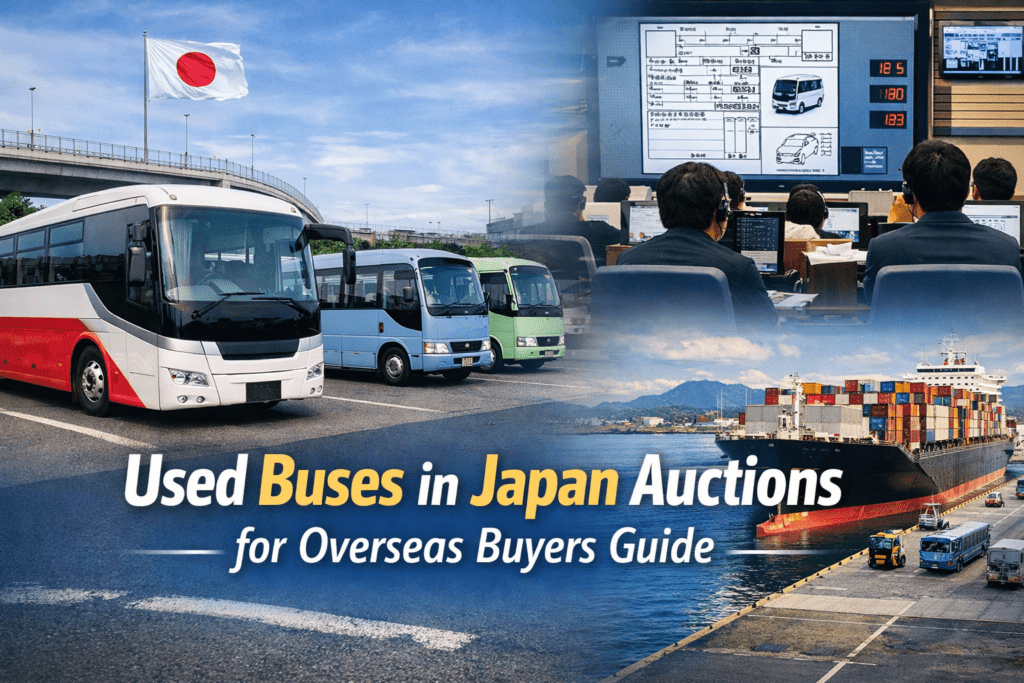

Used Buses in Japan Auctions
Search available auction vehicles here:
Browse Auction Vehicles
Japanese vehicle auctions are well known for passenger cars, but they are also an important source of used buses. For overseas buyers, Japan auctions offer access to many bus types, from small shuttle buses to larger commercial buses. In many cases, buyers can find clean units, detailed inspection data, and competitive prices in one place.
If you want to import a used bus from Japan, it is important to understand how the auction system works. A bus is a business asset. Therefore, you need more than a low price. You also need the right model, usable condition, clear information, and smooth export support.
This guide explains how used buses appear in Japan auctions, why overseas buyers use this system, how the buying process works, what risks to watch, and why a professional export company is the smart partner for your purchase.
Why Used Buses in Japan Auctions Attract Overseas Buyers
Many overseas buyers search Japan auctions because Japan has a large and organized vehicle market. Sellers include dealers, leasing companies, transport firms, and other businesses that regularly replace their fleet vehicles. As a result, auctions can include many commercial buses at different price levels.
Buyers also like the system because it is structured. Auction houses usually provide basic vehicle data, auction sheets, photos, and sale timing. This helps buyers compare many options quickly.
For bus importers, this matters a lot. A bus purchase often needs careful planning because the unit may be used for school transport, staff transport, tourism, hotel shuttle service, public route service, or private charter work.
Common Bus Types Found in Japan Auctions
- Micro buses for hotel, school, and staff transport
- Mid-size buses for regional passenger use
- Large buses for commercial routes or tourism
- Special-use buses converted for service or support work
- Welfare or accessibility buses with special equipment
Because of this variety, Japanese auctions can be useful for both first-time buyers and experienced importers.
How the Japanese Used Vehicle Auction System Works
The Japanese used vehicle auction system is a dealer-based marketplace. In simple terms, vehicles are listed by sellers and sold through an organized bidding process. Most auction houses are not open directly to general overseas retail buyers. Instead, licensed dealers or export companies access the system and bid on behalf of customers.
Each auction vehicle has a listing. That listing usually includes important details such as:
- Make and model
- Year of manufacture or registration
- Mileage
- Engine size
- Transmission type
- Fuel type
- Vehicle condition notes
- Photos
- Auction date
In many cases, the vehicle also has an auction inspection sheet. This sheet gives a quick summary of condition. It may mention body damage, interior wear, repairs, corrosion, or mechanical concerns. For buses, buyers should read these notes carefully because commercial vehicles can show heavy-use signs.
How Bidding Works
On auction day, buyers place bids through the auction system. The highest acceptable bid wins the vehicle. However, the final price can depend on seller expectations, reserve prices, and competition from other buyers.
As a result, a bus may sell quickly if demand is strong. On the other hand, some buses may not sell if bidding does not meet the seller’s target.
This is why planning matters. A buyer should decide the budget, target specification, shipping plan, and usage purpose before bidding starts.
Main Benefits for Overseas Buyers
Japanese bus auctions offer several clear advantages for overseas buyers. These benefits are especially important for import businesses that need stock turnover, cost control, and reliable sourcing.
1. Large Selection
One major advantage is access to many vehicles. Instead of waiting for one local dealer to offer stock, buyers can review many buses from different auction houses and sale dates.
2. Better Price Opportunities
Auctions can create good buying chances. In some cases, buyers can secure a bus at a price lower than retail dealer stock. This helps importers improve profit margins or offer better prices to local customers.
3. Transparent Basic Information
Auction listings usually provide structured vehicle data. This makes it easier to compare year, mileage, engine type, seating layout, and condition across many units.
4. Access to Commercial Fleet Vehicles
Buses sold in Japan auctions may come from organized fleet use. For overseas buyers, this can be useful because fleet vehicles often follow regular replacement cycles.
5. Useful for Many Markets
Used buses from Japan can suit many business needs around the world, including:
- Tourism and resort transport
- Airport or hotel shuttle services
- School transportation
- Company staff transport
- Religious group and community transport
- Regional passenger service
Step-by-Step Process to Buy a Used Bus from Japan Auctions
Overseas buyers do not usually buy directly by themselves. Most purchases are handled through an experienced Japanese export company. The process below is the standard flow.
Step 1: Define Your Target Bus
First, decide what kind of bus you need. Think about capacity, body size, right-hand drive acceptance, route condition, climate, spare parts availability, and business purpose.
For example, a tourism company may prefer a comfortable shuttle bus. A school operator may focus more on seat count and safety. A local transport business may care more about operating cost and easy maintenance.
Step 2: Search Auction Listings
Next, review auction listings through a trusted exporter platform. At this stage, you can filter vehicles by make, model, year, type, and other conditions.
This step saves time because you can focus only on buses that match your market.
Step 3: Check the Auction Sheet and Photos
Before bidding, study the available information carefully. Look at the condition notes, rust comments, repair history, interior wear, warning signs, and body damage marks. For buses, also check:
- Passenger door condition
- Seat layout and interior wear
- Floor condition
- Luggage space if needed
- Signs of commercial heavy use
- Corrosion around lower panels and underbody
Step 4: Set Your Maximum Bid
Work with your export company to set a clear maximum bid. This amount should include more than the hammer price. You should also consider auction fees, inland transport in Japan, export handling, shipping, destination charges, import tax, and local registration costs.
Step 5: Bid Through the Exporter
Your exporter places the bid on auction day. If the bid wins, the vehicle moves to the next stage. If not, you can search again and try another unit.
Step 6: Payment and Export Arrangements
After a successful purchase, the exporter handles payment to the auction side and prepares the bus for shipment. This stage may include document processing, movement from auction yard, port booking, and export scheduling.
Step 7: Shipping and Delivery
Finally, the bus is shipped to your destination country. Depending on the size of the bus, shipping arrangements can vary. Your exporter should explain the shipping option, expected schedule, and documents needed for import clearance.
Important Things to Check Before Buying
A used bus can be a strong business purchase, but only if the condition matches your needs. Therefore, buyers should pay close attention to risk points before bidding.
Mechanical and Structural Condition
Large commercial vehicles can hide expensive repair needs. Engine issues, transmission wear, suspension problems, brake system work, and underbody corrosion can increase your real cost very quickly.
Rust and Corrosion
Rust is one of the most important checks. A bus may look acceptable in photos, but hidden corrosion can create future maintenance problems. This is especially important if the bus will operate in humid or coastal regions after import.
Mileage and Usage Pattern
High mileage does not always mean a bad bus. However, buyers should understand how the vehicle was used. A bus used daily for commercial transport can have more wear than a lightly used shuttle unit of similar age.
Parts and Service Support
Before buying, confirm whether spare parts, mechanics, and service knowledge are available in your country. A low purchase price is not enough if future repairs become difficult.
Import Rules in Your Country
You should also check your local regulations in advance. Some countries have age limits, inspection rules, emission requirements, or body-type restrictions for imported buses.
Why Overseas Buyers Should Use a Professional Export Company
This is one of the most important points. Japanese vehicle auctions are not only about finding a cheap bus. They are also about making the right decision with limited time and incomplete direct access. That is why a professional export company adds real value.
Access to the Auction Network
Most overseas buyers cannot directly access dealer-only auction systems. A licensed exporter solves this problem by providing search access and bidding support.
Condition Review Support
A professional exporter helps interpret auction sheets, photos, and condition comments. This is especially useful when notes are short, technical, or written in Japanese.
Cost Control and Risk Reduction
Experienced exporters help buyers estimate total costs before bidding. This reduces the risk of buying a bus that looks cheap at auction but becomes expensive after fees and shipping.
Export Process Management
After the purchase, the exporter handles the practical work. That includes payment, transport inside Japan, booking shipment, document handling, and communication during the export process.
Better Buying Decisions
Professional support is valuable because buses are commercial tools. A wrong choice can affect your transport business, customer satisfaction, and operating budget. A trusted exporter helps you buy with more confidence and fewer mistakes.
Common Mistakes Overseas Buyers Should Avoid
- Focusing only on the auction price and ignoring total landed cost
- Buying without checking local import rules
- Ignoring auction sheet comments about rust, repairs, or heavy wear
- Choosing a bus model with weak parts support in the destination market
- Buying without a clear business use plan
- Using an exporter with poor communication or weak after-sale support
A good purchase is not simply the cheapest bus. It is the bus that fits your market, your route, your budget, and your local operating conditions.
How to Buy Smarter from Japan Bus Auctions
Smart buyers usually follow a simple rule: compare more, check more, and rush less. Japanese auctions move fast, but your decision should still be disciplined.
Start with your business goal. Then match that goal to the right bus type. After that, review vehicle condition, estimate the full import cost, and use a trusted exporter to manage the process.
When done correctly, buying used buses in Japan auctions can be an efficient way to build stock, expand a transport business, or secure quality vehicles for long-term service.
Conclusion
Used buses in Japan auctions give overseas buyers access to a wide range of commercial vehicles at competitive prices. The system offers structure, selection, and useful condition data. At the same time, buyers still need to act carefully. A bus is a major purchase, and small mistakes can create large costs later.
For that reason, the best approach is to work with a trusted Japanese export company that understands auctions, export procedures, and the real needs of overseas buyers.
EVERY TRADING is a Japanese used vehicle export company serving customers around the world. We help overseas buyers search Japanese auction vehicles, review available units, and move forward with confidence through the export process.
Learn more about Japanese auctions:
Japanese Car Auction Guide
Start searching your vehicle from Japan today:
Search Auction Vehicles Now
If you are looking for any Japanese vehicles, cars and truck and bus for sale, please check our list.
The list of Japanese Used Truck, Bus, cars, and tractor exporter EVERYCAR.jp (*Click to open).We do our best work for all customer's partnership.
It's for SDGs goal number 17 "PARTNERSHIP FOR THE GOALS".
Let's work together!


