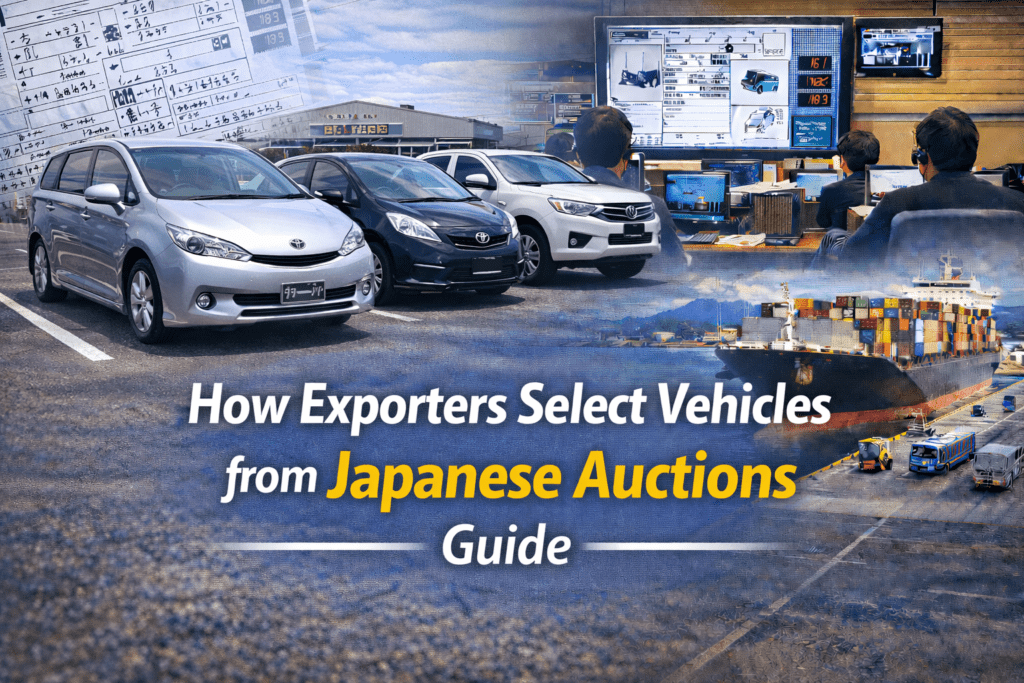

How Exporters Select Vehicles from Auctions
Search available auction vehicles here:
Browse Auction Vehicles
Introduction
Japanese car auctions are the backbone of the global used vehicle trade. Every week, hundreds of thousands of vehicles are listed across Japan. Exporters carefully select vehicles from these auctions to meet the needs of buyers worldwide.
If you are an overseas buyer, understanding how professional exporters choose vehicles will help you make better decisions. This guide explains the full process in simple terms.
How Japanese Car Auctions Work
Auction System Overview
Japanese car auctions operate through large auction houses such as USS, TAA, JU, and ARAI. These auctions are not open to the public. Only licensed dealers and exporters can participate.
- Thousands of vehicles listed daily
- Detailed inspection reports available
- Vehicles graded based on condition
- Live bidding system (online and on-site)
Vehicle Inspection and Grading
Each vehicle is inspected by professionals before the auction. The results are shown in an inspection sheet.
- Exterior condition (scratches, dents)
- Interior condition
- Engine and mechanical status
- Auction grade (e.g., 3.5, 4, 4.5, 5)
Exporters rely heavily on these reports to make decisions quickly.
How Exporters Select Vehicles from Auctions
Understanding Market Demand
Professional exporters do not choose vehicles randomly. They study market demand in each country.
- Africa: Durable SUVs and diesel trucks
- Caribbean: Compact cars and vans
- Oceania: 4WD vehicles and pickups
- Asia: Fuel-efficient compact cars
By understanding local needs, exporters can select vehicles that sell faster and perform better.
Checking Auction Grades and Reports
Exporters carefully read inspection sheets. A high auction grade usually means better condition, but price is also higher.
- Grade 4–5: Excellent condition
- Grade 3–3.5: Average condition
- RA: Accident history
Experienced exporters know how to balance price and condition.
Evaluating Mileage and Age
Mileage and vehicle age are key factors. Lower mileage vehicles are preferred, but older models may be more affordable.
- Low mileage = better reliability
- Older models = lower cost
- Balance depends on buyer budget
Inspecting Vehicle Photos and Details
Exporters review detailed photos provided by auction houses.
- Body condition
- Rust and corrosion
- Interior wear
- Engine bay condition
In some cases, exporters request additional photos or videos.
Checking Export Suitability
Not all vehicles are suitable for export. Exporters check:
- Import regulations of destination country
- Right-hand or left-hand drive requirements
- Age restrictions
- Emission standards
This step is critical to avoid import problems.
Benefits for Overseas Buyers
Access to a Wide Selection
Japanese auctions offer one of the largest vehicle selections in the world.
- Passenger cars
- Trucks and buses
- Construction machinery
- Special-purpose vehicles
Competitive Pricing
Auction prices are often lower than dealer prices. Buyers can save money while getting high-quality vehicles.
Transparent Vehicle Information
Inspection reports provide reliable and detailed information. This reduces risk for overseas buyers.
Step-by-Step Buying Process
1. Choose an Exporter
Select a trusted Japanese exporter who has access to auction systems.
2. Search for Vehicles
Use auction platforms to find vehicles that match your needs.
3. Request Advice
Exporters help you understand inspection reports and recommend suitable vehicles.
4. Place a Bid
You set a maximum price, and the exporter bids on your behalf.
5. Win the Auction
If your bid is successful, the vehicle is secured.
6. Payment and Shipping
After payment, the exporter arranges shipping and documentation.
Important Points to Consider
Hidden Costs
Always calculate the total cost, including:
- Auction fees
- Export fees
- Shipping costs
- Import duties and taxes
Vehicle Condition Risks
Even with inspection reports, some risks remain. This is why choosing a reliable exporter is important.
Shipping Time
Shipping can take several weeks depending on the destination.
Import Regulations
Each country has different rules. Always confirm before purchasing.
Why Use a Professional Export Company
Expert Knowledge
Export companies understand auction systems and vehicle quality.
Accurate Inspection Support
They can interpret inspection sheets and avoid risky vehicles.
Safe and Secure Transactions
Professional exporters provide secure payment processes and proper documentation.
Logistics and Shipping Support
They handle shipping, customs documents, and delivery arrangements.
Why EVERY TRADING is Your Best Partner
EVERY TRADING is a trusted Japanese used vehicle exporter. Since 2006, we have supplied vehicles to customers in over 100 countries.
- Access to all major Japanese auctions
- Wide range of vehicles
- Professional support for overseas buyers
- Fast and reliable export service
We make it easy for you to find and purchase the right vehicle from Japan.
Learn more about Japanese auctions:
Japanese Car Auction Guide
Start searching your vehicle from Japan today:
Search Auction Vehicles Now
If you are looking for any Japanese vehicles, cars and truck and bus for sale, please check our list.
The list of Japanese Used Truck, Bus, cars, and tractor exporter EVERYCAR.jp (*Click to open).We do our best work for all customer's partnership.
It's for SDGs goal number 17 "PARTNERSHIP FOR THE GOALS".
Let's work together!


