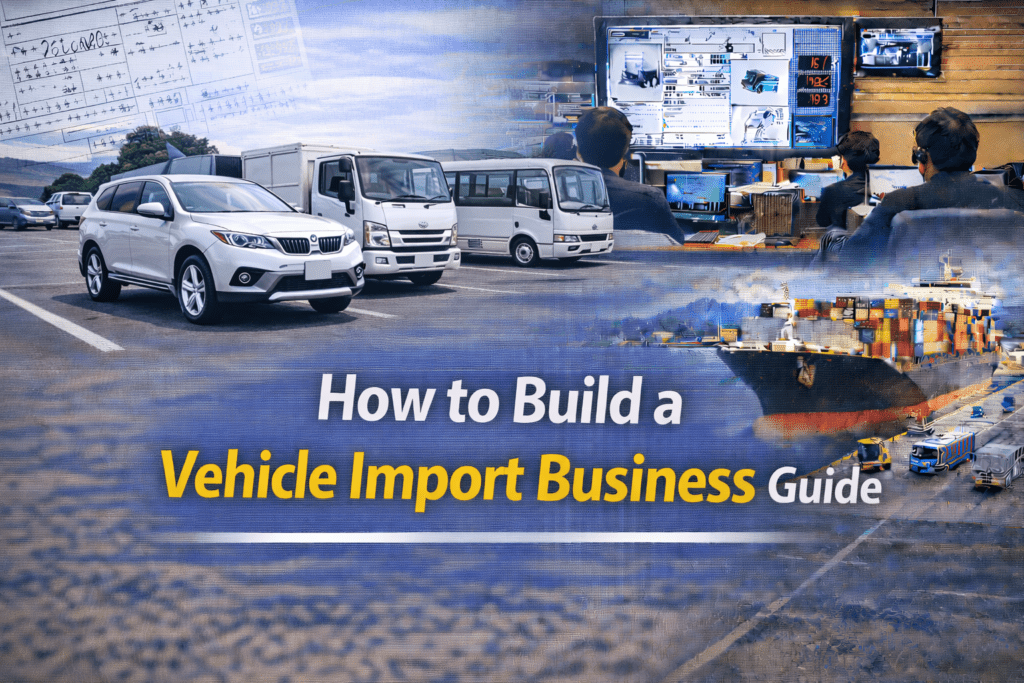

How to Build a Vehicle Import Business
Search available auction vehicles here:
Browse Auction Vehicles
Building a vehicle import business can be a smart way to grow in the used vehicle market. Japanese auctions give overseas buyers access to a wide range of cars, trucks, buses, tractors, and other commercial vehicles. For many businesses, this creates a strong opportunity to source reliable stock at competitive prices.
However, success does not come from buying random vehicles and hoping they will sell. A strong import business needs a clear market, a reliable supply route, a safe buying process, and good cost control. Buyers also need to understand how Japanese auctions work and why professional exporter support matters.
This guide explains how to build a vehicle import business step by step. You will learn how Japanese used vehicle auctions work, why overseas buyers use them, how to purchase vehicles safely, what risks to watch, and how a trusted export company can help you grow faster with less risk.
How the Japanese Used Vehicle Auction System Works
Japanese vehicle auctions are wholesale-style marketplaces. Most vehicles sold through these systems are handled by licensed dealers, exporters, and trade members rather than ordinary retail buyers. That is why overseas customers usually buy through a Japanese export company instead of entering the auction directly.
Each auction listing usually includes important information such as make, model, year, mileage, transmission type, fuel type, photos, and an auction inspection sheet. This auction sheet is one of the most useful tools for buyers because it gives a summary of the vehicle’s visible condition before bidding.
What an Auction Sheet Usually Shows
- Overall vehicle grade
- Interior grade
- Mileage or usage details
- Repair history notes
- Body damage marks such as scratches and dents
- Rust or corrosion notes
- Inspector comments
This structure helps buyers compare many vehicles in a short time. Instead of depending only on simple photos or seller explanations, they can review organized condition data before making a decision.
How Bidding Works
Vehicles are sold through competitive bidding on auction day. If the highest bid reaches the seller’s target level, the vehicle is sold. If not, it may remain unsold or return in a later auction. Because this process moves quickly, experienced buyers prepare in advance. They decide the target vehicle, safe bid range, and expected total cost before the auction begins.
Why Overseas Buyers Use Japanese Auctions
Japanese auctions are popular with overseas buyers because they offer scale, structure, and flexibility. Instead of relying on a small fixed stock list, importers can search a large volume of vehicles across different categories.
1. Large Vehicle Selection
One of the biggest advantages is variety. Japanese auctions list:
- Passenger cars
- Hybrid cars
- SUVs and 4WD vehicles
- Vans and minibuses
- Commercial trucks
- Buses
- Tractors and machinery
This gives import businesses more freedom to match stock to local demand.
2. Better Buying Opportunities
Auction buying often gives access to prices below normal retail stock levels. This can create room for stronger resale margin if the buyer chooses the right vehicle and controls the full landed cost.
3. Structured Condition Information
Auction sheets and photos help buyers compare several units more effectively. This does not remove all risk, but it makes professional decision-making easier.
4. Access Through Exporters
For overseas businesses, exporters make the market practical. They provide auction access, condition support, document handling, and shipping coordination.
What You Need Before Starting a Vehicle Import Business
Before you buy your first unit, you need a clear business plan. Many new buyers focus only on finding a cheap vehicle, but long-term success depends on planning, not only on purchase price.
Choose Your Target Market
Start with a clear market. Ask yourself:
- Which country or region will I sell in?
- What types of vehicles are most popular there?
- What price range do buyers expect?
- Which brands are trusted in that market?
- Are parts and service support available?
A strong import business starts with demand. If you do not know what local buyers want, even a cheap unit can become difficult to sell.
Choose the Right Vehicle Category
Not every business should start with the same vehicle type. Some markets perform well with compact cars. Others need pickup trucks, vans, buses, or agricultural machinery.
Examples:
- Compact cars for fuel-conscious city markets
- Pickup trucks for agriculture, utility, and construction use
- Vans for cargo and passenger transport
- Buses for tourism, school transport, or staff movement
- Tractors for farming regions
Understand Your Cost Structure
Import businesses succeed when cost control is strong. Your real cost is not only the auction price. You also need to include:
- Auction fees
- Exporter commission
- Inland transport in Japan
- Port handling
- Shipping cost
- Insurance if needed
- Import duty and local taxes
- Registration or compliance cost
- Repairs or preparation after arrival
This full cost is what decides whether the business stays profitable.
Step-by-Step Process to Build a Vehicle Import Business
Most successful businesses follow a clear process instead of buying without structure. The steps below create a practical foundation for steady growth.
Step 1: Define Your Business Model
Decide how you want to operate. Some importers resell directly to end users. Others supply local dealers. Some focus on one vehicle category, while others offer mixed stock.
Common business models include:
- Retail resale of imported used cars
- Wholesale supply to local dealers
- Commercial vehicle import for business clients
- Specialized import of buses, trucks, or tractors
Step 2: Research Local Demand
Before you buy, confirm what sells well in your area. Study:
- Popular brands and models
- Customer price range
- Road conditions
- Fuel preference
- Import restrictions
This step prevents you from bringing in stock that has low resale interest.
Step 3: Work with a Trusted Export Company
Choose an exporter with real auction experience and clear communication. The exporter will become a key partner in your sourcing process.
A good exporter helps with:
- Auction search access
- Auction sheet interpretation
- Condition advice
- Bidding support
- Document handling
- Shipping management
Step 4: Search and Compare Auction Vehicles
Do not buy the first vehicle you see. Compare several units of the same model when possible. Check mileage, grade, color, condition notes, and expected total cost.
Professional buyers often compare similar vehicles to find the best balance of price and resale value.
Step 5: Set a Safe Bid Limit
Your maximum bid should be based on the full landed cost and the expected resale price in your market. This protects profit and prevents emotional buying during a competitive auction.
Step 6: Purchase Through the Exporter
Once the right vehicle is identified, your exporter places the bid on auction day. If the vehicle is won within your target cost range, the process moves to payment and shipment.
Step 7: Arrange Shipping and Import
After purchase, the exporter handles inland movement, export documents, and shipping booking. When the vehicle arrives, you complete customs clearance and local registration according to your country’s rules.
Important Risks and Precautions
A vehicle import business can grow well, but only when risks are managed carefully. Many first-time buyers lose margin because they focus only on low purchase price.
Do Not Ignore Auction Sheet Notes
A low-grade or repair-history vehicle may still be acceptable in some cases, but only if the condition issues are clearly understood and priced correctly. Ignoring inspection notes is one of the fastest ways to lose money.
Check Import Regulations Before Buying
Each country has different rules. Some control:
- Vehicle age limits
- Emissions requirements
- Right-hand-drive rules
- Commercial vehicle restrictions
- Documentation standards
You should never bid before confirming that the vehicle can be imported and registered in your market.
Choose Vehicles with Strong Parts Support
Reliable resale depends on serviceability. If spare parts and mechanic knowledge are weak in your market, resale may become slower and customer satisfaction may fall.
Watch for Rust and Corrosion
Rust can hurt resale value and increase repair cost. This is especially important for coastal, humid, or heavy-use markets.
Avoid Overbidding
Some buyers lose money because they keep raising their bids during the auction. Smart buyers decide their maximum price in advance and stay disciplined.
How Dealers and Importers Find the Best Vehicles
Experienced importers do not only ask, “Is this vehicle cheap?” They ask, “Will this vehicle still leave good value after all costs?”
They Look for Market Fit
The best vehicle for business is the one that sells quickly and leaves profit. That means it matches local demand, customer expectations, and service conditions.
They Compare Condition and Cost Together
A slightly higher-priced vehicle may still be the smarter buy if it has better condition and lower repair need. Cheap vehicles can become expensive if they need too much work after arrival.
They Build a Repeatable Buying Process
Successful importers create a system. They use the same steps every time:
- Research demand
- Search stock
- Review condition
- Calculate full cost
- Set a bid limit
- Buy only when the margin is safe
This process creates consistency and helps the business grow more safely over time.
Why Use a Professional Export Company
A professional export company is one of the most valuable partners in a vehicle import business. For overseas buyers, it provides more than just auction access.
Access to Dealer-Only Auctions
Most overseas buyers cannot enter Japanese auctions directly. Exporters provide access to a much larger range of stock.
Better Condition Evaluation
Experienced exporters understand auction sheets, inspection symbols, and practical risk signs. This helps buyers avoid poor purchases.
Cost Planning Support
Good exporters help estimate the full cost before bidding. This is essential for protecting business margin.
Shipping and Documentation Management
They handle payment, inland transport, export paperwork, and shipping arrangements. That makes the full process smoother and reduces mistakes.
Long-Term Business Value
For repeat buyers, a trusted exporter becomes a long-term sourcing partner. This helps improve buying accuracy, speed, and consistency as the business grows.
Conclusion
Building a vehicle import business can be a strong opportunity for overseas buyers who want to grow in the used vehicle trade. Japanese auctions provide access to a large supply of stock, structured vehicle information, and real buying opportunities across many categories.
However, a successful import business depends on planning, not only on price. You need to know your market, choose the right vehicle category, calculate the full landed cost, manage risk carefully, and stay disciplined during bidding.
EVERY TRADING is a Japanese used vehicle export company serving customers around the world. We help buyers search Japanese auction vehicles, choose stock that fits their business goals, and move through the purchase and export process with confidence.
Learn more about Japanese auctions:
Japanese Car Auction Guide
Start searching your vehicle from Japan today:
Search Auction Vehicles Now
If you are looking for any Japanese vehicles, cars and truck and bus for sale, please check our list.
The list of Japanese Used Truck, Bus, cars, and tractor exporter EVERYCAR.jp (*Click to open).We do our best work for all customer's partnership.
It's for SDGs goal number 17 "PARTNERSHIP FOR THE GOALS".
Let's work together!


