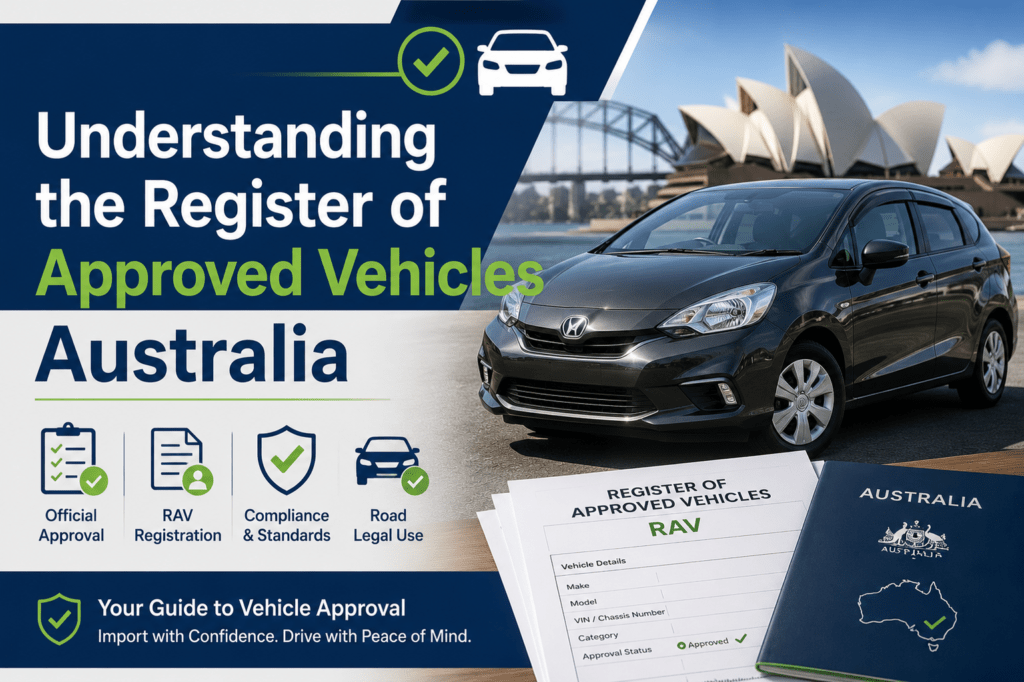

Understanding the Register of Approved Vehicles in Australia: Complete Guide for Importing Japanese Vehicles
Australia remains one of the most attractive destinations for Japanese used vehicles. Buyers appreciate Japanese cars, trucks, SUVs, and commercial vehicles because they offer outstanding reliability, low mileage, and excellent value.
However, importing a vehicle into Australia requires more than purchasing and shipping a vehicle. Importers must also understand Australian compliance requirements.
One important part of the process is the Register of Approved Vehicles, commonly known as the RAV.
Many first-time buyers hear about the RAV but do not fully understand its purpose. Fortunately, the system becomes easier to understand once you know how it works.
This guide explains the Register of Approved Vehicles, why it matters, and how it affects vehicle imports from Japan to Australia.
What Is the Register of Approved Vehicles (RAV)?
The Register of Approved Vehicles is an official database used by the Australian Government.
The system records vehicles that have received approval to enter the Australian market.
In simple terms, a vehicle generally needs to appear on the RAV before it can be registered for road use in Australia.
Therefore, the RAV plays a critical role in the vehicle import process.
Without proper approval and inclusion on the register, registration can become difficult or impossible.
Why Was the RAV Introduced?
Australia introduced the Register of Approved Vehicles to improve transparency and efficiency.
Previously, vehicle approval processes involved more paperwork and multiple steps.
Today, the RAV helps simplify the process.
As a result, authorities can verify vehicle approval status more easily.
Additionally, buyers gain greater confidence when importing vehicles.
The system also supports compliance with Australian safety and environmental standards.
Why the RAV Matters to Vehicle Importers
Many buyers focus on vehicle prices, shipping costs, and auction results.
However, approval status is equally important.
The Register of Approved Vehicles helps ensure that imported vehicles meet Australian requirements.
Therefore, understanding the RAV can help buyers avoid costly mistakes.
Furthermore, it reduces uncertainty during registration.
A vehicle listed on the register has already completed an important step toward legal road use.
How the RAV Fits Into the Import Process
The RAV forms part of the broader vehicle import system.
A typical import process includes:
- Selecting a vehicle
- Applying for vehicle import approval
- Shipping the vehicle from Japan
- Completing compliance requirements
- Entering the vehicle into the RAV
- Registering the vehicle
Because several steps depend on each other, proper planning is essential.
Consequently, successful importers prepare well before shipment begins.
Relationship Between ROVER and the RAV
Many buyers confuse ROVER and the RAV.
Although they are connected, they serve different purposes.
ROVER
ROVER is the online platform used to manage vehicle approvals and compliance processes.
Users submit applications and manage vehicle information through ROVER.
RAV
The Register of Approved Vehicles is the official database that records approved vehicles.
Therefore, ROVER manages the process, while the RAV records approved outcomes.
Understanding this difference helps importers navigate the system more confidently.
Which Vehicles Need RAV Approval?
Many imported vehicles require approval before registration.
Common examples include:
- Passenger vehicles
- SUVs
- Light commercial vehicles
- Trucks
- Utility vehicles
- Specialty vehicles
As a result, most importers should understand how the RAV affects their purchase.
Checking approval requirements before buying a vehicle is always recommended.
Benefits of Buying Japanese Vehicles for Australia
Japanese vehicles continue to attract Australian buyers for several reasons.
Excellent Reliability
Japanese manufacturers have built strong reputations worldwide.
Consequently, many imported vehicles provide years of dependable service.
Low Mileage
Japanese vehicles often accumulate fewer kilometres than comparable vehicles in other markets.
Therefore, buyers frequently find high-quality options.
Wide Vehicle Selection
Japanese auctions offer thousands of vehicles every week.
Furthermore, buyers can compare many models and specifications.
Competitive Pricing
Direct imports often provide better value than local alternatives.
As a result, many businesses and private buyers choose Japanese vehicle imports.
How Vehicles Enter the Register of Approved Vehicles
Vehicles do not automatically appear on the register.
Instead, they must satisfy specific requirements.
The process generally includes:
- Approval review
- Vehicle assessment
- Compliance verification
- Documentation review
Once requirements are satisfied, the vehicle can be entered into the register.
Consequently, the vehicle moves closer to registration eligibility.
Information Recorded on the RAV
The Register of Approved Vehicles contains important vehicle information.
This may include:
- Vehicle make
- Vehicle model
- Vehicle category
- Approval details
- Compliance information
Therefore, authorities can quickly verify vehicle approval status.
The system also helps improve transparency throughout the import process.
Common Mistakes Importers Make
Many import delays occur because buyers overlook compliance requirements.
Fortunately, most issues can be avoided.
Focusing Only on Purchase Price
A low purchase price does not guarantee successful importation.
Therefore, approval requirements should always be reviewed first.
Ignoring Compliance Information
Some buyers assume every vehicle qualifies automatically.
However, eligibility requirements may vary.
Incomplete Documentation
Missing paperwork often creates unnecessary delays.
Consequently, organized documentation is extremely important.
Waiting Too Long
Some buyers begin compliance planning after the vehicle ships.
Instead, planning should start before purchase.
Tips for a Smooth Approval Process
Several simple strategies can improve the import experience.
Work With an Experienced Exporter
Professional exporters understand vehicle documentation requirements.
Therefore, they can help reduce errors.
Verify Vehicle Details Early
Always confirm vehicle information before submitting applications.
Accurate information helps prevent delays.
Keep Copies of Every Document
Digital copies provide quick access when information is requested.
Furthermore, organized records improve efficiency.
Understand Compliance Requirements
Learning about Australian regulations before purchasing helps avoid surprises later.
As a result, buyers can make better purchasing decisions.
Why Japanese Vehicle Auctions Are Popular
Japanese vehicle auctions provide one of the largest vehicle marketplaces in the world.
Benefits include:
- Thousands of vehicles available weekly
- Detailed inspection reports
- Competitive pricing
- Transparent vehicle grading
- Access to commercial vehicles
Therefore, many Australian importers use Japanese auction networks to source inventory.
Popular Japanese Vehicles Imported Into Australia
Australian buyers frequently import:
SUVs
Popular for family use, touring, and off-road driving.
Commercial Trucks
Widely used in transport, logistics, farming, and construction.
Utility Vehicles
Suitable for both business and personal use.
Specialty Vehicles
Many enthusiasts import unique Japanese vehicles unavailable through local dealerships.
As a result, Japanese imports continue to attract a wide range of buyers.
How EVERY TRADING Supports Australian Buyers
EVERY TRADING helps customers import vehicles from Japan safely and efficiently.
Our services include:
- Access to Japanese vehicle auctions
- Professional vehicle inspections
- Export documentation support
- Vehicle sourcing assistance
- Worldwide shipping solutions
- Fast customer communication
In addition, our experienced team helps buyers understand import procedures and prepare necessary documentation.
This reduces risk and creates a smoother importing experience.
Frequently Asked Questions About the RAV
Can I Register a Vehicle Without the RAV?
The Register of Approved Vehicles plays an important role in the registration pathway.
Therefore, approval status should always be verified.
Does Every Imported Vehicle Follow the Same Process?
Requirements can vary depending on the vehicle type and approval pathway.
Consequently, buyers should review the specific requirements for their vehicle.
Can an Exporter Help With Documentation?
Yes. Experienced exporters often assist buyers with vehicle information and export documents.
This support can significantly improve efficiency.
Conclusion
The Register of Approved Vehicles is a key part of Australia's vehicle import system.
Although many buyers focus on shipping and vehicle prices, understanding the RAV is equally important.
The register helps confirm that imported vehicles meet approval requirements and move closer to legal registration.
Furthermore, understanding the relationship between ROVER, compliance requirements, and the RAV helps buyers avoid costly mistakes.
By planning early, preparing proper documentation, and working with trusted exporters, Australian buyers can import Japanese vehicles with greater confidence.
If you are looking for professional support, vehicle inspections, auction access, and export expertise, EVERY TRADING is ready to help you source and import quality vehicles directly from Japan.


Browse Reliable Used Trucks & Buses from Japan
Carefully selected vehicles ready for export worldwide
Search 100,000+ Dealer Stock Vehicles from Japan
Access a wide selection of vehicles from Japanese dealers nationwide. Updated daily.
