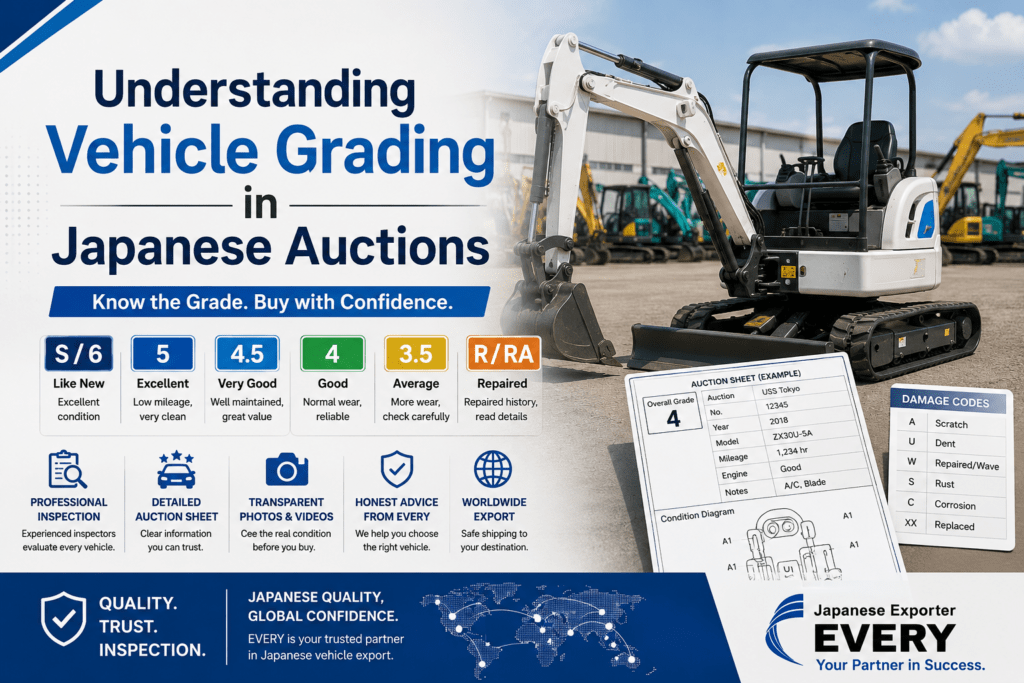

Understanding Vehicle Grading in Japanese Auctions: The Complete Guide to Buying with Confidence
Japanese used vehicle auctions are trusted by buyers around the world. Every week, thousands of cars, trucks, buses, tractors, and construction machines are sold through professional auction houses. One of the biggest reasons for this trust is the Japanese auction grading system.
For first-time buyers, auction grades may seem confusing. What does Grade 4 mean? Is Grade 3.5 still a good vehicle? What is an R Grade? Understanding these grades can help you choose the right vehicle while avoiding unnecessary risks.
At EVERY, we help customers understand auction grades before they purchase. We explain inspection reports clearly and provide honest advice so buyers can make informed decisions.
This guide explains how Japanese vehicle grading works, what each grade means, and how you can use grading information to buy with confidence.
What Is a Japanese Auction Grade?
A Japanese auction grade is a professional evaluation of a vehicle's overall condition.
Before the auction begins, trained inspectors carefully examine each vehicle.
They review:
- Exterior condition
- Interior condition
- Mechanical appearance
- Mileage
- Repair history
- Modifications
- Visible damage
After the inspection, they assign an overall grade.
This grade helps buyers quickly understand the vehicle's condition before bidding.
Why Auction Grades Matter
Buying a vehicle from another country requires trust.
Auction grades provide an independent opinion about the vehicle's condition.
As a result, buyers can:
- Compare different vehicles
- Estimate overall quality
- Understand repair history
- Reduce purchasing risk
- Make better bidding decisions
However, auction grades should never be the only factor.
EVERY recommends reviewing the complete auction sheet together with photos and inspection reports.
Who Assigns the Auction Grade?
Professional inspectors employed by each auction house assign vehicle grades.
These inspectors follow standardized procedures.
They carefully evaluate every visible part of the vehicle before the auction.
Although grading standards vary slightly between auction companies, the overall system remains very consistent across Japan.
Common Japanese Auction Grades
Most Japanese auction houses use similar grading systems.
Below are the most common grades.
Grade S
Grade S usually indicates a nearly new vehicle.
These vehicles often have:
- Very low mileage
- Excellent condition
- Minimal wear
- No significant damage
Grade S vehicles are uncommon in the used vehicle market.
Grade 6
Grade 6 vehicles are also very close to new.
They normally feature:
- Extremely low mileage
- Excellent appearance
- Very clean interior
- Outstanding overall condition
Many buyers searching for premium vehicles prefer this grade.
Grade 5
Grade 5 represents excellent used vehicle condition.
These vehicles usually offer:
- Low mileage
- Very clean exterior
- Clean interior
- Few cosmetic imperfections
Grade 5 vehicles remain highly popular among international buyers.
Grade 4.5
Grade 4.5 vehicles provide excellent value.
They often include:
- Light cosmetic wear
- Well-maintained condition
- Strong mechanical performance
- Attractive appearance
Many experienced buyers actively search for Grade 4.5 vehicles.
Grade 4
Grade 4 is one of the most common auction grades.
These vehicles generally have:
- Normal wear
- Good maintenance
- Minor scratches
- Small dents
- Reliable mechanical condition
Many exported trucks, buses, and passenger vehicles fall into this category.
Grade 4 often offers an excellent balance between quality and price.
Grade 3.5
Grade 3.5 vehicles usually show more visible wear.
Typical characteristics include:
- Additional scratches
- Interior wear
- Higher mileage
- Minor repairs
Nevertheless, many Grade 3.5 vehicles still provide dependable performance.
Proper inspection becomes especially important for this grade.
Grade 3
Grade 3 vehicles often require closer evaluation.
They may have:
- Noticeable cosmetic damage
- Higher mileage
- Interior wear
- Previous repairs
However, some Grade 3 vehicles remain mechanically reliable.
EVERY carefully reviews these vehicles before recommending them.
Grade 2
Grade 2 vehicles often have significant wear or special conditions.
These vehicles usually require experienced buyers.
Additional inspections become very important before purchase.
Grade 1
Grade 1 often indicates a heavily modified vehicle or one with unusual history.
Buyers should carefully review the auction sheet before bidding.
Grade R
Grade R means the vehicle has undergone repair following an accident or structural damage.
This does not automatically mean the vehicle is poor quality.
Many repaired vehicles continue operating safely.
However, buyers should understand:
- What repairs occurred
- Repair quality
- Current condition
EVERY explains these details clearly whenever an R Grade vehicle is considered.
Grade RA
Grade RA usually indicates lighter structural repairs than some R Grade vehicles.
Even so, buyers should review the inspection report carefully before purchasing.
Interior Grades
Japanese auctions also assign separate interior grades.
These usually include:
- A — Excellent
- B — Good
- C — Average wear
- D — Heavy wear
Interior grades help buyers evaluate cabin condition before export.
Exterior Condition Diagram
Auction sheets often include a vehicle diagram.
Inspectors mark visible damage using symbols.
Common examples include:
- A = Scratch
- U = Dent
- W = Repaired panel
- S = Rust
- C = Corrosion
- XX = Replaced panel
Each symbol usually includes a number indicating the severity.
Learning these symbols helps buyers understand vehicle condition more accurately.
Why Auction Grades Are Not Everything
Auction grades provide valuable information.
However, they never tell the complete story.
Buyers should also review:
- Auction comments
- Vehicle photographs
- Inspection reports
- Maintenance history
- Engine condition
- Vehicle usage
EVERY combines all of this information before recommending a vehicle.
How EVERY Helps Buyers Understand Auction Grades
Many first-time buyers find auction sheets difficult to read.
Our experienced team explains:
- Auction grades
- Inspector comments
- Damage symbols
- Vehicle strengths
- Repair history
- Overall condition
We translate technical information into clear and simple language.
As a result, customers can purchase with greater confidence.
Why Transparency Matters
Honest communication builds long-term trust.
EVERY never hides vehicle information.
Instead, we explain:
- Cosmetic damage
- Previous repairs
- Inspection observations
- Auction notes
- Vehicle strengths
Transparency helps buyers avoid unexpected surprises after delivery.
Tips for Choosing the Right Auction Grade
The best auction grade depends on your budget and business goals.
For example:
Premium Buyers
Choose Grades 5 or 4.5 for excellent condition.
Value Buyers
Grade 4 often offers the best balance between quality and price.
Experienced Buyers
Grades 3.5 or 3 may provide excellent value after careful inspection.
Every buyer has different priorities.
EVERY helps match the right vehicle to your needs.
Benefits of Buying Through EVERY
When you purchase through EVERY, you receive:
- Professional auction advice
- Honest vehicle evaluations
- Auction sheet explanations
- Detailed photographs
- Inspection support
- Export documentation
- Worldwide shipping assistance
Our goal is to make Japanese vehicle auctions easy to understand for every customer.
Frequently Asked Questions
Is Grade 4 a good auction grade?
Yes. Grade 4 is one of the most popular grades because it offers good condition, reliable performance, and excellent value.
Should I avoid R Grade vehicles?
Not necessarily. Many R Grade vehicles have been professionally repaired. However, you should always review the repair history and inspection report carefully.
Are auction grades the same at every auction?
The grading systems are very similar, although minor differences may exist between auction houses.
Can EVERY explain auction sheets?
Yes. Our experienced staff explains auction grades, damage symbols, inspector comments, and overall vehicle condition before purchase.
Why should I buy through EVERY?
EVERY provides professional guidance, transparent communication, honest inspections, and worldwide export support so buyers can purchase with confidence.
Buy Smarter by Understanding Japanese Auction Grades
Japanese auction grades are one of the biggest reasons buyers around the world trust vehicles from Japan. They provide valuable information about condition, appearance, and repair history before a vehicle is purchased.
However, the smartest buying decisions come from combining auction grades with professional inspections, detailed photographs, maintenance history, and honest advice.
At EVERY, we help customers understand every detail before they buy. Our experienced team explains auction sheets clearly, verifies vehicle condition, and provides transparent support throughout the export process.
If you are looking for a trusted Japanese exporter that helps you understand auction grades and purchase with confidence, EVERY is ready to help you find the right vehicle for your business.


Browse Reliable Used Trucks & Buses from Japan
Carefully selected vehicles ready for export worldwide
Search 100,000+ Dealer Stock Vehicles from Japan
Access a wide selection of vehicles from Japanese dealers nationwide. Updated daily.
