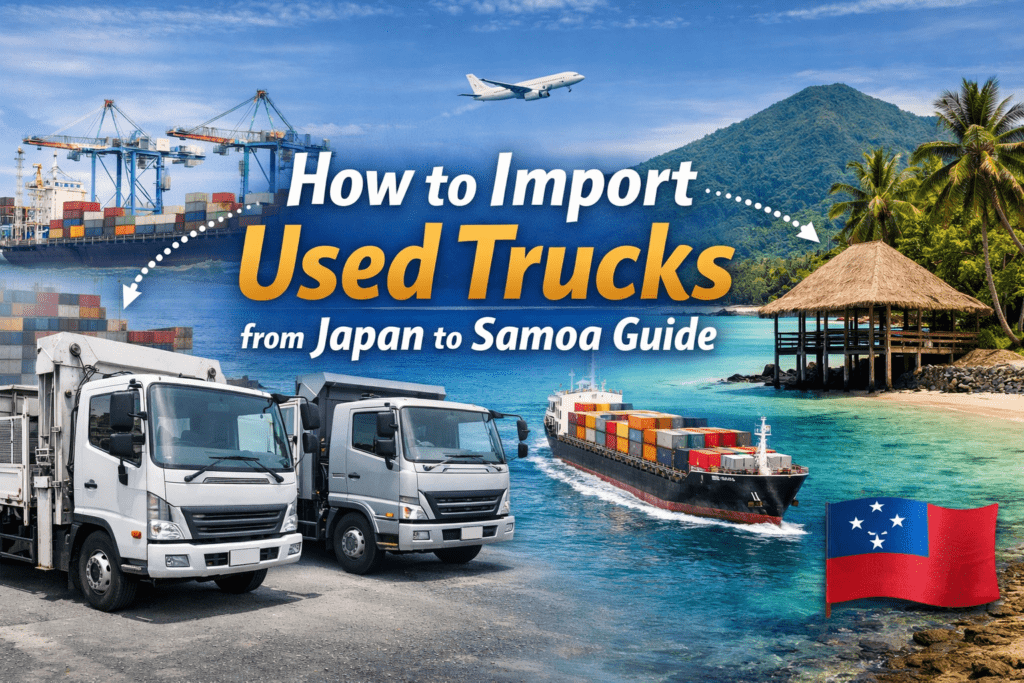

How to Import Used Trucks from Japan to Samoa: The Complete Step-by-Step Guide for Smart Buyers
Japanese used trucks have earned a strong reputation across the Pacific. They offer excellent quality, impressive durability, and outstanding value. As a result, many businesses in Samoa choose Japanese trucks for transportation, construction, farming, and delivery services.
However, importing a truck involves more than choosing the right vehicle. You also need to understand the shipping process, required documents, customs procedures, and local regulations.
Fortunately, the process is much easier when you follow the right steps. This guide explains everything you need to know before importing a used truck from Japan to Samoa.
Why Import Used Trucks from Japan?
Japanese trucks are trusted around the world for several important reasons.
Excellent Reliability
Japanese manufacturers build trucks that last for many years. Even after years of use, many vehicles continue to perform well with proper maintenance.
Affordable Prices
Buying a used truck from Japan often costs much less than purchasing a similar vehicle locally. Therefore, buyers can reduce investment costs while receiving high-quality equipment.
Wide Selection
Japan's large vehicle market offers thousands of trucks every week. You can choose from:
- Light-duty trucks
- Medium-duty trucks
- Heavy-duty trucks
- Flatbed trucks
- Dump trucks
- Refrigerated trucks
- Crane trucks
- Box trucks
- Cargo trucks
Because of this variety, buyers can find vehicles that match almost every business need.
Well-Maintained Vehicles
Many Japanese owners maintain their vehicles carefully. In addition, regular inspections help keep trucks in good condition.
Step 1: Decide Which Truck Fits Your Business
Before searching for trucks, think about how you will use the vehicle.
Ask yourself several questions.
- What cargo will you transport?
- How much weight will you carry?
- Will you drive mainly in cities or rural areas?
- Do you need four-wheel drive?
- How often will the truck operate?
Clear answers help narrow your choices quickly.
Step 2: Choose a Trusted Japanese Exporter
Your exporter plays a major role throughout the import process.
A professional exporter will:
- Find suitable trucks
- Explain vehicle conditions honestly
- Prepare export documents
- Arrange shipping
- Answer your questions quickly
- Support you until delivery
Good communication also makes the buying process much smoother.
Step 3: Select the Right Truck
After choosing an exporter, begin searching for available trucks.
Pay attention to:
- Manufacturing year
- Mileage
- Engine size
- Vehicle grade
- Service history
- Rust condition
- Tire condition
- Interior condition
- Exterior condition
Furthermore, request detailed photos and inspection reports before making your decision.
Step 4: Confirm the Vehicle Price
The vehicle price usually includes only the truck itself.
Before purchasing, ask for a complete quotation that clearly shows every cost.
Common costs include:
- Vehicle price
- Inland transportation
- Export handling
- Shipping charges
- Insurance
- Destination charges
- Customs fees
- Local registration costs
Knowing the total cost helps you plan your budget with confidence.
Step 5: Complete the Purchase
Once you approve the quotation, you can complete the payment.
Most exporters provide secure international payment methods.
After payment confirmation, the exporter prepares the truck for export.
Meanwhile, shipping arrangements begin immediately.
Step 6: Prepare the Export Documents
Several important documents are required during the export process.
These usually include:
- Commercial Invoice
- Bill of Lading (B/L)
- Export Certificate
- Packing List (when required)
- Inspection documents (if applicable)
Always keep digital and printed copies for future reference.
Step 7: Ship the Truck to Samoa
Most trucks travel by Roll-on/Roll-off (RoRo) shipping.
RoRo shipping offers several advantages.
- Lower shipping costs
- Simple loading process
- Safe transportation
- Faster handling
- Suitable for operational vehicles
Container shipping is another option. It may provide extra protection and can also carry spare parts or accessories.
Choose the shipping method that best fits your budget and requirements.
Step 8: Complete Customs Clearance in Samoa
When the truck arrives, customs clearance begins.
Prepare all required documents before the vessel arrives.
Normally, customs authorities review:
- Commercial Invoice
- Bill of Lading
- Export Certificate
- Import documents
- Identification documents
Submitting accurate paperwork helps avoid unnecessary delays.
Step 9: Pay Import Duties and Local Charges
Import costs may include:
- Import duty
- Taxes
- Port handling fees
- Customs processing fees
- Registration costs
Since regulations may change, confirm the latest requirements before importing.
Proper planning helps prevent unexpected expenses.
Step 10: Register the Truck
After customs clearance, complete the local registration process.
Registration allows you to legally operate the truck in Samoa.
Depending on local requirements, you may also need inspections before registration is completed.
Popular Japanese Truck Brands
Many buyers in Samoa prefer Japanese manufacturers because they combine durability with low operating costs.
Popular brands include:
- Isuzu
- Hino
- Mitsubishi Fuso
- Toyota
- Nissan UD
Each manufacturer offers trucks designed for different industries and transport needs.
Tips for First-Time Importers
If this is your first import, these practical tips can help.
- Work with experienced exporters.
- Compare several truck options.
- Review inspection reports carefully.
- Confirm every cost before payment.
- Keep all documents organized.
- Ask questions whenever something is unclear.
- Plan your budget for local expenses.
- Allow enough time for shipping.
Small preparations today can prevent major problems later.
Common Mistakes to Avoid
Many first-time buyers make similar mistakes.
Avoid these common problems.
- Buying only because of a low price
- Ignoring inspection reports
- Forgetting local registration requirements
- Underestimating shipping costs
- Missing important documents
- Choosing inexperienced exporters
Learning from these mistakes saves both time and money.
Why Many Businesses in Samoa Choose Japanese Trucks
Businesses across Samoa continue choosing Japanese trucks because they deliver dependable performance every day.
These trucks offer:
- Strong resale value
- Reliable engines
- Fuel efficiency
- Long service life
- Easy maintenance
- Excellent parts availability
- Proven durability
As businesses grow, dependable transportation becomes even more important.
Why Choose EVERY TRADING?
EVERY TRADING has supplied quality Japanese vehicles to customers worldwide for many years.
Our experienced team supports buyers through every stage of the process.
We provide:
- Access to thousands of vehicles
- Honest vehicle information
- Professional export support
- Fast communication
- Worldwide shipping
- Careful document preparation
- Reliable customer service
Whether you are buying your first truck or expanding your fleet, we are ready to help.
Final Thoughts
Importing a used truck from Japan to Samoa is a smart investment when you understand the process.
First, choose the right truck. Next, work with a trusted exporter. Then, prepare the necessary documents and complete customs procedures carefully.
With proper planning, importing becomes simple, safe, and cost-effective.
If you are ready to purchase a reliable Japanese used truck, EVERY TRADING is here to support you from Japan to Samoa every step of the way.


Browse Reliable Used Trucks & Buses from Japan
Carefully selected vehicles ready for export worldwide
Search 100,000+ Dealer Stock Vehicles from Japan
Access a wide selection of vehicles from Japanese dealers nationwide. Updated daily.
