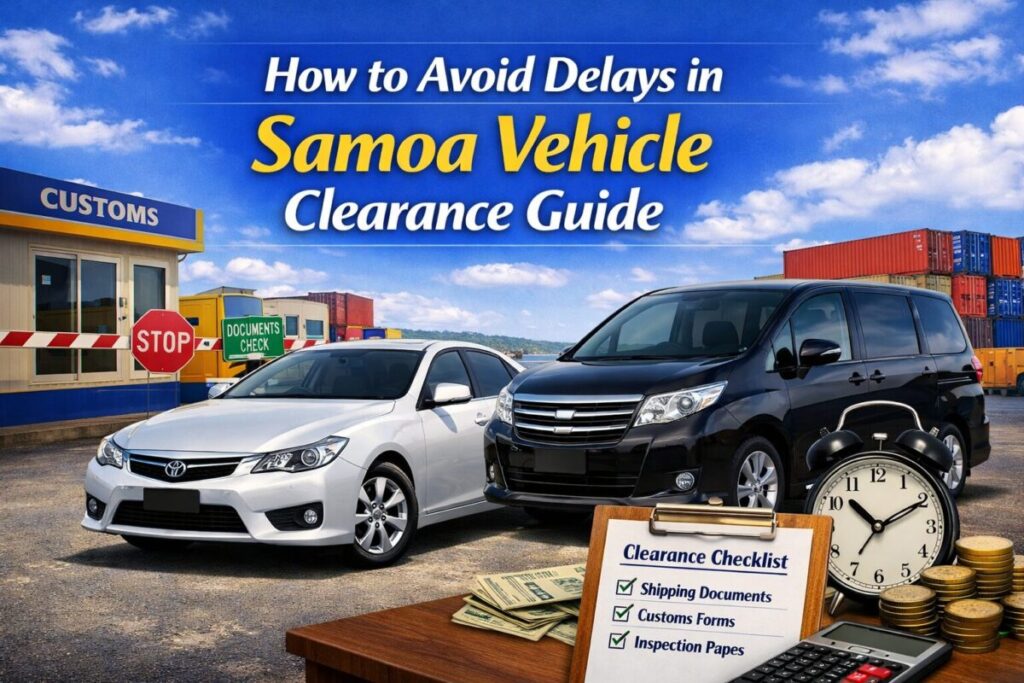

How to Avoid Delays in Samoa Vehicle Clearance: A Complete Guide for Faster Imports from Japan
Importing a used vehicle from Japan to Samoa is an excellent way to purchase a reliable truck, van, SUV, or passenger car at a competitive price. Japanese vehicles are trusted worldwide because they offer outstanding quality, excellent fuel efficiency, and long-lasting performance. However, even the best vehicle can become expensive if customs clearance takes longer than expected.
Many import delays happen because of simple mistakes. Missing documents, incorrect paperwork, late payments, or poor communication can all slow the customs process. Fortunately, most delays are easy to avoid with proper planning.
This guide explains the most common reasons for customs delays in Samoa and shares practical tips to help you clear your imported vehicle quickly and smoothly.
Why Fast Vehicle Clearance Matters
Every extra day at the port may increase your costs.
Delays can lead to:
- Additional storage fees
- Higher port handling charges
- Business interruptions
- Delivery delays
- Registration postponements
- Unnecessary stress
Therefore, preparing before your shipment arrives is one of the smartest decisions you can make.
Understand the Samoa Vehicle Clearance Process
Before learning how to avoid delays, it helps to understand the overall import process.
The basic steps include:
- Vehicle shipment from Japan
- Arrival at Apia Port
- Customs declaration
- Customs valuation
- Payment of duties and taxes
- Vehicle inspection
- Customs release
- Vehicle registration
Each step depends on accurate documentation and timely action.
Prepare Your Documents Before the Ship Arrives
Document preparation is the most important way to prevent customs delays.
Collect every required document before the vessel reaches Samoa.
Typical documents include:
- Original Bill of Lading
- Commercial Invoice
- Japanese Export Certificate
- Customs Declaration
- Importer's Identification
- Payment records
Having everything ready allows customs officers to begin processing immediately.
Double-Check Every Vehicle Detail
Many clearance problems happen because information does not match.
Always verify:
- Vehicle Identification Number (VIN)
- Engine number
- Chassis number
- Vehicle make
- Model
- Year of manufacture
Every document should contain identical information.
Even one incorrect number can delay customs approval.
Submit Customs Documents Early
Do not wait until the vehicle arrives.
Whenever possible, prepare and submit your paperwork before the ship reaches Apia Port.
Early submission gives customs officers more time to review your documents.
As a result, clearance often becomes much faster.
Pay Import Duties and Taxes Promptly
Customs cannot release your vehicle until all required payments have been completed.
These payments may include:
- Import Duty
- Goods and Services Tax (GST)
- Customs processing fees
- Port handling charges
Preparing your budget in advance helps you avoid unnecessary waiting.
Track Your Shipment Carefully
Knowing your shipment schedule helps you prepare every stage of the import process.
Ask your exporter for:
- Vessel name
- Voyage number
- Estimated Time of Arrival (ETA)
- Shipping updates
Regular shipment tracking reduces last-minute surprises.
Work with an Experienced Exporter
Choosing the right exporter makes a significant difference.
An experienced exporter can help you:
- Prepare accurate documents
- Arrange shipping
- Explain customs procedures
- Avoid common mistakes
- Respond quickly to customs questions
Professional support often saves both time and money.
Respond Quickly to Customs Requests
Sometimes customs officers request additional information.
Examples include:
- Document clarification
- Ownership confirmation
- Invoice verification
- Vehicle information
Reply as soon as possible.
Fast communication keeps your clearance process moving.
Make Sure the Vehicle Is Properly Cleaned
Imported vehicles should arrive in clean condition.
Excess dirt, mud, or plant material may create inspection issues.
Before shipping, ask your exporter to ensure the vehicle is thoroughly cleaned.
A clean vehicle helps inspections proceed more smoothly.
Verify Customs Valuation Documents
Customs calculates import duties using the declared vehicle value.
Therefore, your documents should accurately reflect:
- Purchase price
- Freight charges
- Marine insurance
- Vehicle information
Honest documentation helps prevent unnecessary questions during customs review.
Prepare for Vehicle Inspection
Some imported vehicles require inspection before release.
Inspectors may examine:
- VIN number
- Engine number
- Exterior condition
- Safety equipment
- Shipping damage
Keeping your documents organized helps the inspection proceed efficiently.
Collect Your Vehicle Quickly
After customs approves your shipment, collect the vehicle as soon as possible.
Waiting too long can increase:
- Storage fees
- Port charges
- Handling expenses
Quick collection also allows you to begin registration sooner.
Common Mistakes That Cause Delays
Many importers experience avoidable problems.
Fortunately, these mistakes are easy to prevent.
Missing Documents
Incomplete paperwork remains one of the most common causes of customs delays.
Always use a document checklist before shipping.
Incorrect VIN or Engine Numbers
Every number must match across all documents.
Double-check everything before submission.
Late Duty Payments
Delaying payment postpones customs release.
Prepare your funds before the shipment arrives.
Poor Communication
Ignoring customs requests creates unnecessary waiting.
Maintain regular communication throughout the process.
Choosing an Inexperienced Exporter
Export experience matters.
A knowledgeable exporter understands documentation, shipping, and customs requirements.
Practical Tips for Faster Clearance
Experienced importers follow several simple habits.
Organize Every Document
Keep paper copies and digital backups.
Good organization prevents confusion.
Monitor Shipping Progress
Follow your shipment from Japan to Samoa.
Knowing the arrival date helps you plan every step.
Ask Questions Early
If you are unsure about customs requirements, ask before shipping.
Early answers prevent costly mistakes.
Budget for Every Expense
Prepare for:
- Import Duty
- GST
- Shipping charges
- Port fees
- Registration costs
Financial preparation prevents unnecessary delays.
Stay Flexible
Sometimes weather or shipping schedules change.
Planning extra time helps reduce stress.
Why Japanese Used Vehicles Continue to Be the Best Choice
Despite the import process, Japanese vehicles remain one of the smartest investments for Samoan buyers.
They offer:
- Outstanding reliability
- Excellent fuel economy
- Affordable maintenance
- Long service life
- Strong resale value
- High-quality engineering
These advantages continue long after customs clearance is complete.
Popular Japanese Vehicles Imported into Samoa
Many businesses choose dependable commercial vehicles from Japan.
Popular models include:
Toyota Dyna
A trusted truck for construction, delivery, and agriculture.
Toyota ToyoAce
Reliable, economical, and easy to maintain.
Isuzu Elf
One of the world's most successful light-duty trucks.
Mitsubishi Fuso Canter
Well known for durability and fuel efficiency.
Nissan Atlas
An excellent option for local transportation.
Toyota Hiace
Ideal for passenger transport, tourism, and business operations.
These vehicles continue to perform exceptionally well throughout Samoa.
Why Choose EVERY TRADING?
EVERY TRADING has helped customers worldwide import high-quality Japanese vehicles with confidence.
Our services include:
- Access to Japanese vehicle auctions
- Professional vehicle inspections
- Complete export documentation
- Worldwide shipping
- Customs support
- Fast customer communication
- Reliable after-sales service
Whether you are importing one truck or building an entire fleet, our experienced team supports you from vehicle selection to successful delivery in Samoa.
Frequently Asked Questions
What causes the biggest customs delays?
Missing documents, incorrect vehicle information, late payments, and incomplete paperwork are the most common reasons.
Can I speed up customs clearance?
Yes. Preparing documents early, paying duties promptly, and working with an experienced exporter significantly improve the process.
Should I use a customs broker?
Many importers choose customs brokers because they simplify paperwork and help avoid delays.
Why is shipment tracking important?
Shipment tracking helps you prepare documents, arrange payments, and schedule customs procedures before arrival.
Why buy Japanese used vehicles?
Japanese vehicles deliver excellent reliability, strong performance, affordable maintenance, and long-term value.
Final Thoughts
Avoiding delays during vehicle clearance in Samoa starts with careful preparation. Accurate paperwork, early document submission, prompt payment of duties, and clear communication with customs all contribute to a faster and smoother import process.
Japanese used vehicles continue to be an excellent choice for buyers in Samoa because they combine quality, reliability, and outstanding value. By partnering with EVERY TRADING, you gain expert support throughout every stage of the journey—from selecting the right vehicle in Japan to successful customs clearance and delivery at Apia Port.


Browse Reliable Used Trucks & Buses from Japan
Carefully selected vehicles ready for export worldwide
Search 100,000+ Dealer Stock Vehicles from Japan
Access a wide selection of vehicles from Japanese dealers nationwide. Updated daily.
