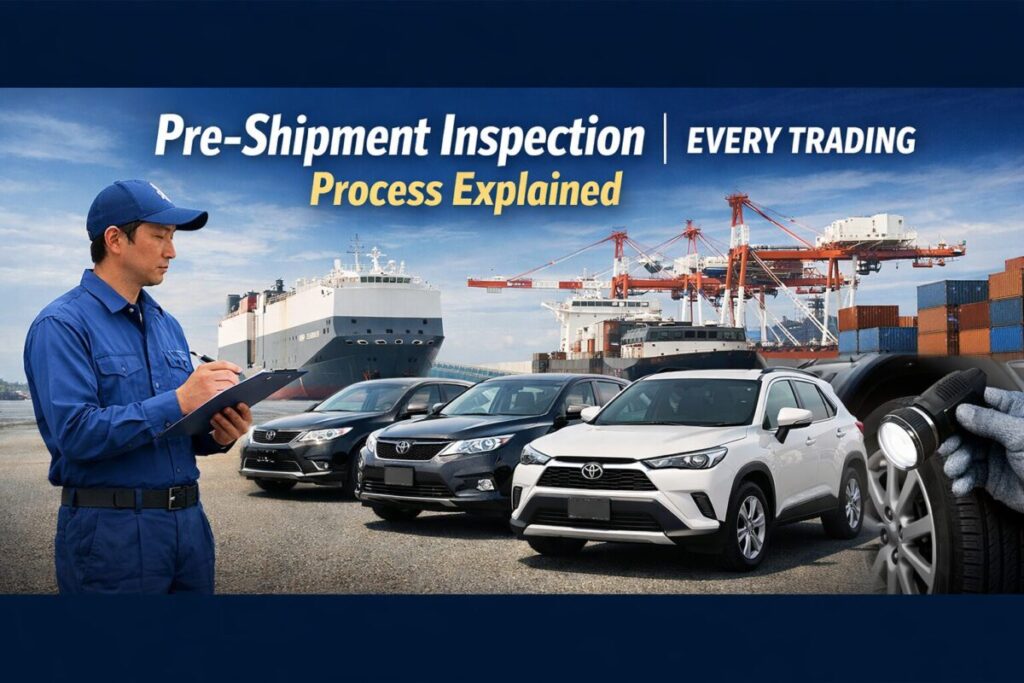

Pre-Shipment Inspection Process Explained: How Japanese Vehicle Checks Protect Your Investment
Buying a used vehicle from Japan is an excellent way to save money while receiving a high-quality car, truck, van, bus, or commercial vehicle. Japanese vehicles are trusted around the world because they offer outstanding reliability, fuel efficiency, and long service life. However, before a vehicle leaves Japan, one important step helps ensure customer satisfaction—the Pre-Shipment Inspection (PSI).
A professional pre-shipment inspection gives buyers confidence before their vehicle begins its journey overseas. It helps identify the vehicle's condition, confirms important details, and reduces the risk of unexpected problems after delivery.
In this guide, you'll learn what a pre-shipment inspection is, why it matters, what inspectors check, and how EVERY TRADING helps customers receive reliable Japanese vehicles with confidence.
What Is a Pre-Shipment Inspection?
A Pre-Shipment Inspection (PSI) is a detailed vehicle inspection completed before export.
The inspection confirms that the vehicle matches its description and is ready for international shipping.
During this process, inspectors carefully review:
- Vehicle identity
- Exterior condition
- Interior condition
- Mechanical components
- Safety features
- Export readiness
As a result, buyers receive greater confidence before the vehicle leaves Japan.
Why Pre-Shipment Inspection Is Important
International buyers cannot usually inspect vehicles in person.
Therefore, the inspection provides valuable peace of mind.
A professional PSI helps buyers:
- Understand the vehicle's condition
- Avoid unexpected surprises
- Confirm important specifications
- Reduce purchasing risks
- Improve buying confidence
For businesses, this also helps reduce downtime after delivery.
How EVERY TRADING Performs Pre-Shipment Inspections
At EVERY TRADING, every inspection follows a systematic process.
Our experienced staff carefully evaluates each vehicle before export.
This process supports our commitment to:
- Honest communication
- Accurate vehicle information
- Customer satisfaction
- Long-term trust
Every inspection helps ensure customers know exactly what they are buying.
Step 1: Vehicle Identification Check
The inspection begins by confirming the vehicle's identity.
Our team checks:
- Vehicle Identification Number (VIN)
- Chassis number
- Engine number
- Manufacturer
- Model
- Year of manufacture
Matching these details helps prevent documentation errors during export and customs clearance.
Step 2: Exterior Inspection
Next, inspectors examine the outside of the vehicle.
They review:
- Body panels
- Paint condition
- Doors
- Mirrors
- Windows
- Headlights
- Taillights
- Wheels
Any noticeable scratches, dents, or damage are recorded accurately.
Transparency builds trust with every customer.
Step 3: Interior Inspection
The vehicle's interior also receives careful attention.
Inspectors examine:
- Seats
- Dashboard
- Steering wheel
- Door trim
- Floor mats
- Air conditioning
- Instrument panel
- Controls
A clean interior often reflects careful ownership and regular maintenance.
Step 4: Mechanical Inspection
Mechanical reliability is one of the most important inspection areas.
Our team checks:
- Engine operation
- Transmission
- Steering system
- Brake performance
- Suspension
- Battery condition
- Fluid levels
Although used vehicles naturally show signs of use, our goal is to provide accurate information about their overall condition.
Step 5: Tire and Wheel Inspection
Safe tires improve driving performance after delivery.
Inspectors review:
- Tire condition
- Tread depth
- Wheel condition
- Spare tire availability
Good tire condition helps reduce immediate maintenance costs.
Step 6: Electrical Equipment Check
Modern vehicles include many electrical components.
During inspection, our team verifies the operation of:
- Headlights
- Brake lights
- Turn signals
- Hazard lights
- Power windows
- Windshield wipers
- Horn
Working electrical systems improve safety and convenience.
Step 7: Confirm Vehicle Features
Many buyers request specific equipment.
Therefore, we confirm important vehicle specifications.
Examples include:
- Automatic transmission
- Manual transmission
- Four-wheel drive (4WD)
- Air conditioning
- Power steering
- Navigation system
- Backup camera
Verifying these features helps avoid misunderstandings.
Step 8: Vehicle Cleanliness
Before shipment, the vehicle receives a thorough cleaning.
This includes removing:
- Dirt
- Dust
- Mud
- Plant material
- Loose debris
A clean vehicle also supports smoother customs and quarantine inspections in many countries.
Step 9: Export Documentation Review
Inspection includes verifying export documents.
Our team checks:
- Commercial Invoice
- Export Certificate
- Bill of Lading information
- Vehicle specifications
Accurate documentation helps shipments move through customs more efficiently.
Step 10: Final Export Readiness Check
Before loading onto the vessel, we complete one final review.
This confirms:
- Vehicle condition
- Documentation accuracy
- Keys
- Accessories
- Spare tire
- Shipping readiness
Only after completing every step does the vehicle move to the export port.
What Makes EVERY TRADING Different?
Many exporters rely only on auction information.
EVERY TRADING goes further.
We combine:
- Professional inspections
- Honest reporting
- Detailed photographs
- Fast communication
- Experienced export support
This approach helps customers make informed purchasing decisions.
Benefits of a Professional Pre-Shipment Inspection
A thorough inspection provides several important advantages.
Customers receive:
- Greater buying confidence
- Transparent vehicle information
- Reduced import risks
- Better purchase decisions
- Fewer unexpected repairs
- Faster customs processing through accurate documentation
Professional inspections help protect your investment.
Popular Japanese Trucks We Inspect
EVERY TRADING exports many reliable commercial vehicles.
Popular models include:
Toyota Dyna
A dependable truck for construction, delivery, and agriculture.
Isuzu Elf
Known worldwide for durability and fuel efficiency.
Mitsubishi Fuso Canter
A trusted commercial truck with excellent reliability.
Hino Dutro
Designed for daily business operations and long service life.
Nissan Atlas
Ideal for local transportation and commercial deliveries.
We also export passenger cars, buses, tractors, and construction machinery.
Tips Before Buying a Used Vehicle from Japan
A successful purchase starts with careful preparation.
Before placing your order:
- Review vehicle photos
- Read the auction sheet
- Confirm inspection results
- Check mileage
- Verify equipment
- Choose a trusted exporter
These simple steps help reduce purchasing risks.
Why Buyers Trust EVERY TRADING
Customers around the world choose EVERY TRADING because we focus on honesty and quality.
Our services include:
- Access to Japanese vehicle auctions
- Professional pre-shipment inspections
- Transparent communication
- Complete export documentation
- Worldwide shipping
- Fast customer support
- Reliable after-sales assistance
Whether you are importing one vehicle or expanding your business fleet, we are committed to helping you buy with confidence.
Frequently Asked Questions
What is a pre-shipment inspection?
It is a detailed vehicle inspection completed before export to confirm the vehicle's condition and readiness for shipping.
Does EVERY TRADING inspect every vehicle?
Yes. Our experienced team performs careful inspections before export and shares accurate information with customers.
What does the inspection include?
The inspection covers vehicle identification, exterior, interior, mechanical condition, electrical equipment, documentation, and export readiness.
Why is a pre-shipment inspection important?
It helps buyers understand the vehicle's actual condition and reduces the risk of unexpected problems after delivery.
Can first-time buyers benefit from this service?
Absolutely. A professional inspection gives first-time buyers confidence throughout the importing process.
Final Thoughts
A professional pre-shipment inspection is one of the most important steps when importing a used vehicle from Japan. It provides transparency, reduces risk, and helps buyers make informed decisions before their vehicle begins its journey overseas.
At EVERY TRADING, quality and trust are at the center of everything we do. Our experienced inspection team carefully checks every vehicle before export, ensuring customers receive honest information and dependable service. Whether you are importing a truck, van, bus, or passenger car, you can rely on EVERY TRADING to deliver quality you can trust.


Browse Reliable Used Trucks & Buses from Japan
Carefully selected vehicles ready for export worldwide
Search 100,000+ Dealer Stock Vehicles from Japan
Access a wide selection of vehicles from Japanese dealers nationwide. Updated daily.
