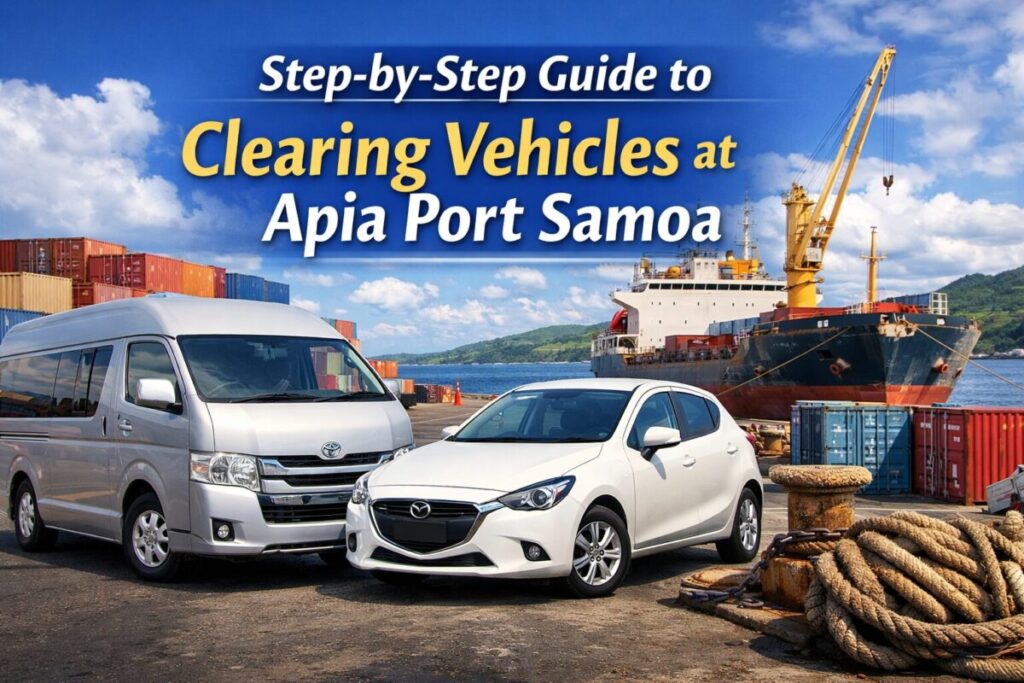

Step-by-Step Guide to Clearing Vehicles at Apia Port: Everything You Need to Know Before Importing from Japan
Importing a used vehicle from Japan to Samoa is one of the smartest ways to buy a reliable truck, van, SUV, or passenger car at an affordable price. Japanese vehicles are well known for their excellent condition, fuel efficiency, and long service life. However, before you can drive your imported vehicle, it must successfully clear customs at Apia Port, Samoa's main international seaport.
Although customs clearance may seem complicated, the process becomes much easier when you understand each step in advance. Preparing the correct documents, paying the required charges, and working with an experienced exporter will help you avoid delays and receive your vehicle quickly.
This complete guide explains the vehicle clearance process at Apia Port, the required documents, customs procedures, inspections, and practical tips to help you import with confidence.
Why Import Japanese Used Vehicles to Samoa?
Japanese used vehicles remain extremely popular throughout Samoa because they offer excellent value for money.
Buyers choose Japanese imports because they provide:
- Outstanding reliability
- Competitive prices
- Low mileage
- Excellent fuel economy
- Strong resale value
- High-quality maintenance history
- Easy access to spare parts
As a result, businesses and private buyers continue importing vehicles from Japan every year.
Why Customs Clearance Is Important
Every imported vehicle must complete customs clearance before registration and road use.
Customs clearance confirms:
- Legal importation
- Correct vehicle ownership
- Accurate customs valuation
- Payment of duties and taxes
- Compliance with Samoan regulations
Completing this process correctly allows your vehicle to move smoothly to registration.
Step 1: Track Your Shipment Before Arrival
Preparation begins long before your vehicle reaches Samoa.
Your exporter should provide several important shipping documents, including:
- Bill of Lading (B/L)
- Vessel name
- Voyage number
- Estimated Time of Arrival (ETA)
- Shipping schedule
Knowing the arrival date helps you prepare your paperwork early.
Good planning reduces waiting time at the port.
Step 2: Prepare All Required Documents
Document preparation is one of the most important parts of customs clearance.
Typical documents include:
- Original Bill of Lading
- Commercial Invoice
- Japanese Export Certificate
- Packing List (when applicable)
- Importer's Identification
- Customs Declaration Forms
Always review every document carefully.
Even a small error can delay customs approval.
Step 3: Vehicle Arrival at Apia Port
Once the vessel arrives, port staff unload your vehicle.
The port records:
- Vehicle Identification Number (VIN)
- Engine number
- Cargo information
- Shipping details
Your vehicle then enters the customs clearance process.
Step 4: Submit Your Customs Declaration
Next, submit your customs declaration together with all required documents.
Customs officers verify:
- Vehicle make
- Model
- Year
- Engine size
- Purchase price
- Vehicle identification
Accurate information speeds up the review process.
Step 5: Customs Valuation
Customs calculates the customs value of your imported vehicle.
Several factors may affect the valuation:
- Vehicle purchase price
- Freight charges
- Marine insurance
- Vehicle type
- Vehicle condition
This valuation determines the duties and taxes you must pay.
Therefore, honest and accurate invoices are very important.
Step 6: Pay Import Duties and Taxes
After customs completes the valuation, you pay the required government charges.
These may include:
- Import Duty
- Goods and Services Tax (GST)
- Customs processing fees
- Port handling charges
Payment confirmation allows customs to continue processing your shipment.
Step 7: Customs Inspection
Your vehicle may undergo a physical inspection before release.
Inspectors usually verify:
- VIN number
- Engine number
- Exterior condition
- Shipping damage
- Documentation accuracy
If everything matches, clearance continues without unnecessary delays.
Step 8: Port Handling Procedures
While customs completes its review, the port performs several handling activities.
These include:
- Vehicle storage
- Cargo management
- Security checks
- Release preparation
Collecting your vehicle quickly helps reduce storage costs.
Step 9: Receive Customs Release
After customs approves your shipment, you receive the official release documents.
These documents confirm that:
- Customs procedures are complete
- Required payments have been made
- Your vehicle may leave the port
Before driving away, inspect the vehicle carefully.
Check:
- Body condition
- Windows
- Tires
- Interior
- Spare tire
- Keys
- Accessories
Report any shipping damage immediately.
Step 10: Register Your Vehicle
Customs clearance is not the final step.
Next, complete vehicle registration according to Samoan regulations.
Registration generally includes:
- Ownership registration
- Vehicle inspection (if required)
- Insurance
- Number plate issuance
Once registration finishes, your imported vehicle is ready for legal road use.
Common Reasons for Customs Delays
Many importers experience delays because of avoidable mistakes.
Fortunately, careful preparation prevents most problems.
Missing Documents
Always prepare every required document before your shipment arrives.
Incomplete paperwork often delays customs approval.
Incorrect Vehicle Information
VIN numbers, engine numbers, invoices, and export certificates must match exactly.
Review every document carefully.
Outstanding Payments
Customs cannot release your vehicle until duties, taxes, and fees have been paid.
Prepare your budget before the shipment arrives.
Late Paperwork
Submitting documents after vessel arrival often creates unnecessary waiting time.
Early preparation always helps.
Tips for Faster Vehicle Clearance
Experienced importers follow several simple practices.
Work with an Experienced Exporter
Professional exporters understand customs procedures and prepare accurate documentation.
Their experience helps prevent costly mistakes.
Monitor Your Shipment
Track your vessel throughout the journey.
Knowing the arrival date improves planning.
Keep Backup Copies
Carry both printed and digital copies of every important document.
Backup files provide extra security.
Respond Quickly
If customs requests additional information, reply immediately.
Fast communication often shortens processing time.
Double-Check Everything
Review every number, date, and document before submission.
Small mistakes can create significant delays.
Popular Japanese Vehicles Imported into Samoa
Japanese commercial vehicles remain excellent choices for Samoan businesses.
Popular models include:
Toyota Dyna
Reliable for deliveries, construction, and small businesses.
Toyota ToyoAce
Well known for fuel efficiency and dependable performance.
Isuzu Elf
One of the world's most trusted light-duty trucks.
Mitsubishi Fuso Canter
Offers excellent durability with affordable maintenance.
Nissan Atlas
Perfect for daily commercial transportation.
Toyota Hiace
A favorite for passenger transport, tourism, and business operations.
These vehicles continue to perform well under Samoa's road and climate conditions.
Why Choose EVERY TRADING?
EVERY TRADING has helped customers around the world import quality Japanese vehicles for many years.
We provide:
- Access to Japanese auto auctions
- Professional vehicle inspections
- Complete export documentation
- International shipping
- Customs support
- Fast customer service
- Reliable after-sales assistance
Whether you are importing one truck or building a commercial fleet, our experienced team supports you throughout every stage of the importing process.
Frequently Asked Questions
How long does customs clearance usually take?
The timeline depends on document accuracy, customs workload, inspections, and payment completion. Well-prepared shipments generally move much faster.
Can I clear my vehicle without a customs broker?
Yes. However, many buyers choose customs brokers because they simplify paperwork and reduce delays.
Which documents are most important?
The Bill of Lading, Commercial Invoice, Export Certificate, and Customs Declaration are among the most important documents.
Can customs inspect every vehicle?
Customs may inspect imported vehicles to verify documentation and vehicle identification.
How can I avoid customs delays?
Prepare accurate documents, submit paperwork early, pay charges promptly, and work with an experienced exporter.
Final Thoughts
Clearing an imported vehicle at Apia Port is straightforward when you understand the process before your shipment arrives. Careful preparation, complete documentation, and timely communication help you move through customs efficiently while avoiding unnecessary costs and delays.
Japanese used vehicles continue to offer outstanding value for buyers in Samoa because they combine reliability, affordability, and long-term performance. By partnering with EVERY TRADING, you gain expert support from vehicle selection in Japan to successful customs clearance and delivery in Samoa.


Browse Reliable Used Trucks & Buses from Japan
Carefully selected vehicles ready for export worldwide
Search 100,000+ Dealer Stock Vehicles from Japan
Access a wide selection of vehicles from Japanese dealers nationwide. Updated daily.
