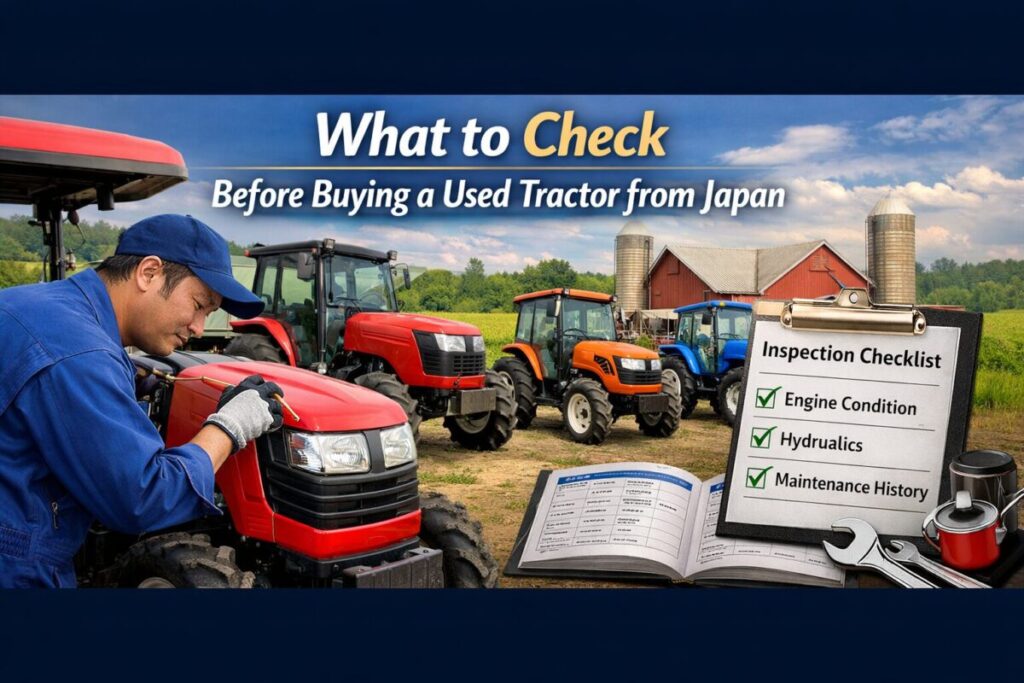

What to Check Before Buying a Used Tractor from Japan: The Complete Inspection Guide for Smart Buyers
Japanese used tractors have earned an excellent reputation across the world. Farmers, contractors, landscapers, and agricultural businesses choose them because they offer outstanding quality, durability, and value.
However, buying a used tractor is a major investment. A careful inspection before purchase can save money, reduce future repairs, and help you choose the right machine for your work.
At EVERY TRADING, we help customers worldwide find reliable Japanese used tractors through careful inspections and honest communication. This guide explains the most important points every buyer should check before importing a used tractor from Japan.
Why Japanese Used Tractors Are Popular Worldwide
Japanese tractors are designed for long service life.
Many owners also maintain their equipment carefully.
As a result, Japanese used tractors often remain in excellent condition even after years of use.
Popular advantages include:
- Excellent reliability
- Fuel-efficient diesel engines
- Strong resale value
- Easy operation
- Long-lasting performance
- High-quality engineering
- Wide availability of trusted brands
These benefits make Japanese tractors a smart investment for farms of every size.
Start by Choosing the Right Tractor Size
Before looking at tractor condition, decide what size you actually need.
Buying a machine that is too small limits productivity.
On the other hand, buying one that is too large increases fuel and maintenance costs.
Consider:
- Farm size
- Soil conditions
- Crop type
- Working hours
- Required attachments
- Transportation needs
Choosing the correct horsepower helps maximize efficiency.
Check the Tractor's Hour Meter
Unlike passenger cars, tractors use an hour meter instead of an odometer.
The hour meter records engine operating time.
Lower hours often indicate less wear.
However, operating hours alone do not tell the complete story.
A well-maintained tractor with higher hours may perform better than one with lower hours and poor maintenance.
Therefore, always compare engine hours with the tractor's overall condition.
Inspect the Engine Carefully
The engine is the heart of every tractor.
A healthy engine provides dependable performance for many years.
Before purchasing, inspect:
- Easy engine starting
- Smooth idle
- Normal exhaust color
- Oil leaks
- Coolant leaks
- Unusual engine noises
- Clean engine compartment
A clean and well-maintained engine usually reflects responsible ownership.
Look for Oil Leaks
Small leaks can become expensive repairs later.
Carefully inspect areas around:
- Engine
- Transmission
- Hydraulic system
- Front axle
- Rear axle
Fresh oil around seals or hoses deserves additional attention.
Therefore, never ignore visible leaks.
Check the Hydraulic System
Hydraulic performance affects almost every farming operation.
A strong hydraulic system improves productivity.
Inspect:
- Hydraulic hoses
- Lift arms
- Hydraulic cylinders
- Oil leaks
- Three-point hitch movement
Smooth operation usually indicates a healthy hydraulic system.
Test the Transmission
The transmission should operate smoothly under different conditions.
Pay attention to:
- Easy gear shifting
- Smooth clutch operation
- Four-wheel-drive engagement
- PTO operation
- Reverse gear performance
Any unusual noise or resistance may require further inspection.
Examine the PTO System
The Power Take-Off (PTO) drives many farming implements.
Therefore, proper PTO operation is essential.
Check for:
- Smooth engagement
- Stable rotation
- Unusual vibration
- Strange sounds
Reliable PTO performance supports long-term productivity.
Inspect the Tires
Replacing tractor tires can be expensive.
Good tire condition reduces immediate ownership costs.
Look for:
- Even tread wear
- Sidewall cracks
- Deep cuts
- Proper tire size
- Matching tire pairs
Healthy tires improve traction and fuel efficiency.
Check the Steering System
The steering should feel smooth and responsive.
Watch for:
- Excessive steering play
- Hydraulic steering leaks
- Unusual vibration
- Loose steering components
Safe steering improves comfort during long working hours.
Inspect the Braking System
Reliable brakes protect both the operator and surrounding workers.
Inspect:
- Brake pedal response
- Parking brake
- Brake fluid condition
- Smooth stopping performance
Good brakes are essential for safe operation on slopes and uneven ground.
Look at the Tractor's Exterior
Exterior appearance often reflects overall care.
Check carefully for:
- Rust
- Frame damage
- Weld repairs
- Bent panels
- Missing parts
- Damaged lights
Minor cosmetic scratches are normal.
However, structural damage deserves closer inspection.
Review Maintenance History
Maintenance records provide valuable information about previous ownership.
Look for records showing:
- Engine oil changes
- Filter replacement
- Hydraulic servicing
- Cooling system maintenance
- Transmission service
Regular maintenance often leads to better long-term reliability.
Confirm the Tractor's Age
The manufacturing year helps estimate future maintenance needs.
Older tractors may still offer excellent value.
However, buyers should consider:
- Parts availability
- Engine technology
- Emission regulations
- Overall condition
Condition usually matters more than age alone.
Check Available Attachments
Many Japanese tractors include useful implements.
Common attachments include:
- Rotary tillers
- Front loaders
- Mowers
- Plows
- Cultivators
These accessories increase productivity and improve overall value.
Therefore, verify attachment compatibility before purchase.
Verify Parts Availability in Your Country
Before importing, confirm that replacement parts are available locally.
Popular Japanese brands usually offer excellent parts support.
This reduces downtime and future maintenance concerns.
Choose a Trusted Japanese Exporter
Even an excellent tractor requires a trustworthy supplier.
Professional exporters help buyers avoid unnecessary risks.
A reliable exporter should provide:
- Honest inspections
- Clear photographs
- Detailed tractor information
- Fast communication
- Export experience
- Shipping support
Transparency builds confidence throughout the buying process.
How EVERY Inspects Used Tractors
At EVERY, every tractor receives careful evaluation before export.
Our inspection process includes:
- Engine condition
- Hour meter verification
- Hydraulic inspection
- PTO operation
- Transmission check
- Exterior inspection
- Tire condition
- Available maintenance information
- Overall operating condition
We believe accurate information helps buyers make better decisions.
Common Mistakes First-Time Buyers Make
Many first-time buyers focus only on price.
However, smart buyers also consider:
- Tractor condition
- Maintenance history
- Engine hours
- Parts availability
- Brand reputation
- Exporter's reliability
Looking at the complete picture usually leads to better long-term value.
Why Buyers Around the World Trust EVERY
EVERY has helped customers import Japanese used tractors for many years.
Our customers appreciate:
- Professional inspections
- Honest communication
- Fast customer support
- Careful vehicle selection
- Worldwide shipping experience
- Reliable export service
We work hard to build long-term partnerships based on trust.
Final Thoughts
Buying a used tractor from Japan can be one of the smartest investments for your farm or business. However, careful inspection remains the key to making the right choice.
Always evaluate engine condition, operating hours, hydraulic performance, transmission, maintenance history, and overall tractor quality before purchasing.
At EVERY, we inspect every tractor carefully and provide transparent information throughout the buying process. Our goal is simple—to help customers around the world import dependable Japanese used tractors with confidence and peace of mind.
Choose EVERY as your trusted export partner and enjoy reliable equipment that supports your business for years to come.


Browse Reliable Used Trucks & Buses from Japan
Carefully selected vehicles ready for export worldwide
Search 100,000+ Dealer Stock Vehicles from Japan
Access a wide selection of vehicles from Japanese dealers nationwide. Updated daily.
