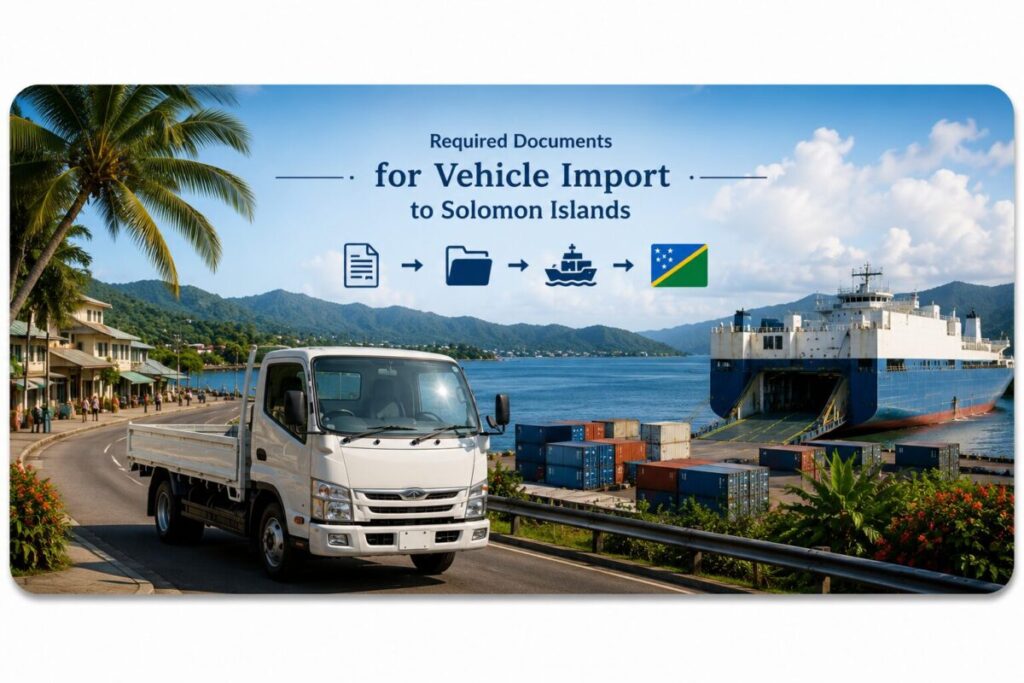

Required Documents for Vehicle Import to Solomon Islands: Complete Guide from Japan
Importing a Japanese used commercial vehicle into Solomon Islands is a smart investment for many businesses. Reliable Japanese trucks help companies reduce operating costs while improving transportation efficiency. However, before your vehicle reaches Honiara Port, you must prepare the correct import documents.
Many first-time buyers focus only on choosing the right truck. However, incomplete paperwork can delay customs clearance, increase storage charges, and create unnecessary costs. Therefore, understanding the required documents is just as important as selecting the right vehicle.
This guide explains every important document needed when importing Japanese used trucks into Solomon Islands. It also introduces the complete shipping process and provides practical advice for buyers.
Why Documentation Matters
Every imported commercial vehicle must pass several administrative procedures before it can legally operate in Solomon Islands.
Proper documentation helps Customs verify the vehicle's identity, ownership, purchase value, and shipping information.
Furthermore, accurate paperwork allows customs brokers, shipping agents, and port authorities to process your shipment more efficiently.
Preparing every document before the vessel arrives can significantly reduce delays.
Main Industries Importing Japanese Trucks
Japanese commercial vehicles support many industries throughout Solomon Islands.
- Construction
- Road maintenance
- Agriculture
- Forestry
- Retail distribution
- Fishing
- Wholesale delivery
- Tourism
Because operating conditions differ across the islands, businesses usually select vehicles that are durable, fuel-efficient, and easy to maintain.
Popular Japanese models include the Isuzu Elf, Mitsubishi Canter, Toyota Dyna, Hino Dutro, Isuzu Forward, and Hino Ranger.
Document 1: Commercial Invoice
The commercial invoice is one of the most important import documents.
It shows the official transaction between the exporter and importer.
Normally, the invoice contains:
- Exporter information
- Importer information
- Vehicle description
- Model code
- Chassis number
- Engine number (when available)
- Purchase price
- Payment terms
- Shipping terms such as FOB or CIF
Customs officers use this document when assessing import duties and taxes.
Document 2: Bill of Lading (B/L)
The Bill of Lading is issued by the shipping company.
This document proves that the carrier has accepted the vehicle for international transport.
It also identifies:
- Consignee
- Exporter
- Shipping company
- Port of loading
- Destination port
- Container or RoRo information
- Vessel name
The importer usually needs the Bill of Lading before collecting the vehicle from the port.
Document 3: Japanese Export Certificate
Japan issues an Export Certificate after vehicle deregistration.
This certificate confirms that the vehicle has legally left the Japanese registration system.
It normally contains:
- Vehicle registration history
- Model code
- Chassis number
- Engine displacement
- First registration date
- Vehicle dimensions
Many exporters also provide an English translation to simplify customs procedures.
Document 4: Packing List (When Required)
A packing list becomes important when additional equipment ships with the truck.
For example:
- Extra tires
- Spare parts
- Attachments
- Tools
- Accessories
This document helps customs officers identify every item included in the shipment.
Document 5: Marine Insurance Certificate
Marine insurance protects the cargo during ocean transport.
If the shipment includes insurance, the exporter usually provides an insurance certificate.
The document explains:
- Insurance company
- Policy number
- Cargo description
- Coverage amount
- Validity period
Insurance is especially valuable because weather conditions in the Pacific Ocean can sometimes affect shipping schedules.
Document 6: Vehicle Inspection Reports
Professional exporters often provide detailed inspection reports before shipment.
Although inspection formats differ, they commonly include:
- Engine condition
- Transmission condition
- Brake inspection
- Suspension inspection
- Exterior photographs
- Interior photographs
- Mileage confirmation
These reports help buyers understand the vehicle before arrival.
Document 7: Customs Declaration
After the vessel reaches Solomon Islands, the importer or customs broker submits the customs declaration.
This declaration combines information from all supporting documents.
Accurate information helps Customs calculate the correct import charges.
Document 8: Import Permit (If Applicable)
Depending on future government regulations or specific vehicle categories, certain imports may require additional permits.
Therefore, buyers should always confirm the latest import requirements before purchasing a vehicle.
Choosing a Reliable Exporter
The exporter plays an important role throughout the documentation process.
A professional Japanese exporter prepares every document accurately before shipment.
In addition, experienced exporters answer documentation questions quickly and provide support until the truck arrives.
Before making payment, ask whether the exporter supplies all original shipping documents.
Common Documentation Mistakes
- Incorrect consignee information
- Wrong chassis number
- Misspelled company name
- Incorrect destination port
- Missing signatures
- Late document delivery
- Incomplete customs declaration
Checking every document before shipment can prevent these problems.
Final Checklist
- Commercial Invoice
- Bill of Lading
- Japanese Export Certificate
- English Translation (if provided)
- Packing List (when required)
- Insurance Certificate (if purchased)
- Inspection Report
- Customs Declaration
- Import Permit (if required)
Conclusion
Preparing the correct documentation makes importing Japanese commercial vehicles into Solomon Islands much easier.
Every document supports a different stage of the import process, from shipping and customs clearance to registration.
By working with an experienced Japanese exporter and checking every document carefully, buyers can reduce delays, avoid unnecessary costs, and receive their vehicles smoothly.
Whether you import one truck or build an entire commercial fleet, accurate documentation is one of the keys to successful international trade.


Browse Reliable Used Trucks & Buses from Japan
Carefully selected vehicles ready for export worldwide
Search 100,000+ Dealer Stock Vehicles from Japan
Access a wide selection of vehicles from Japanese dealers nationwide. Updated daily.
