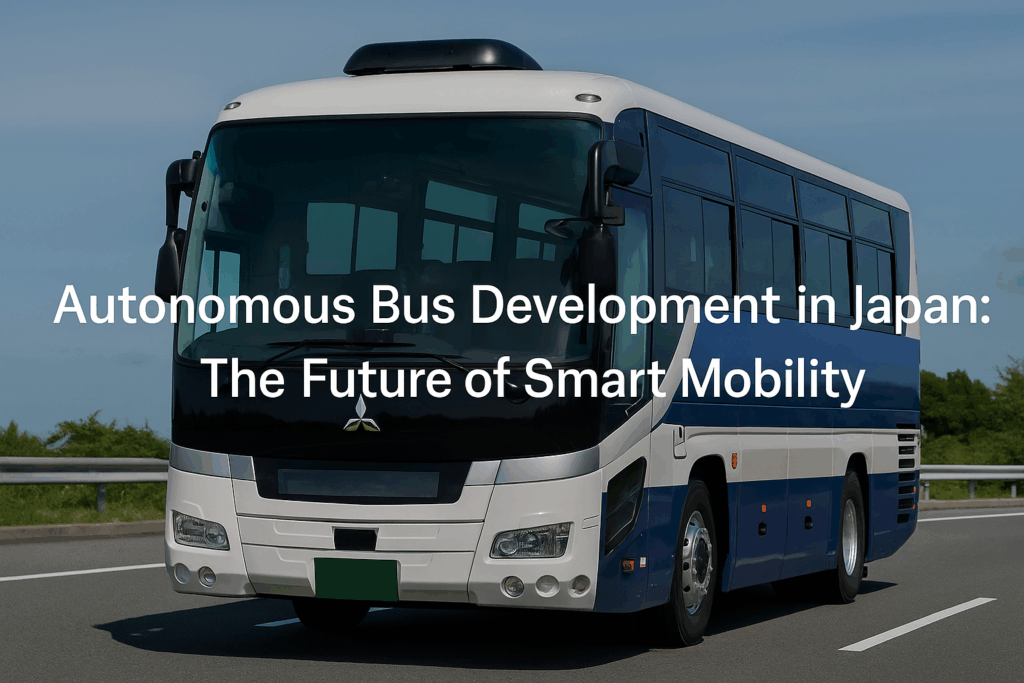

Autonomous Bus Development in Japan
Japan has long been a global pioneer in automotive technology, and its progress in autonomous bus development proves that innovation continues to drive the nation forward. As cities face growing demands for sustainable and efficient mobility, self-driving buses are emerging as a key part of Japan’s next-generation transport ecosystem.
If you are looking for Used Autonomous Bus, please check our latest listings here:
 Used Autonomous Bus for Sale – EVERYCAR.jp
The Rise of Smart Public Transportation
Autonomous buses are designed to improve safety, reduce traffic congestion, and enhance accessibility. Japan’s leading manufacturers—such as Hino Motors, Mitsubishi Fuso, Isuzu, and Toyota—are collaborating with technology companies and research institutions to create buses that combine artificial intelligence (AI) with real-time sensors, cameras, and GPS systems.
These buses can navigate complex urban environments, detect obstacles, and stop precisely at bus stations. As a result, they provide a safer and smoother ride for passengers, even in busy city centers.
Key Pilot Programs Across Japan
Japan has launched multiple autonomous bus trials in recent years. Cities like Fujisawa, Fukuoka, and Tokyo’s Haneda area are already testing self-driving buses on public roads. These projects demonstrate Japan’s commitment to integrating automation and electrification into public transport.
Moreover, rural towns facing driver shortages are adopting autonomous shuttles to maintain accessibility for elderly residents. This shows that the technology benefits not only major cities but also regional communities in need of dependable mobility.
Technology Behind Japan’s Autonomous Buses
The core technologies driving these innovations include:
-
LIDAR sensors that map surroundings in real time.
-
AI-based decision systems to detect pedestrians and vehicles.
-
Automatic braking and steering controls for precision navigation.
-
Electric powertrains that enhance energy efficiency and reduce emissions.
Together, these systems make Japanese autonomous buses among the most advanced in the world, setting global standards for reliability and safety.
Environmental and Economic Impact
Autonomous buses support Japan’s carbon neutrality goals by promoting electric and hybrid drivetrains. They also reduce the need for multiple drivers, lowering operating costs for transport companies. In the long term, they promise to make public transit more affordable, efficient, and eco-friendly.
Global Implications and Export Potential
Japan’s expertise in robotics and automation gives its autonomous buses strong export potential. Countries in Southeast Asia, the Middle East, and Europe are already showing interest in these systems, especially for airport shuttles, smart city projects, and last-mile transport solutions.
As Japan refines its safety standards and testing protocols, international buyers can expect reliable, adaptable systems ready for various regional conditions.
Conclusion
The development of autonomous buses in Japan marks the beginning of a new era in smart mobility. With AI integration, electric efficiency, and unmatched reliability, these buses are redefining how people move within cities and rural areas alike.
For global importers and transport planners, Japan’s progress offers a clear vision of the future—safe, connected, and sustainable public transportation that meets the needs of the modern world.
👉 Explore our latest stock here: Used Japanese Buses for Sale
If you are looking for Japanese Used Bus, please check our list.
The list of Used Japanese used Bus for sale(*Click to open).
We do our best work for all customer's partnership.
It's for SDGs goal number 17 "PARTNERSHIP FOR THE GOALS".
Let's work together!


