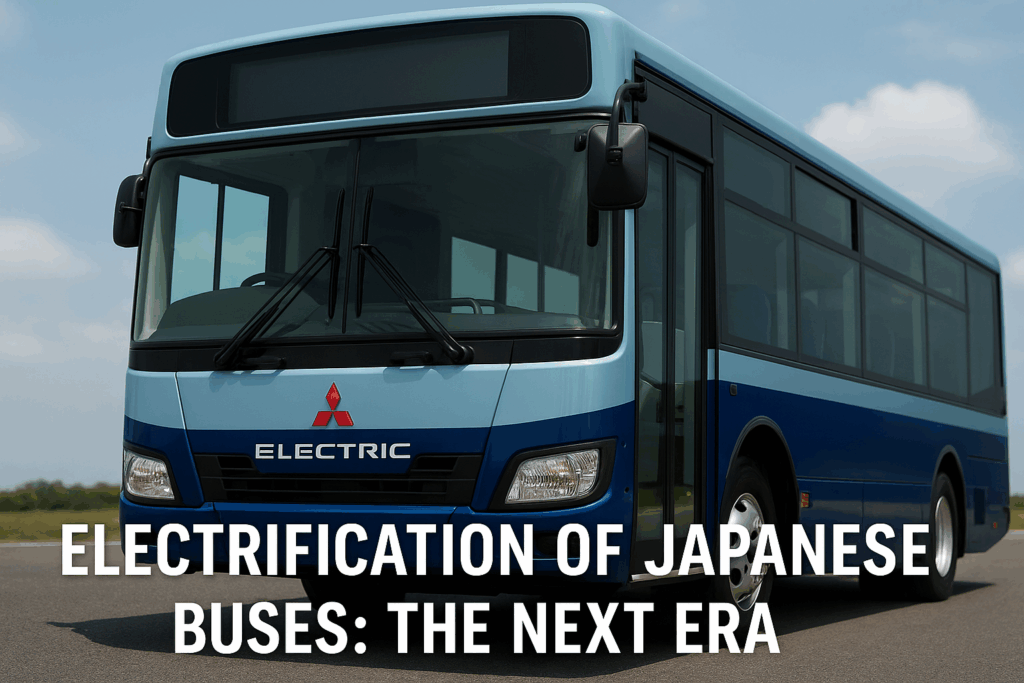

Electrification of Japanese Buses: The Next Era
The Japanese bus industry is entering a remarkable new phase—the era of electrification. With growing global demand for cleaner and more efficient public transportation, Japan’s leading manufacturers are driving innovation in electric and hybrid bus technology. These vehicles not only reduce emissions but also improve comfort, performance, and long-term cost savings.
If you are looking for Used Electrification of Japanese Buses , please check our latest listings here:
 Used Electrification of Japanese Buses for Sale – EVERYCAR.jp
The Shift Toward Electric Mobility
Across the world, governments and cities are setting ambitious goals to reduce carbon emissions. As a result, the need for electric public transport has never been greater. Japan, known for its precision engineering and reliability, has responded by introducing a new generation of eco-friendly buses.
Companies such as Hino Motors, Isuzu, and Toyota are developing buses equipped with battery-electric systems, regenerative braking, and zero-emission drivetrains. These features make Japanese electric buses an ideal choice for modern cities focused on sustainable mobility.
Technological Advantages of Japanese Electric Buses
Japanese electric buses stand out for their innovation and reliability. Key benefits include:
-
Quiet and smooth operation, reducing noise pollution in urban areas.
-
Lower maintenance costs, as electric drivetrains have fewer moving parts.
-
Improved energy efficiency, achieved through advanced battery management.
-
Longer lifespan, thanks to high-quality Japanese engineering and durable materials.
Furthermore, hybrid buses—combining electric motors with diesel engines—serve as a practical bridge toward full electrification. These models allow fleet operators in developing regions to adopt green technologies gradually.
Global Demand and Export Growth
The export market for Japanese electric and hybrid buses is expanding rapidly. Countries in Southeast Asia, the Caribbean, and the Middle East are turning to Japan for reliable, eco-friendly transport solutions. These regions benefit from low running costs, minimal downtime, and strong after-sales support through Japan’s global dealer network.
Moreover, as cities across Africa and Latin America modernize their public transport systems, demand for affordable used Japanese electric buses is expected to grow. Their efficiency, durability, and brand reputation make them a smart investment for both government and private operators.
Challenges and Future Prospects
While electrification brings exciting opportunities, it also requires infrastructure improvements. Charging stations, battery recycling systems, and renewable power integration are essential for full-scale adoption. However, Japan’s continuous innovation ensures these challenges are being addressed swiftly.
The introduction of solid-state batteries and faster charging technologies will further enhance the practicality of electric buses in the coming years. These advancements will make Japanese models even more attractive in export markets where sustainability is becoming a key purchasing factor.
Conclusion
The electrification of Japanese buses marks the beginning of a new chapter in global transportation. With advanced technology, strong reliability, and a commitment to reducing environmental impact, Japan is setting new standards in clean mobility.
For international buyers seeking eco-friendly, durable, and efficient buses, Japanese electric and hybrid models represent the future of public transportation. As this new era unfolds, Japan’s innovation continues to drive the world toward a greener, smarter, and more sustainable future.
👉 Explore our latest stock here: Used Japanese Buses for Sale
If you are looking for Japanese Used Bus, please check our list.
The list of Used Japanese used Bus for sale(*Click to open).
We do our best work for all customer's partnership.
It's for SDGs goal number 17 "PARTNERSHIP FOR THE GOALS".
Let's work together!


