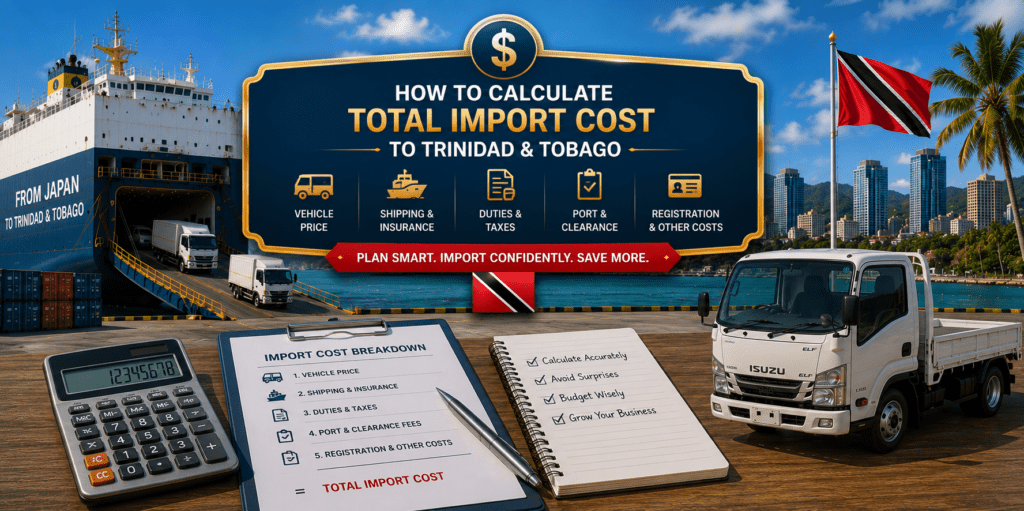

How to Calculate Total Import Cost to Trinidad and Tobago
Importing a Japanese used truck to Trinidad and Tobago is an excellent investment for businesses looking for reliable commercial vehicles at competitive prices. Japanese trucks are famous for their durability, fuel efficiency, strong resale value, and long service life. Consequently, many companies in Trinidad and Tobago import directly from Japan every year.
However, many first-time buyers make one common mistake.
They only look at the vehicle price.
In reality, the total import cost includes several additional expenses before the truck is ready for business.
Understanding every cost in advance allows buyers to create an accurate budget, compare quotations properly, and avoid unexpected expenses.
This guide explains every major cost involved when importing a Japanese truck into Trinidad and Tobago.
🇹🇹 Why Businesses Import Trucks from Japan
Trinidad and Tobago has one of the Caribbean's strongest commercial economies.
Japanese trucks support many industries, including:
- Construction
- Oil and gas
- Agriculture
- Manufacturing
- Wholesale distribution
- Retail delivery
- Port logistics
- Tourism
Businesses choose Japanese trucks because they offer:
- Excellent fuel economy
- Long engine life
- Low maintenance costs
- Reliable diesel engines
- Strong resale value
As a result, importing directly from Japan often provides better value than purchasing locally.
What Is the Total Import Cost?
The total import cost is the complete amount you spend before the truck is ready to operate in Trinidad and Tobago.
It normally includes:
- Purchase price
- Inland transportation in Japan
- Export documentation
- Ocean freight
- Marine insurance
- Customs duties
- Import taxes
- Port handling charges
- Customs broker fees
- Registration fees
- Insurance
- Local transportation
Therefore, buyers should never compare trucks using only the selling price.
Instead, compare the complete landed cost.
Step 1: Vehicle Purchase Price
The first expense is the truck itself.
Prices vary depending on:
- Manufacturer
- Model
- Year
- Mileage
- Condition
- Body type
Typical export price ranges include:
| Truck Model | Average Export Price (USD) |
|---|---|
| Isuzu Elf | 5,000 – 18,000 |
| Toyota Dyna | 6,000 – 20,000 |
| Mitsubishi Fuso Canter | 6,500 – 22,000 |
| Hino Dutro | 7,000 – 22,000 |
| Isuzu Forward | 12,000 – 35,000 |
| Hino Ranger | 15,000 – 40,000 |
| Mitsubishi Fuso Fighter | 15,000 – 45,000 |
These prices vary according to market conditions and vehicle specifications.
Step 2: Inland Transportation in Japan
Before export, the truck must travel from its storage location or auction yard to the shipping port.
This cost usually covers:
- Domestic transport
- Port delivery
- Vehicle handling
The distance from the seller to the port influences the final amount.
Therefore, trucks located closer to major export ports may have lower inland transportation costs.
Step 3: Export Documentation
Every exported truck requires official documentation.
Common documents include:
- Export Certificate
- Commercial Invoice
- Bill of Lading
- Inspection reports
- Shipping documents
Professional exporters prepare these documents carefully to ensure smooth customs clearance.
Step 4: Ocean Freight
Ocean freight is one of the largest import expenses.
Shipping costs depend on:
- Truck size
- Weight
- Shipping method
- Departure port
- Arrival port
- Freight market conditions
Most commercial trucks travel by Roll-on/Roll-off (RORO) vessels because this method is economical and efficient.
Container shipping is also available for selected vehicles or shipments that include spare parts.
Step 5: Marine Insurance
Marine insurance protects your investment during international shipping.
Although shipping companies handle vehicles carefully, unexpected situations can occur.
Insurance provides additional peace of mind throughout the voyage.
Many buyers choose CIF pricing because marine insurance is already included.
Step 6: Customs Duties
When the truck arrives in Trinidad and Tobago, customs authorities assess applicable import duties.
The amount depends on several factors, including:
- Vehicle type
- Customs valuation
- Current import regulations
Since regulations may change over time, buyers should confirm current duty rates before importing.
Planning ahead helps avoid unexpected costs.
Step 7: Taxes
Imported commercial vehicles may also be subject to applicable taxes under Trinidad and Tobago's import regulations.
The total amount depends on:
- Vehicle classification
- Customs value
- Current tax requirements
Understanding these taxes before purchasing allows businesses to build a realistic import budget.
Step 8: Port Charges
After the vessel arrives, additional port-related expenses may apply.
These can include:
- Port handling fees
- Storage charges
- Terminal charges
- Administrative fees
Completing customs procedures quickly helps reduce storage costs.
Step 9: Customs Broker Fees
Many businesses choose to work with a licensed customs broker.
A broker can assist with:
- Customs declarations
- Document preparation
- Import procedures
- Vehicle release
Professional assistance often saves time while reducing paperwork errors.
Step 10: Vehicle Registration
After customs clearance, the truck must be registered before operating on public roads.
Registration expenses may include:
- Registration fees
- Licensing
- Number plates
- Administrative processing
These costs should be included in your overall budget.
Step 11: Insurance
Commercial vehicle insurance is another essential expense.
Insurance protects:
- The vehicle
- Drivers
- Business operations
- Third parties
Obtaining insurance before beginning commercial operations is strongly recommended.
Step 12: Local Transportation
Finally, the truck may require transportation from the port to:
- Your business
- A workshop
- A fleet yard
- A customer location
Although this expense is usually smaller than shipping costs, it should still be included in the total budget.
Example Import Cost Calculation
The following example demonstrates how buyers estimate total costs.
| Item | Example (USD) |
|---|---|
| Vehicle Purchase | 12,000 |
| Inland Transport | 400 |
| Export Documentation | 300 |
| Ocean Freight | 2,300 |
| Marine Insurance | 200 |
| Customs Duties & Taxes | Varies |
| Port Charges | Varies |
| Broker Fees | Varies |
| Registration | Varies |
| Insurance | Varies |
The final landed cost depends on the specific truck and current import regulations.
Therefore, always request a complete quotation before making a purchase.
Why Japanese Trucks Offer Better Value
Even after considering import costs, Japanese trucks remain an excellent investment.
They provide:
- Outstanding reliability
- Low fuel consumption
- Long service life
- Strong resale value
- Affordable maintenance
These advantages help businesses reduce long-term operating expenses.
Tips for Reducing Import Costs
Smart buyers follow several strategies.
Choose the Right Truck
Buy a truck that matches your actual business needs.
Compare Total Cost
Do not compare only purchase prices.
Import Directly from Japan
Direct purchases often eliminate unnecessary middlemen.
Work with an Experienced Exporter
Professional exporters help prevent costly mistakes.
Plan Before Shipping
Good preparation reduces delays and unexpected expenses.
Why Trinidad and Tobago Businesses Choose EVERY Japan
Since 2006, EVERY Japan has exported high-quality commercial vehicles to more than 100 countries worldwide.
Our services include:
- Professional inspections
- Transparent quotations
- Export documentation
- International shipping
- Vehicle sourcing
- Customer support
Our experienced team helps businesses calculate total import costs before purchasing.
This allows customers to make confident decisions.
Import with Confidence and Plan Your Budget
Understanding the total import cost is one of the most important steps when purchasing a Japanese used truck.
The purchase price is only one part of the investment. Shipping, customs duties, taxes, documentation, registration, insurance, and local charges all contribute to the final landed cost.
By calculating every expense in advance, Trinidad and Tobago buyers can avoid surprises and choose the truck that offers the best long-term value.
Whether you need an Isuzu Elf, Toyota Dyna, Mitsubishi Fuso Canter, Hino Ranger, or another dependable Japanese truck, EVERY Japan is ready to help you import with confidence.
Contact EVERY Japan today and let our export specialists help you calculate the total cost of your next truck import to Trinidad and Tobago.


Browse Reliable Used Trucks & Buses from Japan
Carefully selected vehicles ready for export worldwide
Search 100,000+ Dealer Stock Vehicles from Japan
Access a wide selection of vehicles from Japanese dealers nationwide. Updated daily.
