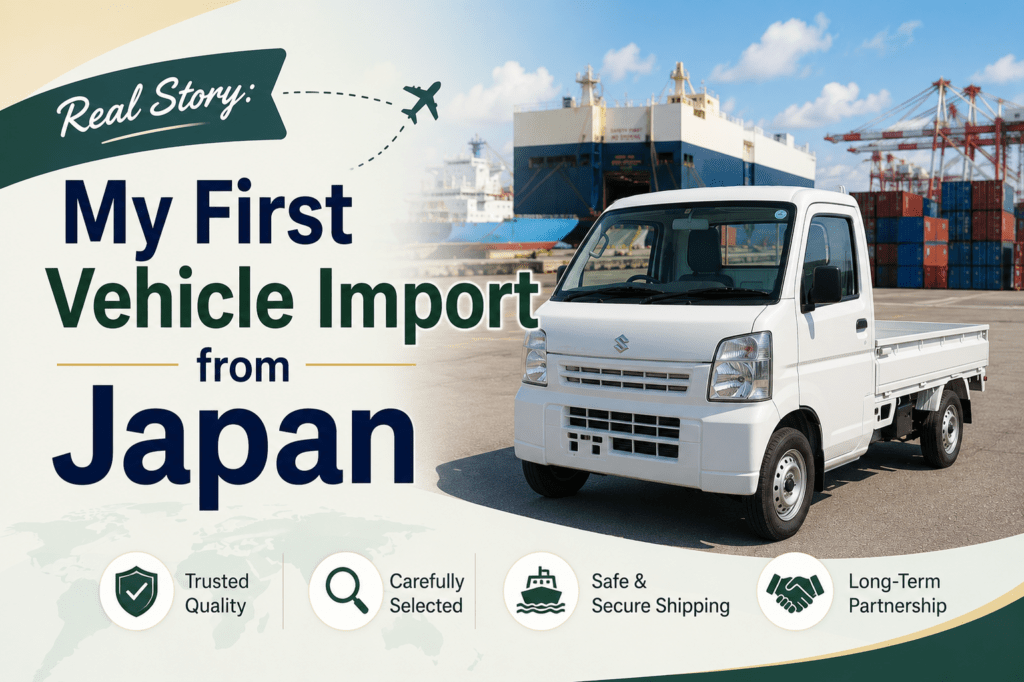

Real Story: My First Vehicle Import from Japan
Importing a vehicle from Japan for the first time can feel exciting, but it can also feel overwhelming. Many overseas buyers ask the same questions before they begin. Can I trust the exporter? Will the vehicle arrive as described? What documents do I need? How much will the total cost be? Most importantly, how can I avoid mistakes on my first order?
These concerns are normal. In fact, almost every first-time buyer feels them. Buying a vehicle from another country is a big step. However, when the process is clear and the exporter is reliable, that first import can become the start of a long-term business relationship.
In this article, we share a real-style customer story based on the experience many first-time overseas buyers have when importing from Japan. It shows the worries they face, the decisions they make, and the reasons they choose Japanese vehicles. More importantly, it explains how the right support can turn a first order into a confident and successful purchase.
Why First-Time Buyers Often Feel Nervous
Buying a used vehicle in your own country is already a serious decision. Buying one from Japan can feel even bigger because you cannot see the vehicle in person before shipment. You need to trust photos, inspection details, auction information, and the exporter’s explanation. Therefore, first-time importers often spend a lot of time comparing companies and asking questions.
Most new buyers worry about the same points:
- Whether the vehicle condition is truly good
- Whether the exporter will communicate clearly
- Whether the shipping process will go smoothly
- Whether the final cost will match the estimate
- Whether the vehicle will fit local market needs
- Whether spare parts and maintenance will be manageable
These are not small concerns. They directly affect money, time, and business reputation. That is why the first import experience matters so much.
The Start of the Journey: Searching for the Right Vehicle from Japan
This story begins with a buyer who wanted to import a vehicle from Japan for the first time. He had seen many Japanese used trucks and commercial vehicles in his market. Some were used by transport companies. Others were working in construction, farming, and local delivery. He noticed that Japanese vehicles had a strong reputation for durability, clean condition, and long-term value.
At first, he only wanted to understand the process. He searched online for Japanese used vehicles, export companies, shipping information, and customer reviews. Like many first-time buyers, he did not want to rush. Instead, he wanted to understand three important things before sending any money:
- How to choose a reliable exporter
- How to confirm the vehicle condition
- How to estimate the full import cost
This careful approach is one of the best things a first-time buyer can do.
Why the Buyer Chose Japan Instead of Buying Locally
At first, buying locally looked easier. The vehicle would already be in the country, and the buyer could inspect it directly. However, when he compared local stock with Japanese export stock, the difference became clear.
Japanese vehicles offered several advantages:
- Better overall condition
- More model choices
- Lower mileage in many cases
- Cleaner interiors and exteriors
- Better maintenance history
- More reliable commercial vehicle options
- Better value compared with local resale prices
As a result, importing from Japan started to look less risky and more practical. The buyer realized that a well-chosen Japanese vehicle could give him better long-term value than many locally available options.
The Biggest Concern: Can I Trust the Exporter?
This was the most important question in the entire process. The buyer knew that vehicle condition mattered, but he also understood something else: even a good vehicle can become a bad experience if the exporter is unreliable.
He wanted an exporter that could do more than send a price list. He wanted a company that would answer questions quickly, explain the process clearly, and be honest about the vehicle’s condition.
So he started checking for signs of trust:
- Did the company respond quickly?
- Did they answer questions directly?
- Could they explain shipping and documents clearly?
- Did they have experience with overseas buyers?
- Did they understand business vehicles and export needs?
- Did they seem focused on long-term support instead of one quick sale?
These checks helped him narrow his choices. In the end, trust did not come from one message. It came from consistent communication and clear support.
Asking the Right Questions Before Buying
Once the buyer found an exporter he felt comfortable with, he began asking detailed questions. This step made a big difference. Instead of only asking for the cheapest vehicle, he focused on value, risk, and long-term use.
Some of the questions he asked included:
- What is the exact condition of the vehicle?
- Are there any repairs or damage I should know about?
- What is the mileage and service history?
- Is this model suitable for my business and local market?
- What documents will I receive after purchase?
- How long will shipping take?
- What costs should I prepare for after arrival?
These questions helped him feel more in control. They also showed the exporter that he was serious and careful. Good communication on both sides often leads to a smoother buying process.
Choosing the Right Vehicle for the First Import
The buyer did not want to make an emotional purchase. He wanted a vehicle that could serve a clear purpose. In his case, the vehicle was needed for local business use and future income generation. Therefore, he looked for a practical unit with strong reliability, manageable maintenance, and good resale value.
The selection process focused on:
Vehicle Type
He needed a commercial vehicle that could support local work. So he looked at trucks and practical business-use models rather than passenger cars.
Condition and Risk
He paid close attention to photos, inspection details, and any signs of wear. He wanted to avoid a vehicle that would create repair costs immediately after arrival.
Budget
The goal was not to buy the cheapest unit. Instead, the goal was to buy the best vehicle possible within a safe budget.
Future Use
He also thought about how the vehicle would perform after import. Would it support business growth? Would it be easy to maintain? Would it still have resale value later?
This is a key lesson for first-time buyers. The best first import is usually not the cheapest vehicle on the list. It is the one that gives the best balance of condition, price, and practical use.
Understanding the Full Import Cost
One of the biggest mistakes first-time buyers make is focusing only on the vehicle price. In reality, the total import cost includes much more than that. The buyer in this story understood that early, so he asked for a full breakdown.
He wanted to know about:
- Vehicle price
- Export fees
- Shipping cost
- Port charges
- Import duties and taxes
- Clearance costs
- Registration or local compliance costs
This helped him plan properly. It also prevented disappointment later. A transparent cost explanation is a major part of a good first import experience.
The Waiting Period: From Purchase to Shipment
After the buyer confirmed the vehicle and completed payment, the next stage began. For many first-time importers, this is the hardest part emotionally. You have already spent money, but the vehicle is still far away. Naturally, you want updates and reassurance.
This is where exporter communication becomes very important.
The buyer appreciated regular updates about:
- Payment confirmation
- Export schedule
- Shipping arrangements
- Vessel booking progress
- Document preparation
- Expected arrival timing
These updates helped reduce stress. More importantly, they strengthened trust. Even when there was nothing dramatic to report, clear communication made the process feel safe and professional.
The Vehicle Arrives: The Moment That Builds Confidence
The most important moment came when the vehicle arrived and matched the buyer’s expectations. This is the point where trust becomes real. Photos, emails, and promises all matter, but the actual vehicle is what proves the quality of the experience.
For this buyer, the vehicle condition gave him confidence right away. It looked clean, practical, and ready for use. More importantly, it felt like the exporter had been honest throughout the process.
That first positive result changed everything.
Instead of thinking, “I hope I do not lose money,” the buyer started thinking, “I can do this again.”
That shift is powerful. It is how one order becomes a long-term customer relationship.
What the Buyer Learned from the First Import
The first import taught the buyer several lessons that made future purchases easier and smarter.
1. Trust Matters More Than a Small Price Difference
A slightly lower price from an unknown seller may not be worth the risk. Fast, honest, and professional support has real value.
2. Asking Questions Is a Strength, Not a Problem
Good exporters do not get annoyed by serious questions. In fact, clear questions often lead to better vehicle choices and smoother transactions.
3. The Right Vehicle Is One That Matches Your Goal
A vehicle should fit your market, your work, and your budget. It should not only look attractive in photos.
4. The First Purchase Builds the Future
If the first order goes well, the buyer gains confidence. That often leads to more imports, better planning, and stronger business growth.
Why Japanese Vehicles Continue to Attract First-Time Buyers
This story is not unique. Many first-time importers choose Japanese used vehicles for similar reasons. They want quality, reliability, and better value than what they can find locally. In addition, they want access to a wide range of commercial vehicles, trucks, vans, buses, tractors, and machinery from a country known for dependable manufacturing.
Japanese used vehicles are attractive because they often offer:
- Strong long-term reliability
- Good condition compared with price
- A wide choice of models and body types
- Better business value over time
- Strong resale potential in many markets
- Practical options for transport, delivery, farming, and construction
For buyers who want to grow a business, that combination is very appealing.
How a Good First Import Can Lead to Long-Term Partnership
A first import is not only about one vehicle. It is also about building confidence in the process. Once a buyer has one successful experience, they often begin thinking differently. Instead of worrying about whether import is possible, they start thinking about what to import next.
That is why long-term partnership matters.
A trusted exporter can support buyers as they move from one purchase to several. Over time, the relationship can grow from a single vehicle order to regular fleet supply, business support, and strategic purchasing advice.
This long-term value includes:
- Faster future buying decisions
- Better understanding of buyer preferences
- More accurate vehicle suggestions
- Smoother communication and document handling
- Stronger confidence on both sides
In many cases, long-term partnership is what turns a first-time importer into a repeat customer and a stronger business owner.
Tips for Buyers Importing Their First Vehicle from Japan
If you are planning your first vehicle import from Japan, this story offers some practical lessons. Here are some simple but important tips:
Choose an Exporter Carefully
Look for clear communication, export experience, and honest support. Trust matters more than a very small price difference.
Know Your Purpose Before You Buy
Decide whether the vehicle is for resale, personal use, transport work, construction, farming, or delivery. This will guide your choice.
Ask for Full Cost Details
Do not focus only on the vehicle price. Ask about shipping, fees, taxes, and other charges from the start.
Review Condition Carefully
Pay attention to photos, inspection reports, auction sheets, and any comments about damage or repairs.
Be Patient, but Stay Informed
Shipping takes time. However, a good exporter should keep you updated and help you understand each step.
Think Long-Term
A good first purchase can open the door to future imports, business growth, and a trusted supplier relationship.
Why EVERY TRADING Supports First-Time Buyers
At EVERY TRADING, we understand that the first import is a major step. It involves money, trust, and many questions. That is why we focus on making the process clear, practical, and supportive for every customer.
We help buyers with:
- Finding suitable Japanese vehicles for their market
- Explaining vehicle condition and specifications clearly
- Supporting auction and stock vehicle selection
- Handling export documents carefully
- Arranging shipping from Japan
- Building long-term trust through fast communication
Whether the customer is buying one truck, one van, one bus, or building a larger business fleet, the goal is the same: provide dependable support and make importing from Japan easier.
Final Thoughts
The first vehicle import from Japan is often the hardest one emotionally because it involves the most uncertainty. However, it can also be the most important one. When the process goes well, it creates more than one successful purchase. It creates confidence, knowledge, and the beginning of a long-term business relationship.
This real-style customer story shows that first-time buyers do not need to know everything before they start. They simply need the right vehicle, the right questions, and the right exporter.
Japanese used vehicles continue to attract first-time buyers because they offer strong quality, good value, and practical business potential. With reliable support from an experienced exporter, that first import can become the start of something much bigger.
If you are planning your first vehicle import from Japan, EVERY TRADING is ready to help you move forward with confidence.


Browse Reliable Used Trucks & Buses from Japan
Carefully selected vehicles ready for export worldwide
Search 100,000+ Dealer Stock Vehicles from Japan
Access a wide selection of vehicles from Japanese dealers nationwide. Updated daily.
