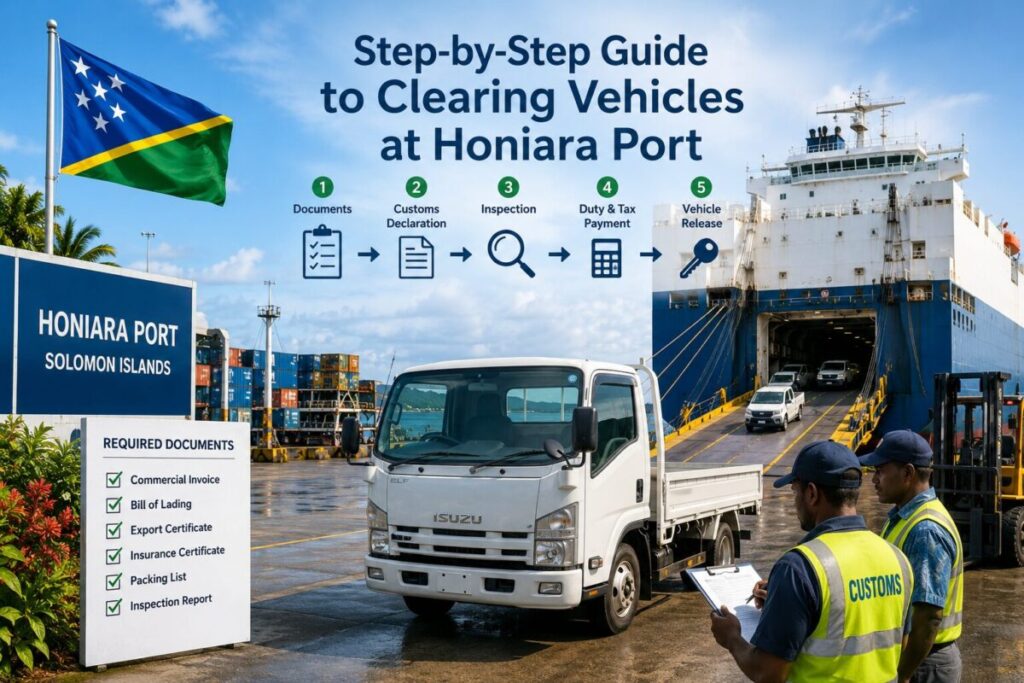

Complete Step-by-Step Guide to Clearing Imported Vehicles at Honiara Port in Solomon Islands
Importing a Japanese used commercial vehicle into Solomon Islands is an excellent investment for businesses in construction, agriculture, forestry, tourism, fisheries, and logistics. However, buying a reliable truck is only the first step. After your vehicle arrives, you must complete customs clearance correctly at Honiara Port before you can legally operate it.
Many first-time importers worry about customs procedures because they seem complicated. Fortunately, the process becomes much easier when you understand every step in advance. This guide explains how vehicle clearance works at Honiara Port, what documents you need, and how to avoid delays and unnecessary costs.
Why Honiara Port Is the Main Gateway for Imported Vehicles
Honiara Port is the primary international cargo gateway for Solomon Islands. Almost every imported commercial vehicle from Japan arrives here before moving to businesses across Guadalcanal or other islands.
Because Solomon Islands consists of many islands, imported trucks often require additional domestic transportation after customs clearance. Therefore, planning the entire transportation route before shipment is very important.
Japanese commercial vehicles are highly valued because they provide excellent reliability, fuel efficiency, and affordable maintenance. Popular models include the Isuzu Elf, Mitsubishi Canter, Toyota Dyna, Hino Dutro, Isuzu Forward, and Hino Ranger.
Before Your Vehicle Arrives
The customs clearance process actually begins before the vessel reaches Solomon Islands.
Your Japanese exporter should prepare all shipping documents immediately after the vessel departs Japan.
Normally, the importer receives scanned copies first. Original documents usually follow by courier.
Preparing documents early helps customs brokers start processing before arrival.
Documents You Should Prepare
- Commercial Invoice
- Bill of Lading
- Japanese Export Certificate
- English Translation of Export Certificate
- Insurance Certificate (if applicable)
- Packing List (if applicable)
- Vehicle Inspection Documents (if available)
Step 1: Confirm Vessel Arrival
Shipping companies regularly update estimated arrival dates.
Weather conditions, port congestion, and shipping schedules sometimes change unexpectedly.
Therefore, always confirm the latest Estimated Time of Arrival (ETA).
Your customs broker should receive this information before the vessel reaches Honiara.
Step 2: Submit Documents to Your Customs Broker
Many importers use a licensed customs broker because the broker understands local customs procedures and documentation requirements.
The broker prepares the customs declaration using information from your shipping documents.
Submitting documents early allows Customs to review your shipment sooner.
Step 3: Customs Declaration
Your customs broker submits the import declaration to Solomon Islands Customs.
The declaration includes information such as:
- Vehicle value
- Vehicle model
- Chassis number
- Engine information
- Country of export
- Shipping details
- Importer information
Customs uses this information to calculate import duties and taxes.
Step 4: Customs Assessment
After receiving your declaration, Customs reviews every submitted document.
Officials compare the invoice value, export documents, and shipping information.
If additional clarification becomes necessary, Customs may request further documentation.
Quick responses help prevent unnecessary delays.
Step 5: Duty and Tax Payment
Once Customs completes its assessment, the importer pays the required duties, taxes, and government charges.
The amount depends on the vehicle classification and current Solomon Islands regulations.
Therefore, buyers should always confirm current rates before shipping.
Your customs broker can usually provide an estimated calculation before the vehicle leaves Japan.
Step 6: Biosecurity Inspection
Imported vehicles must meet Solomon Islands biosecurity requirements.
Authorities inspect vehicles for soil, plant material, insects, seeds, and other contamination.
Japanese exporters usually clean vehicles carefully before shipment.
Nevertheless, buyers should request additional cleaning if the truck previously worked on farms, construction sites, or forestry operations.
Step 7: Port Charges
Besides customs duties, importers normally pay several port-related charges.
These may include:
- Port handling charges
- Storage fees
- Documentation fees
- Delivery order fees
- Terminal handling charges
Paying these fees quickly helps speed up vehicle release.
Step 8: Vehicle Release
After Customs and the port authority complete their procedures, the shipping company issues a Delivery Order.
This document authorizes the importer to collect the vehicle.
Before leaving the port, carefully inspect the truck.
Check the following:
- Exterior condition
- Interior condition
- Odometer reading
- Accessories
- Keys
- Shipping damage
- Documents received
Step 9: Transporting Your Vehicle
Many imported vehicles remain on Guadalcanal.
However, businesses located on other islands usually arrange domestic shipping after customs clearance.
Therefore, buyers should book inter-island transport before collecting the vehicle.
Common Reasons for Customs Delays
Missing Documents
Incomplete documentation is one of the most common reasons for clearance delays.
Always verify every document before shipment.
Incorrect Vehicle Information
Incorrect chassis numbers or invoice details require corrections.
Even a small typing mistake may delay customs processing.
Late Payment
Customs cannot complete clearance until all required payments have been received.
Prepare sufficient funds before arrival.
Biosecurity Issues
Dirty vehicles sometimes require additional cleaning.
This creates extra costs and additional waiting time.
Practical Tips for Solomon Islands Importers
- Choose an experienced Japanese exporter.
- Work with a licensed customs broker.
- Prepare documents before vessel arrival.
- Confirm the latest shipping schedule.
- Keep copies of every document.
- Inspect your vehicle before leaving the port.
- Arrange domestic transportation in advance.
- Calculate your total import cost before purchasing.
Why Japanese Used Trucks Continue to Be Popular
Businesses throughout Solomon Islands continue importing Japanese trucks because they deliver long-term value.
Construction companies appreciate their durability.
Farmers value their fuel economy.
Retail companies benefit from dependable daily transportation.
Meanwhile, tourism operators and fisheries appreciate reliable deliveries throughout the year.
How EVERY TRADING Supports Solomon Islands Buyers
EVERY TRADING Co., Ltd. has exported Japanese commercial vehicles since 2006.
We assist customers from vehicle selection through shipping documentation and export procedures.
Our experienced team helps buyers choose vehicles suitable for Solomon Islands' road conditions, climate, and business needs.
Whether you need one truck or multiple commercial vehicles, we provide professional export support throughout the purchasing process.
Conclusion
Vehicle customs clearance at Honiara Port becomes much easier when you prepare in advance.
Understanding every step helps reduce delays, avoid unnecessary expenses, and ensure your truck reaches your business quickly.
By working with experienced exporters, reliable customs brokers, and trusted shipping companies, Solomon Islands businesses can import high-quality Japanese commercial vehicles with confidence.


Browse Reliable Used Trucks & Buses from Japan
Carefully selected vehicles ready for export worldwide
Search 100,000+ Dealer Stock Vehicles from Japan
Access a wide selection of vehicles from Japanese dealers nationwide. Updated daily.
