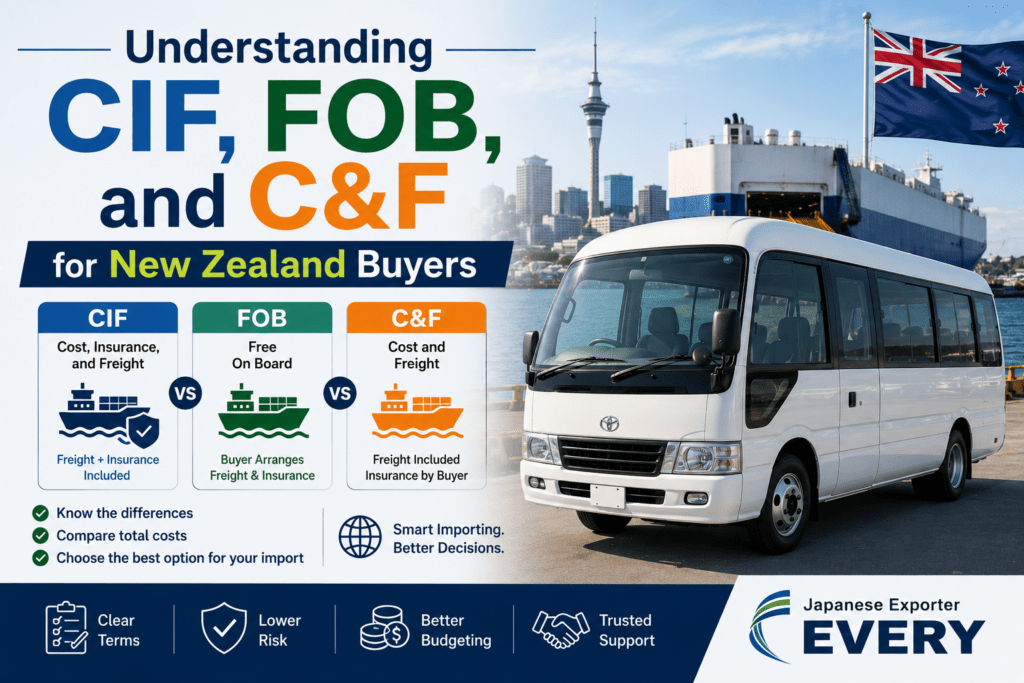

Understanding CIF, FOB, and C&F for New Zealand Buyers: Choose the Best Shipping Term When Importing from Japan
Importing a used vehicle from Japan is one of the smartest ways to buy a reliable, affordable, and high-quality car, truck, van, bus, or commercial vehicle. Japanese vehicles are well known for their excellent condition, low mileage, and long service life. As a result, many buyers in New Zealand import directly from Japan every year.
However, before placing an order, you need to understand one important part of international shipping. Exporters often use terms such as CIF, FOB, and C&F (CFR) when preparing quotations. These shipping terms affect your total cost, your responsibilities, and the level of risk during transportation.
Fortunately, these terms are much easier to understand than they first appear.
This guide explains the differences between CIF, FOB, and C&F in simple language. It also helps New Zealand buyers choose the best shipping option for their needs.
Why Shipping Terms Matter
Shipping terms clearly define who pays for transportation, insurance, and freight during the export process.
Knowing these terms helps you:
- Compare quotations correctly
- Understand total import costs
- Plan your budget
- Reduce unexpected expenses
- Choose the right exporter
- Import with confidence
Furthermore, understanding shipping terms makes communication with exporters much easier.
What Is FOB?
FOB stands for Free On Board.
Under FOB, the exporter is responsible for preparing the vehicle and loading it onto the ship in Japan.
After the vehicle is safely loaded, responsibility transfers to the buyer.
The buyer usually arranges:
- Ocean freight
- Marine insurance
- Destination charges
- Customs clearance
- Local transport
FOB is popular with experienced importers who already work with shipping companies.
Advantages of FOB
FOB offers several benefits.
These include:
- Greater control over shipping
- Flexible freight options
- Freedom to choose your own shipping company
- Easy comparison of freight rates
Businesses importing vehicles regularly often prefer FOB because they already have established logistics partners.
Things to Consider with FOB
FOB also requires more planning.
Buyers need to arrange:
- Freight booking
- Marine insurance
- Shipping schedules
- Destination handling
Therefore, FOB may feel challenging for first-time importers.
What Is CIF?
CIF stands for Cost, Insurance, and Freight.
Under CIF, the exporter arranges:
- Ocean freight
- Marine insurance
- Shipping to the destination port
The buyer usually handles:
- Customs clearance
- GST
- Biosecurity inspection
- Compliance inspection
- Registration
- Local transport after arrival
Because more services are included, CIF is one of the most popular shipping options.
Advantages of CIF
Many New Zealand buyers choose CIF because it offers greater convenience.
Benefits include:
- Simple shipping process
- Marine insurance included
- Easier budgeting
- Less coordination
- Lower stress for first-time buyers
Additionally, buyers receive one clear shipping quotation before export.
Things to Consider with CIF
Although CIF simplifies shipping, buyers still need to pay local charges after arrival.
These may include:
- GST
- Port charges
- Customs fees
- Biosecurity inspection
- Compliance inspection
- Registration fees
Therefore, always ask your exporter for a clear explanation of destination costs.
What Is C&F (CFR)?
C&F, also known as CFR (Cost and Freight), is another common international shipping term.
Under C&F, the exporter pays:
- Ocean freight
- Shipping costs
However, marine insurance is not included.
The buyer usually arranges:
- Marine insurance
- Customs clearance
- Port charges
- Compliance
- Registration
Many experienced buyers choose C&F because they prefer to arrange their own insurance.
Advantages of C&F
C&F offers several useful benefits.
These include:
- Lower shipping cost than CIF
- Flexible insurance choices
- Suitable for experienced importers
- Clear freight pricing
Things to Consider with C&F
Since insurance is not included, buyers should arrange coverage before shipment.
Marine insurance helps protect against:
- Storm damage
- Fire
- Theft
- Accidental damage
- Shipping incidents
Insurance usually costs much less than replacing a damaged vehicle.
Simple Comparison of CIF, FOB, and C&F
| Shipping Term | Freight Included | Insurance Included | Best For |
|---|---|---|---|
| FOB | No | No | Experienced importers |
| C&F (CFR) | Yes | No | Buyers arranging their own insurance |
| CIF | Yes | Yes | First-time and regular importers |
This simple comparison helps buyers understand which option best matches their experience and budget.
Which Shipping Term Is Best for New Zealand Buyers?
The best option depends on your experience.
Choose FOB if:
- You already have a freight company.
- You import vehicles regularly.
- You want full control over shipping.
Choose C&F if:
- You want the exporter to arrange freight.
- You prefer choosing your own insurance.
- You already understand international shipping.
Choose CIF if:
- This is your first import.
- You want a simple process.
- You prefer one complete shipping quotation.
- You want marine insurance included.
For many first-time New Zealand buyers, CIF offers the easiest and most convenient solution.
Additional Costs After Arrival
Regardless of the shipping term, buyers should also budget for local costs.
These commonly include:
- GST
- Customs charges
- Biosecurity inspection
- Port service fees
- Compliance inspection
- Registration
- Vehicle licensing
- Insurance
Planning these costs in advance helps avoid surprises.
Common Mistakes When Choosing Shipping Terms
Many new importers misunderstand shipping responsibilities.
Avoid these common mistakes.
Assuming CIF Covers Every Cost
CIF covers freight and insurance to the destination port.
It does not include local government charges after arrival.
Ignoring Marine Insurance
Vehicles travel thousands of kilometres across the ocean.
Insurance provides valuable protection during transport.
Choosing the Cheapest Quote Only
A lower shipping price may exclude important services.
Always compare the full quotation.
Not Asking Questions
If any shipping term seems unclear, ask your exporter before making payment.
Clear communication prevents misunderstandings later.
Tips for Choosing the Right Shipping Option
These simple tips help buyers make better decisions.
Compare complete quotations.
Review what each price includes.
Understand your responsibilities.
Know exactly which costs you will pay.
Consider your experience.
First-time buyers often benefit from simpler shipping options.
Work with a trusted exporter.
Professional exporters explain shipping terms clearly.
Ask about destination charges.
Understanding local costs improves budget planning.
Why Choose EVERY TRADING?
EVERY TRADING has supplied quality Japanese used vehicles to customers around the world for many years.
Our experienced export team explains every shipping option clearly before purchase.
We provide:
- Carefully inspected Japanese vehicles
- Transparent pricing
- FOB, CIF, and C&F shipping options
- Complete export documentation
- Fast worldwide shipping
- Honest communication
- Professional customer support
Whether you are importing one vehicle or building a commercial fleet, we help you choose the shipping method that best suits your business.
Final Thoughts
Understanding the difference between CIF, FOB, and C&F helps New Zealand buyers import vehicles with greater confidence. Each shipping term offers different responsibilities, costs, and advantages. By choosing the option that matches your experience and budget, you can enjoy a smoother importing process from Japan.
Most importantly, working with an experienced exporter like EVERY TRADING ensures you receive clear pricing, reliable guidance, and professional support every step of the way. With the right shipping option and proper planning, importing a quality Japanese vehicle into New Zealand becomes simple, secure, and cost-effective.


Browse Reliable Used Trucks & Buses from Japan
Carefully selected vehicles ready for export worldwide
Search 100,000+ Dealer Stock Vehicles from Japan
Access a wide selection of vehicles from Japanese dealers nationwide. Updated daily.
