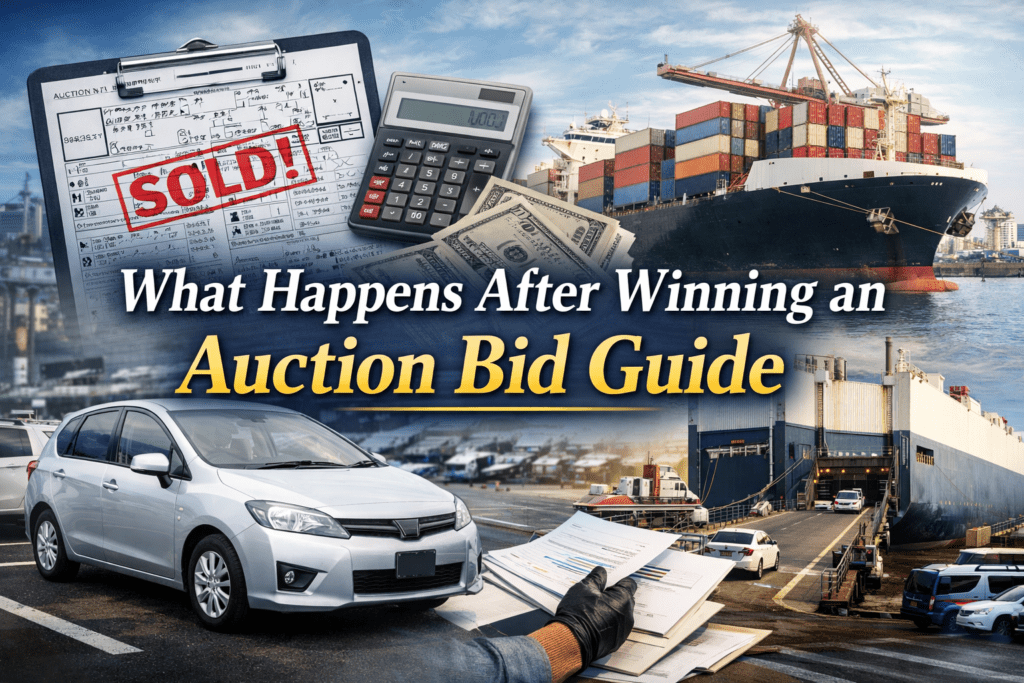

What Happens After Winning an Auction Bid
Winning a vehicle at a Japanese car auction is an exciting moment. However, for overseas buyers, the auction win is only the beginning of the process. After the bid is accepted, several important steps must happen before the vehicle can leave Japan and arrive in your country.
Many first-time buyers focus heavily on the bidding stage. They study auction sheets, compare grades, and set a maximum price. Yet after the hammer falls, they often realize that payment deadlines, domestic transport, export documents, shipping arrangements, and customs preparation are just as important as the bid itself.
This is why understanding the post-auction process is essential. If you know what happens after winning, you can avoid delays, control costs, and make your import business run more smoothly.
In this guide, we explain how the Japanese auction system works, what happens after a winning bid, why this matters for overseas buyers, what cautions to watch, and why working with a professional export company is the safest and most practical way to handle the full process.
Search available auction vehicles here:
Browse Auction Vehicles
Understanding the Japanese Car Auction System
Japanese used car auctions are wholesale marketplaces where licensed dealers and exporters buy and sell vehicles through live bidding systems. These auctions are not simple public retail websites. They are professional trade platforms designed for fast transactions, large stock volume, and structured buying and selling.
Vehicles come into the auction system from trade-ins, lease returns, rental fleets, company vehicles, dealer stock, and finance companies. Auction houses inspect the vehicles, prepare auction sheets, upload photos, and then place them into sale lanes or online bidding systems.
When the auction starts, buyers compete for the listed vehicles. If the highest bid reaches the seller’s conditions, the vehicle is sold. However, after the sale, the process moves quickly into payment, release, transport, and export handling. That next stage is what many overseas buyers need to understand clearly.
Main parts of the auction system
- Auction house: The company that manages inspection, listing, and bidding
- Seller: The dealer, lease company, or business offering the vehicle
- Buyer: A licensed dealer or exporter placing the winning bid
- Auction sheet: The condition report showing grade, damage marks, and comments
- Winning bid: The accepted final price that secures the vehicle
- Post-auction process: Payment, release, transport, export handling, and shipping
Most overseas buyers do not join the dealer-only auction system directly. Instead, they usually work through a Japanese export company. That exporter not only places the bid, but also manages the steps that happen after the auction is won.
What Happens Immediately After You Win the Bid
As soon as the auction result is confirmed, the winning buyer becomes responsible for the vehicle under the auction house’s rules. In most cases, the exporter or dealer receives a sale confirmation and the process moves quickly into the settlement stage.
This first phase is important because Japanese auctions operate on strict timelines. Delays in payment or document handling can create penalties, storage costs, or unnecessary problems.
Immediate actions after the win
- The auction result is confirmed
- The final sale price is recorded
- The buyer becomes responsible for payment
- The auction house prepares billing and release procedures
- The exporter starts the next steps for transport and export
For overseas buyers, this means the auction win is not the end of the work. It is the point where logistics and paperwork begin.
Step 1: Payment After Winning the Auction
One of the first and most important steps after winning is payment. Auction houses usually have firm deadlines. The buyer or exporter must complete payment within the required time so the vehicle can be released smoothly.
The payment stage often includes more than just the hammer price. Auction fees, service charges, inland transport, and export handling may also be part of the total invoice depending on how the exporter structures the transaction.
What payment may include
- The winning auction price
- Auction house fees
- Exporter service fees
- Domestic transport charges in Japan
- Port or handling costs
Overseas buyers should understand this clearly before bidding. A vehicle that looks affordable on the auction screen may carry additional charges after the win. This is one reason cost planning before auction day is so important.
Step 2: Vehicle Release and Domestic Transport in Japan
After payment is confirmed, the vehicle can be released from the auction house. At that stage, it usually needs to be moved from the auction location to a yard, inspection point, or export port.
Japan has many auction houses in different regions. The port of export may be far from the place where the car was sold. Because of that, inland transport is a normal part of the post-auction process.
Common transport destinations after the auction
- An exporter’s yard
- A storage facility
- An inspection center
- A shipping port
For buyers, this is another reason to work with an experienced exporter. A good exporter already knows how to arrange movement quickly and keep the process efficient.
Step 3: Document Preparation
Once the vehicle is secured and moving through the system, document handling becomes very important. Exporting a vehicle from Japan requires proper paperwork. If this stage is handled poorly, shipment delays can happen even when the auction purchase itself went well.
The exact documents may vary depending on the vehicle type, destination country, and shipping method. Still, the principle is simple. The exporter must collect, prepare, and manage the documents needed for legal export and destination customs clearance.
Documents commonly involved after the auction win
- Auction or purchase record
- Export documentation
- Vehicle registration-related papers
- Shipping documents
- Invoice and related commercial documents
Overseas buyers should not treat paperwork as a small detail. Strong documentation is one of the most important parts of a smooth import process.
Step 4: Export Inspection or Yard Preparation
Depending on the destination market, the vehicle may need further checks or preparation before shipment. In some cases, buyers request extra inspection, more photos, or confirmation of condition after the auction purchase. In other cases, the vehicle moves directly to port preparation.
Some vehicles may also need cleaning, light maintenance, or removal of personal items before export. Commercial vehicles, buses, and special machinery may require even more careful handling depending on shipping rules.
Possible pre-shipment preparation
- Condition re-check
- Basic cleaning
- Photo confirmation for the buyer
- Removal of loose items
- Export inspection if required
This stage helps reduce surprises and gives the buyer greater confidence before the vehicle leaves Japan.
Step 5: Shipping Arrangement
After the documents and preparation are ready, the exporter books shipment. The vehicle is then scheduled for export from Japan to the buyer’s country.
The shipping method usually depends on the vehicle type, destination, schedule, and buyer preference. The two most common approaches are RORO and container shipping. Each has different cost and handling characteristics.
Main shipping options
- RORO shipping: Common for standard vehicles and often efficient for export
- Container shipping: Often used when buyers want added protection, mixed cargo, or special handling
Once booking is confirmed, the vehicle is sent to the export port and waits for loading. At this stage, timing becomes important again, because shipping schedules affect how quickly the buyer receives the unit.
Benefits for Overseas Buyers
Understanding the post-auction process gives overseas buyers real advantages. Many auction problems do not come from the bid itself. They come from weak planning after the win.
1. Better cost control
When buyers understand what happens next, they can budget more accurately and avoid surprise costs after the auction.
2. Fewer delays
Knowing the process helps buyers prepare for payment, paperwork, and shipment with better timing.
3. Better risk management
Buyers who understand the steps after winning are less likely to overlook documents, deadlines, or preparation requirements.
4. Smoother import planning
Good post-auction handling helps buyers organize customs clearance, sales schedules, and local inventory planning in advance.
5. Better long-term sourcing
Strong auction buying is not only about finding a vehicle. It is about building a reliable repeatable system from bid to delivery.
Important Cautions After Winning a Bid
Many first-time buyers think the hard part is over after they win. In reality, the post-auction stage is where discipline is still required.
Do not delay payment
Auction houses often work on strict schedules. Slow payment can cause problems quickly.
Do not ignore the full invoice
The winning price is not always the final cost. Buyers should review all related fees and charges clearly.
Do not underestimate document handling
Even a strong vehicle deal can become difficult if paperwork is incomplete or delayed.
Do not assume shipment happens immediately
Port schedules, shipping availability, and export preparation all affect the actual timeline.
Do not lose sight of local import needs
The vehicle may leave Japan smoothly, but the buyer still needs the right documents and planning for customs and delivery in the destination country.
Why Professional Export Companies Matter
For overseas buyers, this entire process is much easier when a professional export company is involved. A good exporter does more than win the auction. They manage the steps that happen after the auction with speed, structure, and experience.
This is one reason the EVERYCAR guide collection includes not only auction system topics, but also export process topics such as documents, shipping, and how export companies handle auction purchases. Winning the vehicle is only one stage in a much larger process. :contentReference[oaicite:1]{index=1}
How exporters add value after the winning bid
- They manage payment deadlines correctly
- They arrange inland transport in Japan
- They prepare export documents and invoices
- They coordinate port handling and shipping booking
- They help the buyer stay informed through the process
For global buyers, this support reduces stress and makes the full import flow much more reliable. The exporter becomes more than a bidding agent. They become the operational partner who moves the vehicle from auction win to shipment.
Simple Tips for Overseas Buyers
If you want smoother results after winning a Japanese auction bid, keep the process simple and organized.
- Confirm all costs before the auction starts
- Be ready to make payment quickly after the win
- Ask your exporter to explain the document flow clearly
- Understand the likely shipping method and timeline
- Work with an exporter who handles post-auction operations professionally
These habits can save time, reduce mistakes, and help you build a stronger long-term vehicle import business from Japan.
Conclusion
Winning an auction bid in Japan is an important step, but it is only the start of the full buying process. After the win, payment, vehicle release, domestic transport, document handling, yard preparation, and shipping all become critical.
For overseas buyers, understanding these steps makes the auction process much easier to manage. It also helps control cost, reduce delay, and improve the final business result. A successful auction purchase is not only about getting the vehicle. It is about moving the vehicle smoothly from auction to destination.
EVERY TRADING is a Japanese used vehicle export company serving customers around the world. We help overseas buyers search Japanese auction vehicles, understand auction systems, and move from bidding to shipment with more confidence and better control. The EVERYCAR auction guide collection and search platform are designed to help global buyers understand Japan’s auction market and access available stock from Japan. :contentReference[oaicite:2]{index=2}
Learn more about Japanese auctions:
Japanese Car Auction Guide
Start searching your vehicle from Japan today:
Search Auction Vehicles Now
If you are looking for any Japanese vehicles, cars and truck and bus for sale, please check our list.
The list of Japanese Used Truck, Bus, cars, and tractor exporter EVERYCAR.jp (*Click to open).We do our best work for all customer's partnership.
It's for SDGs goal number 17 "PARTNERSHIP FOR THE GOALS".
Let's work together!


