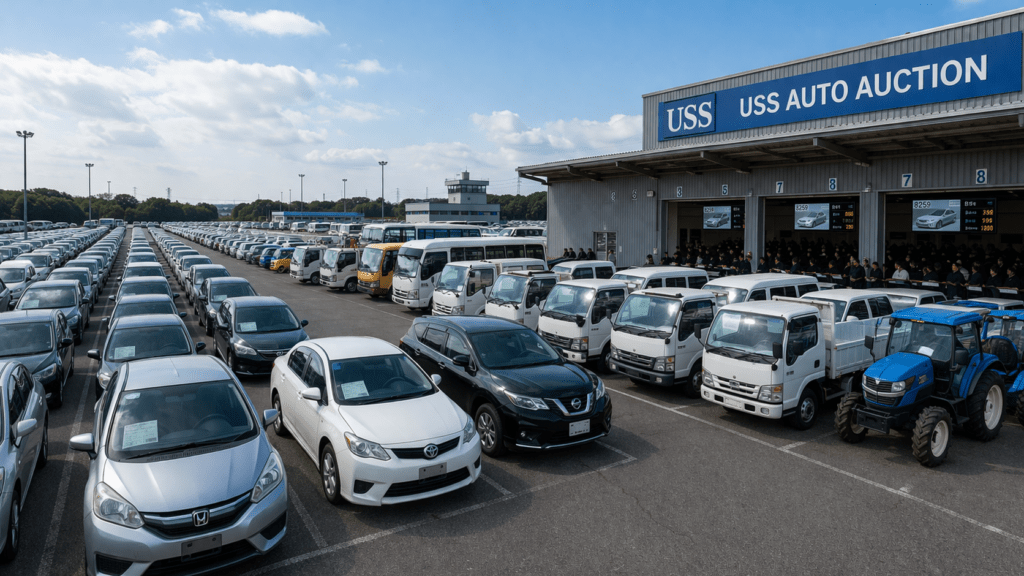

What Is a Japanese Car Auction?
Japanese car auctions are one of the most important parts of the used vehicle business in Japan. They are large wholesale marketplaces where licensed dealers buy and sell vehicles through a bidding system. Every week, a huge number of vehicles are listed at auction houses across Japan, including passenger cars, trucks, buses, vans, tractors, and many other commercial vehicles.
Search available auction vehicles here:
Browse Auction Vehicles
For overseas buyers, Japanese car auctions are a major source of supply. Many vehicles exported from Japan are first purchased at auction. This is because auctions offer a wide selection, market-based pricing, and professional inspection reports that help buyers understand vehicle condition before purchase.
If you want to buy vehicles from Japan for personal use or for business, it is important to understand how Japanese car auctions work. This guide explains the auction system in simple English and shows why many overseas buyers choose this route when sourcing vehicles from Japan.
What Is the Japanese Car Auction System?
A Japanese car auction is a dealer-only marketplace where used vehicles are sold by bidding. Unlike a normal retail used car lot, auctions are not usually open to the general public. Most auction houses are designed for licensed dealers, exporters, and other automotive professionals.
Vehicles are brought to the auction by many types of sellers. These can include car dealers, leasing companies, rental companies, transport companies, construction businesses, farms, and private owners. Because of this, auctions offer a very wide range of stock every week.
The basic system is simple. A vehicle is listed for sale, buyers review the information, and then bids are placed at a scheduled auction time. The highest acceptable bid wins the vehicle. In many cases, everything happens very quickly, especially for popular models and commercial vehicles in strong demand.
One reason Japanese car auctions are trusted around the world is the inspection process. Before the vehicle is sold, it is checked by an auction inspector. The inspector prepares a report that usually includes:
- Exterior condition
- Interior condition
- Visible scratches, dents, and repairs
- Mileage information
- Auction grade
- Comments about condition and equipment
This inspection sheet is one of the most valuable parts of the auction system. It gives buyers more transparency than many ordinary used vehicle markets in other countries.
Why Japanese Car Auctions Matter in the Export Business
Japanese car auctions play a central role in the vehicle export business. Japan has a strong used vehicle market, strict inspection culture, and many businesses that regularly replace their fleets. As a result, large numbers of used vehicles move through the auction system every week.
For exporters, auctions are important because they create access to supply. Instead of depending on a small number of local sellers, exporters can search across a much larger market. This is especially valuable when customers need specific specifications, brands, body types, or price ranges.
For example, a buyer may want a light-duty truck, a used bus, a tractor, or a commercial van with a specific engine size or drive type. Auctions make it easier to search for these requirements because vehicles from many regions of Japan are brought into one searchable system.
This is one reason why Japanese auctions are so useful for overseas buyers in Africa, the Caribbean, Asia, Oceania, and many other markets. Instead of waiting for one dealer to have the right stock, buyers can gain access to thousands of possible options.
How Japanese Car Auctions Work
1. Vehicles Are Collected and Listed
The process starts when vehicles are submitted to an auction house. These vehicles are then photographed, inspected, and listed in the auction system. Basic details are recorded so dealers can review the vehicle before bidding.
2. Inspection Reports Are Prepared
Each auction house has its own inspection standards, but most provide a condition report with grading. This does not mean the vehicle is perfect, but it does provide useful information for decision-making. Buyers can check whether a vehicle has scratches, dents, corrosion, interior wear, accident history, or repair marks.
3. Buyers Search for Vehicles
Licensed auction members and exporters search the available listings before the auction starts. They compare condition, mileage, model year, specifications, and expected selling prices. Good exporters do not just look at price. They also compare vehicle suitability for the customer’s country and business purpose.
4. Bidding Takes Place
At the auction time, vehicles are sold one by one through an electronic bidding system. Bidding can move very fast. A vehicle may be sold in only a few seconds. Because of this, buyers usually decide in advance how much they are willing to pay.
5. The Vehicle Is Won or Lost
If the highest bid is accepted, the buyer wins the vehicle. If another bidder goes higher, the vehicle is lost. In some cases, the seller may reject the final bid if it is below the reserve price.
6. Payment and Export Process Begin
After winning, the buyer or exporter arranges payment and starts the next steps, such as transport, documentation, shipping booking, and export preparation.
Major Advantages for Overseas Buyers
Japanese car auctions offer many advantages for overseas buyers. This is why they are used by importers, dealers, traders, and fleet buyers around the world.
Wide Selection
One of the biggest benefits is the number of available vehicles. Auctions list many more units than a single dealer can normally hold. This gives buyers more chances to find suitable vehicles in the correct budget range.
Market-Based Pricing
Auction prices are usually based on real demand. This makes the system more transparent than fixed retail pricing. Buyers can often find better value, especially when they work with exporters who understand market trends.
Access to Commercial Vehicles
For companies like EVERY TRADING, this is especially important. Many overseas markets need working vehicles such as trucks, buses, tractors, and other business-use units. Auctions can be a strong source for this type of stock.
Inspection Transparency
The auction report helps reduce uncertainty. It does not remove all risk, but it gives a structured summary of condition before the vehicle is purchased.
Better Sourcing Flexibility
If a customer wants a specific model, engine, transmission, or body style, auctions often provide more sourcing flexibility than dealer stock alone.
The Basic Buying Flow for Overseas Buyers
Most overseas buyers cannot directly register and bid at Japanese car auctions by themselves. In most cases, they buy through a professional exporter in Japan. The normal process looks like this:
Step 1: Tell the Exporter What You Need
The buyer shares the required vehicle type, brand, budget, model year, and destination country. If the customer is buying for resale, it is also important to discuss the local market and which specifications are most suitable.
Step 2: Search Available Auction Stock
The exporter searches the auction system and finds matching vehicles. Good exporters also compare auction stock with dealer stock when necessary.
Step 3: Review Photos and Inspection Sheets
The buyer checks the available information. At this stage, the exporter may also explain the auction grade, damage marks, remarks, and estimated final price.
Step 4: Decide the Maximum Bid
Before the auction begins, the buyer and exporter agree on a maximum bid amount. This is important because auction bidding moves quickly.
Step 5: Bid at the Auction
The exporter places the bid. If the bid wins and the seller accepts the final amount, the vehicle is purchased.
Step 6: Arrange Payment
After purchase, the buyer pays according to the exporter’s invoice terms. This often includes the vehicle price and related export costs.
Step 7: Export Preparation and Shipping
The vehicle is transported, prepared for export, and shipped to the destination country. Depending on the shipment method, this may be done by RORO vessel or container.
Important Things to Be Careful About
Although Japanese auctions are professional and reliable, overseas buyers still need to be careful. Understanding the risks is an important part of buying well.
Inspection Sheets Must Be Read Properly
The inspection sheet is helpful, but it must be understood correctly. Symbols, notes, and grades may be confusing for first-time buyers. Working with an exporter who can explain the report clearly is very important.
Auction Grades Are Not Everything
Some buyers focus too much on the auction grade. In reality, the full condition report, photos, service use, rust exposure, and intended market use are also important. A lower-grade vehicle may still be a good business purchase in some markets, while a higher-grade vehicle may still need attention.
Prices Can Rise Quickly
Popular vehicles can sell above expectation. This is especially true when export demand is strong or when the vehicle has attractive specifications. Buyers need realistic budgets and good market advice.
Import Rules Differ by Country
Every country has different rules for age limits, emissions, inspection, taxes, left-hand or right-hand drive acceptance, and shipping requirements. Buyers should always check local import rules before purchasing.
Commercial Vehicles Need Extra Attention
When buying trucks, buses, tractors, or other working vehicles, condition checks are even more important. Business-use vehicles may have heavier wear depending on previous operation.
Why It Is Better to Use a Professional Export Company
For most overseas buyers, using a professional export company is the safest and most practical way to buy from Japanese car auctions. This is not only because of auction access. It is also because the process requires experience, language understanding, documentation control, and export management.
A professional exporter helps with:
- Vehicle search support
- Auction sheet interpretation
- Bidding advice
- Market price guidance
- Payment handling
- Export documentation
- Shipping arrangements
- Communication throughout the process
This support is especially important for buyers who want to build a long-term import business. The right exporter is not just a seller. They are a sourcing partner who helps reduce risk and improve purchasing decisions.
Why Japanese Car Auctions Are Useful for Business Buyers
Many buyers do not purchase from Japan only for personal use. They purchase for resale, fleet use, transport business, construction work, farming, or public service use. In those cases, auctions are even more valuable because they make it easier to source multiple units or find specific working vehicles.
For example, an importer may need:
- Used trucks for logistics businesses
- Used buses for passenger transport
- Used tractors for agricultural work
- Commercial vans for company operations
- Special vehicles for industrial or municipal use
Japanese auctions can provide these vehicles in larger numbers than normal retail channels. This is one reason why exporters serving business buyers often rely heavily on auction sourcing.
What Makes Japan Different from Other Used Vehicle Markets?
Japan is different because of the structure of its vehicle market. Many owners maintain vehicles carefully. Fleet replacement cycles can be regular. Business operators often upgrade units on schedule. Auctions bring these vehicles into an organized trading system.
In addition, Japan has a strong business culture around documentation and inspection. This helps create the level of trust that supports large-scale domestic and export trading.
Of course, not every auction vehicle is perfect. Buyers still need to choose carefully. But compared with many informal used vehicle markets, Japan offers a more structured and professional environment.
Final Thoughts
A Japanese car auction is a professional wholesale marketplace where licensed dealers buy and sell used vehicles through bidding. It is one of the most important sources of vehicles for the global used car export trade. For overseas buyers, it offers wide selection, transparent condition reporting, and access to many vehicles that may not be available through ordinary dealer stock.
At the same time, successful buying requires proper understanding. Buyers need to know how the system works, how to read condition information, how to set realistic budgets, and how to manage export procedures correctly. This is why working with an experienced exporter is so important.
EVERY TRADING Co Ltd is a Japanese used vehicle export company serving customers around the world. We support overseas buyers with vehicle sourcing, auction support, export procedures, and shipping coordination. Through our platform, customers can search Japanese auction vehicles and find stock suitable for their market needs.
If you want to search available auction vehicles from Japan, please visit the following page:
Learn more about Japanese auctions:
Japanese Car Auction Guide
Start searching your vehicle from Japan today:
Search Auction Vehicles Now
The list of Japanese Used Truck, Bus, cars, and tractor exporter EVERYCAR.jp (*Click to open).We do our best work for all customer's partnership.
It's for SDGs goal number 17 "PARTNERSHIP FOR THE GOALS".
Let's work together!


