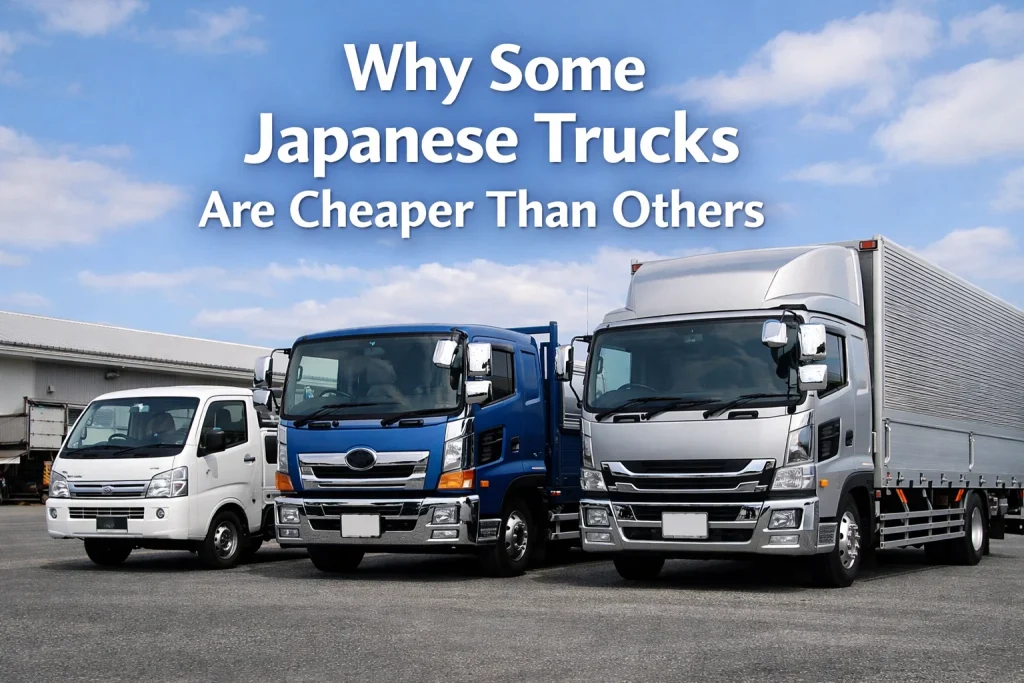
Why Some Japanese Trucks Are Cheaper Than Others
Many buyers notice big price differences among Japanese used trucks.
At first glance, this can feel confusing.
For buyers in DR Congo, understanding price gaps is important.
Therefore, this article explains why some trucks cost less than others.
By learning the reasons, you can choose wisely.
As a result, you avoid costly mistakes.
Not All Japanese Trucks Are the Same
Japanese trucks share a strong reputation.
However, each unit has a unique background.
Age, usage, and condition vary.
These factors strongly affect price.
So, cheaper does not always mean bad.
But it always means different.
Vehicle Age and Model Year Matter
Older trucks usually cost less.
This is the most obvious factor.
Newer models follow stricter standards.
They also include updated technology.
As trucks age, value drops naturally.
Therefore, price differences appear.
Mileage Has a Direct Impact on Price
Mileage shows how much a truck worked.
Higher mileage often lowers price.
However, Japanese trucks handle long use well.
Maintenance quality often matters more.
Still, buyers see mileage first.
So, high mileage trucks sell cheaper.
Engine Type and Specifications
Engine size affects cost.
Larger engines usually cost more.
Fuel type also matters.
Diesel engines hold value better.
Some engines suit export markets better.
Others have lower demand.
Demand always influences price.
That explains many differences.
Body Type and Application
Dump trucks, flatbeds, and refrigerated trucks differ.
Each has a different market value.
Special-purpose trucks often cost more.
They include extra equipment.
Standard models sell faster.
Therefore, prices stay competitive.
Condition and Maintenance History
Well-maintained trucks cost more.
Service records add value.
Trucks with wear sell cheaper.
Cosmetic damage lowers price quickly.
However, cosmetic issues may not affect performance.
Smart buyers look deeper.
Accident History and Repairs
Accident history reduces value.
Even small repairs affect price.
Exporters disclose this information.
Lower prices often reflect past damage.
Transparency helps buyers decide.
It also builds trust.
Market Demand in Export Countries
Popular models cost more.
Demand drives pricing.
If demand drops, prices fall.
This creates opportunities for buyers.
Understanding market trends helps you save.
Timing matters.
Emission Standards and Regulations
Older emission standards lower prices.
Some countries accept them easily.
Newer standards increase cost.
They also limit export destinations.
For DR Congo buyers, flexibility helps.
It opens access to lower-priced units.
Why Cheaper Does Not Always Mean Risky
Low price does not mean poor quality.
It often reflects usage history.
Many cheap trucks still work well.
They suit specific needs.
The key is matching truck to purpose.
That creates value.
How to Choose the Right Truck for Your Budget
Start with your business needs.
Then, set a clear budget.
Compare several options carefully.
Ask detailed questions.
Knowledge protects your investment.
Smart choices lead to profit.
Final Thoughts
Price differences exist for clear reasons.
Understanding them gives you power.
For DR Congo buyers, awareness saves money.
It also reduces risk.
When you know why trucks cost less,
you buy with confidence.
If you are looking for Japanese Used truck, please check our list.
The list of Japanese used truck for sale(*Click to open).
We do our best work for all customer's partnership.
It's for SDGs goal number 17 "PARTNERSHIP FOR THE GOALS".
Let's work together!


