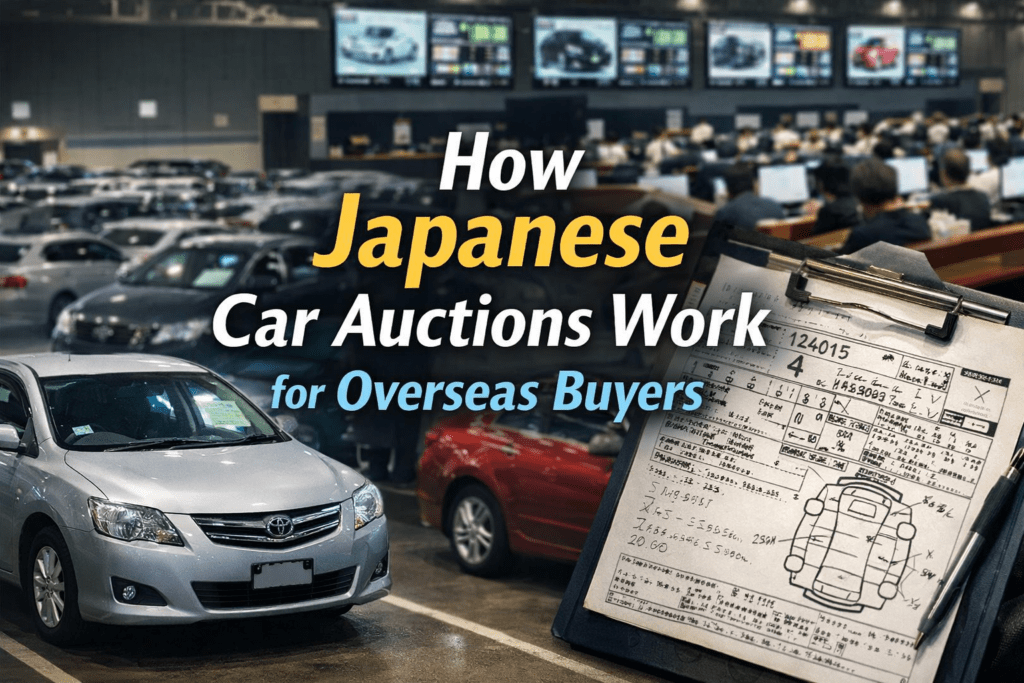

How Japanese Car Auctions Work
Japanese car auctions are one of the most important sources of used vehicles for the global export market. Every week, a huge number of cars, vans, trucks, buses, and machinery units move through auction houses across Japan. For overseas buyers, these auctions open the door to better choice, better pricing, and access to vehicles that may never appear in normal dealer stock.
However, many first-time buyers do not fully understand how the system works. They may hear about auction sheets, bidding lanes, inspection grades, and reserve prices, but the full process can still feel confusing. This guide explains the system in simple English. It also shows why many international buyers work with a professional export company instead of trying to handle everything alone.
Search available auction vehicles here:
Browse Auction Vehicles
What Is a Japanese Car Auction?
A Japanese car auction is a wholesale marketplace where licensed dealers buy and sell used vehicles through a bidding system. Most auction houses are not open to the general public. Instead, registered members such as dealers, exporters, and trade professionals access the vehicles and place bids on behalf of customers.
These auctions are known for large volume, fast turnover, and organized inspection systems. Vehicles come from many sources, including trade-ins, lease returns, finance companies, rental fleets, and dealer inventories. Because of this, buyers can find a very wide range of stock in one place.
For overseas buyers, this system matters because it gives access to vehicles at true market level. Instead of seeing only what one dealer wants to offer, buyers can search many auction listings and compare condition, year, mileage, and final price.
How the Japanese Used Car Auction System Works
1. Sellers Send Vehicles to Auction
The process starts when a seller sends a vehicle to an auction house. The seller may be a dealer, a company, or another business with stock to move quickly. Before the sale date, the vehicle is registered in the auction system and basic details are added.
2. The Vehicle Is Inspected
Next, the auction house inspects the vehicle. An inspector checks the car and prepares an auction sheet. This sheet usually includes the year, model, mileage, equipment, visible damage, repairs, interior condition, and an overall auction grade. A diagram may also show dents, scratches, paint marks, rust, or replaced panels.
This inspection sheet is one of the most useful parts of the Japanese auction system. It gives buyers a faster way to understand the vehicle before bidding. Still, it should never replace professional review and exporter support.
3. The Vehicle Is Listed Before Auction Day
After inspection, the vehicle appears in the auction list. Buyers can review photos, specifications, auction sheet comments, location, and sale schedule. Exporters often help overseas customers shortlist vehicles that match their target market, budget, and shipping plan.
4. Buyers Place Bids
On auction day, dealers and exporters place bids through a live system. In many cases, bidding moves very fast. The price rises in small steps as buyers compete. If the highest bid reaches the seller’s acceptable level, the vehicle is sold.
If the highest bid does not meet the seller’s target, the vehicle may remain unsold. In some cases, negotiation happens after the auction. In other cases, the vehicle returns to auction later.
5. The Winning Buyer Completes Payment and Collection
When a buyer wins, the vehicle moves into post-auction processing. The buyer or export company arranges payment, inland transport, storage, shipping preparation, export documentation, and delivery planning. This stage is very important because delays or mistakes can create extra cost.
Why Overseas Buyers Use Japanese Car Auctions
Japanese auctions are popular with global buyers for many practical reasons. They are not only about low price. They also offer variety, transparency, and access to vehicles that fit many different export markets.
Large Selection
One of the biggest advantages is choice. Buyers can compare many units from different auction houses instead of depending on a single supplier. This is especially useful for importers who need specific brands, low mileage vehicles, commercial units, or rare models.
Market-Based Pricing
Auction pricing reflects real dealer competition. As a result, buyers can often see the actual market value more clearly than in fixed-price dealer stock. This makes it easier to estimate margins for resale in overseas markets.
Useful Condition Information
The auction sheet gives valuable information before purchase. It helps buyers filter vehicles more efficiently and avoid obvious problem units. Although inspection is not perfect, it is still a major benefit compared with markets that offer less structure.
Access to Export-Friendly Stock
Many auction vehicles are ideal for export. Buyers can find passenger cars, SUVs, kei vehicles, vans, trucks, buses, tractors, and special units in one system. Therefore, both retail importers and commercial fleet buyers can source stock more efficiently.
Better Business Planning
Because auctions happen regularly, overseas buyers can plan purchases more consistently. This helps with inventory forecasting, shipping schedules, and customer orders in the destination country.
- Wide range of vehicles every week
- Transparent bidding process
- Helpful inspection sheets
- Access to wholesale market pricing
- Strong supply for export businesses
The Typical Buying Flow for Overseas Buyers
Many first-time customers think they can simply choose a car and buy it immediately. In reality, the process works best when each step is handled in the right order. Below is the normal flow used by professional exporters and experienced global buyers.
Step 1: Define Your Target Vehicle
First, decide what you want to buy. This includes body type, engine size, fuel type, transmission, age range, mileage range, and budget. It is also smart to think about your destination market. Some countries prefer small fuel-efficient cars, while others have stronger demand for pickups, minibuses, or trucks.
Step 2: Search Auction Listings
Next, review available auction vehicles. A good export company can search many listings and help you focus on units with the right specifications. This saves time because thousands of vehicles may be available across the system.
Step 3: Check the Auction Sheet Carefully
Before bidding, study the auction sheet. Look at the grade, repair history, comments, damage map, mileage, and equipment. Also check whether the model suits import rules in your country. A vehicle that looks attractive at first may not fit local regulations or resale demand.
Step 4: Set a Maximum Bid
This is a very important step. Do not bid based only on auction excitement. Instead, calculate your maximum total cost. Include auction price, auction fees, inland transport, export charges, ocean freight, insurance, import duty, local taxes, and delivery cost in your country.
Step 5: Bid Through an Exporter or Licensed Member
Because most overseas buyers cannot join auctions directly, a licensed exporter usually places the bid. The exporter follows your instructions and bids up to the approved maximum.
Step 6: Win, Pay, and Prepare Export
If you win the vehicle, the export company arranges payment and next-stage logistics. This may include transport from the auction house, radiation or inspection checks if required, port booking, document preparation, and shipping arrangement.
Step 7: Receive Shipping Documents
After shipment, the buyer receives the main export documents. These may include the invoice, packing information, export certificate, and bill of lading, depending on the case and destination. These documents are necessary for customs clearance and vehicle registration in many countries.
Step 8: Clear and Receive the Vehicle
Finally, the vehicle arrives at the destination port. The buyer or local clearing agent handles customs, taxes, and final release. After that, the vehicle can move to dealership stock, a retail customer, or a business fleet.
Important Points to Watch Before Buying
Japanese auctions are useful, but buyers still need to be careful. A smart buying strategy protects your money and improves resale success.
Auction Grade Is Helpful, But Not Everything
Many buyers focus too much on the grade alone. A grade gives a quick summary, but it does not tell the full story. Two vehicles with the same grade may feel very different in real use. Always review the full sheet, photos, and exporter comments.
Repair History Needs Attention
Some vehicles have accident or repair history. In many cases, this is shown by grades such as R or RA, depending on the system. These units can be cheaper, but they need extra caution. They may suit some markets, yet not others.
Total Cost Matters More Than Hammer Price
A low winning bid does not always mean a good deal. Many extra costs appear after the auction. Buyers who ignore shipping, local taxes, inland delivery, and compliance cost may lose profit even when the auction price looks cheap.
Local Import Rules Must Be Checked First
Each country has its own rules. Some markets limit vehicle age. Others require right-hand drive, emissions compliance, pre-shipment inspection, or special paperwork. Therefore, buyers should confirm all import conditions before bidding.
Photos Can Be Limited
Auction photos are useful, but they may not show every issue. Small scratches, underbody rust, odors, worn interiors, or mechanical problems may not appear clearly. That is why experienced exporters add another layer of checking before purchase or shipment when possible.
- Do not rely only on the auction grade
- Check repair history carefully
- Calculate full landed cost
- Confirm local import rules before bidding
- Use professional support for inspection review
Why It Is Smart to Use a Professional Export Company
For overseas buyers, working with a professional export company is often the safest and most efficient way to buy from Japanese car auctions. The auction system moves fast, and it uses trade-specific language, dealer access, and local procedures. A reliable exporter helps turn that complex process into a manageable business flow.
Access to Auction Membership
Most overseas buyers cannot bid directly. Professional exporters already have access or dealer partnerships. This allows them to search listings, place bids, and handle post-auction tasks legally and smoothly.
Better Vehicle Selection
An experienced exporter understands both the Japanese auction system and overseas market demand. That means they can help buyers avoid units with poor resale potential and focus on vehicles that match customer needs in the destination country.
Support With Inspection Sheet Reading
Auction sheets often contain Japanese notes and trade abbreviations. A professional exporter can explain this information clearly. This reduces the chance of misunderstanding damage, repairs, equipment, or special remarks.
Control of Export Process
Winning the bid is only one part of the job. After that, the exporter must manage transport, storage, booking, paperwork, and communication. A trusted export company keeps these steps organized and helps avoid delays.
Reduced Risk for Overseas Buyers
Most importantly, a good exporter reduces risk. They guide you on bidding, help estimate full cost, confirm availability, and support shipping. This is especially important for new importers who are still learning the auction business.
Best Practices for Building a Strong Import Business Through Auctions
If you want long-term success, do not treat Japanese auctions as a one-time bargain source. Instead, use them as a structured buying channel for your business.
Start with clear target models. Learn which grades fit your market. Track final selling prices every week. Build a cost sheet for each destination. Work with an exporter who communicates fast and clearly. Over time, this approach helps you buy more accurately and improve profit stability.
It is also wise to review each purchase after delivery. Ask yourself simple questions. Did the vehicle match the sheet? Was the resale speed good? Did freight and tax match your estimate? This feedback improves future bidding decisions.
Conclusion
Japanese car auctions are a powerful sourcing tool for overseas buyers. They offer huge choice, market-based pricing, and organized vehicle information. At the same time, they require knowledge, planning, and the right local support.
When buyers understand how the system works, they can make better decisions and build a stronger import business. The key is not only finding a cheap vehicle. The real goal is buying the right vehicle, at the right price, with the right export process behind it.
That is why many serious international buyers choose to work with a professional export company from Japan.
Find Japanese Auction Vehicles With EVERY TRADING
EVERY TRADING is a Japanese used vehicle export company serving customers around the world. We help global buyers access Japanese auction vehicles more easily and understand the buying process with clear support.
If you are looking for cars, trucks, buses, tractors, or other vehicles from Japan, we can help you search auction stock and export suitable units for your market. Our platform allows overseas buyers to check Japanese auction vehicles in one place and move forward with confidence.
Learn more about Japanese auctions:
Japanese Car Auction Guide
Start searching your vehicle from Japan today:
Search Auction Vehicles Now
If you are looking for any Japanese vehicles, cars and truck and bus for sale, please check our list.
The list of Japanese Used Truck, Bus, cars, and tractor exporter EVERYCAR.jp (*Click to open).We do our best work for all customer's partnership.
It's for SDGs goal number 17 "PARTNERSHIP FOR THE GOALS".
Let's work together!


