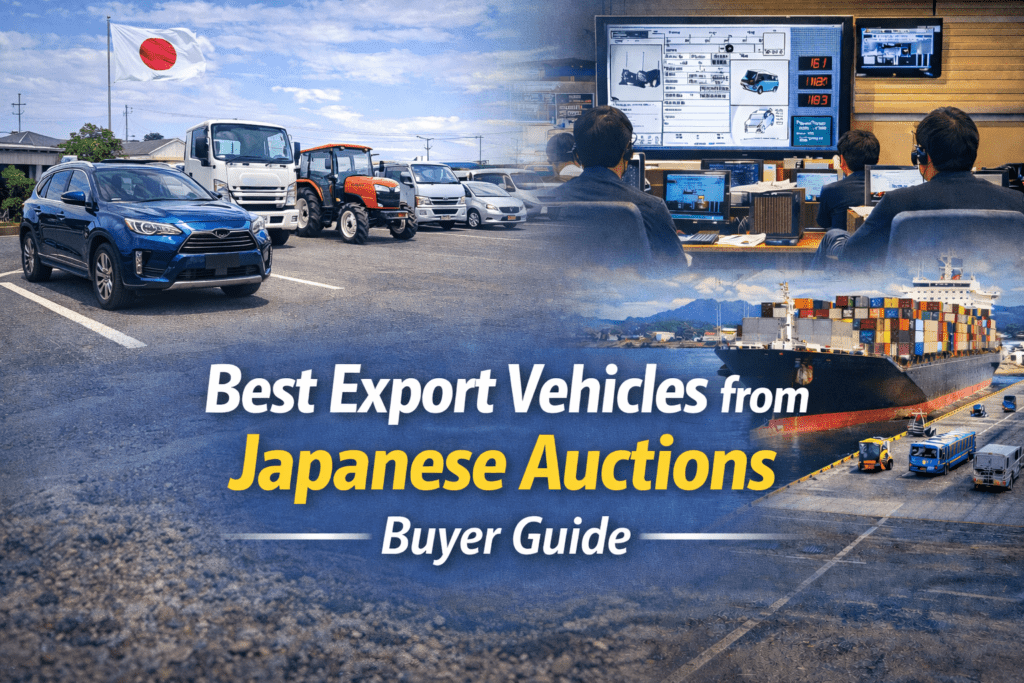

Best Export Vehicles from Japanese Auctions
Search available auction vehicles here:
Browse Auction Vehicles
Japanese vehicle auctions are one of the best sources for export-quality used vehicles. Every week, large numbers of cars, trucks, vans, buses, tractors, and commercial vehicles are listed across Japan. For overseas buyers, this creates a strong chance to find vehicles that match local market demand, business use, and budget goals.
However, not every auction vehicle is the right export vehicle. The best export vehicles are the ones that combine strong global demand, reliable performance, practical maintenance, and stable resale value. A vehicle may look attractive at a low price, but it still needs to fit the buyer’s country, road conditions, customer preferences, and import regulations.
This guide explains how the Japanese auction system works, what makes a vehicle a strong export choice, which vehicle types are often best for export, how the buying process works, what mistakes to avoid, and why a professional export company matters.
How the Japanese Used Vehicle Auction System Works
Japanese vehicle auctions are dealer-based marketplaces. Most overseas buyers cannot enter and bid directly. Instead, licensed dealers and export companies use the auction network and place bids on behalf of overseas customers.
Each auction listing usually includes basic vehicle information such as make, model, year, mileage, engine type, transmission, fuel type, and photos. Many listings also include an auction inspection sheet that gives a summary of condition.
This system is one reason Japanese auctions are trusted by buyers around the world. The market is large, organized, and active. EVERYCAR’s auction guide page explains that these guides are meant to help overseas buyers understand auction systems, inspection reports, bidding procedures, and the export process. :contentReference[oaicite:1]{index=1}
How Bidding Works
Vehicles are sold on the auction day through competitive bidding. If the highest bid reaches the seller’s acceptable price, the vehicle is sold. If not, the vehicle may remain unsold.
Because bidding moves quickly, experienced buyers prepare in advance. They define their target model, set a maximum budget, check condition details, and plan shipping before the auction begins.
What Makes a Vehicle One of the Best Export Vehicles?
The best export vehicles are not always the cheapest vehicles. A good export vehicle performs well after arrival, sells well in the destination market, and remains practical to own and maintain.
Main Features of Strong Export Vehicles
- High demand in the destination country
- Reliable engine and transmission performance
- Strong brand reputation
- Easy access to spare parts
- Suitable body style for local use
- Reasonable landed cost after shipping and taxes
- Good resale value
Export buyers should always think beyond the auction price. The right vehicle is the one that creates long-term value in the market after import.
Why Overseas Buyers Use Japanese Auctions
Japanese auctions are popular because they offer access to a large number of vehicles in one place. Instead of depending on one supplier, buyers can compare many units across multiple auction houses and sale dates.
1. Large Vehicle Volume
Japan has one of the largest used vehicle auction systems in the world. The EVERYCAR auction article hub describes the market as a complete collection of guides for overseas buyers and highlights the large selection of vehicles across auction categories. :contentReference[oaicite:2]{index=2}
2. Wide Range of Export-Suitable Vehicles
EVERYCAR’s guide list shows that buyers search auctions not only for cars, but also for trucks, buses, tractors, Toyota vehicles, and market-focused export vehicles. This reflects how wide the export opportunity is in Japanese auctions. :contentReference[oaicite:3]{index=3}
3. Structured Vehicle Information
Auction listings usually provide organized details that help buyers compare stock more easily. That makes it easier to identify vehicles that fit market demand.
4. Better Buying Opportunities
Buyers can often source vehicles at better prices than standard retail stock. This helps importers improve profit margins or offer more competitive selling prices in their own countries.
Best Types of Export Vehicles from Japanese Auctions
Different countries prefer different vehicles. Even so, some categories consistently perform well in export markets because they combine reliability, versatility, and strong demand.
Passenger Cars
Compact cars and sedans remain strong export choices. They are practical, fuel-efficient, and easier to sell in many countries. Models with good brand recognition often move faster in resale markets.
SUVs and 4WD Vehicles
SUVs are popular in markets with rough roads, rural routes, or buyers who want extra durability. These vehicles often appeal to both private users and commercial buyers.
Vans
Vans are valuable because they serve many purposes. Buyers use them for cargo delivery, passenger movement, tourism, school transport, and business operations.
Pickup Trucks
Pickup trucks are among the best export vehicles for many regions because they work for both private and commercial use. They are practical for farming, transport, construction, and everyday driving.
Commercial Trucks
Light-duty and medium-duty trucks are popular for logistics, delivery, business transport, and contractor work. In many markets, a reliable used Japanese truck is easier to resell than an unknown vehicle brand.
Buses and Minibuses
These are strong export choices for tourism, staff transport, school transport, and regional passenger services.
Tractors and Agricultural Machinery
Japanese used tractors are in demand in many farming markets because they are compact, efficient, and known for dependable engineering.
Popular Export-Friendly Brands in Japanese Auctions
Brand matters in export business. Vehicles from brands with strong global recognition tend to perform better in resale markets and are easier to maintain.
- Toyota
- Nissan
- Honda
- Mazda
- Isuzu
- Hino
- Mitsubishi Fuso
- Kubota
- Yanmar
- Iseki
EVERYCAR’s auction content hub also highlights separate guide topics for Toyota vehicles, trucks, buses, tractors, and commercial vehicles, which shows the strong export focus of these categories. :contentReference[oaicite:4]{index=4}
Step-by-Step Process to Buy the Best Export Vehicles
Buying from Japanese auctions becomes much easier when the process is clear. Most overseas buyers work with an export company from the start.
Step 1: Define Your Target Market
Before choosing a vehicle, decide where you plan to sell or use it. Think about local customer demand, road conditions, fuel costs, climate, and service support.
Step 2: Choose the Right Vehicle Category
Next, decide whether your best export opportunity is a passenger car, SUV, van, truck, bus, or tractor. This depends on your market and business model.
Step 3: Search Auction Listings
Use a trusted exporter platform to check available vehicles. Filter by make, model, year, mileage, and budget.
Step 4: Review Condition Carefully
Check the auction sheet and photos closely. Look for:
- Exterior damage
- Interior wear
- Rust and corrosion
- Engine condition
- Transmission issues
- Repair history
Step 5: Calculate the Full Landed Cost
Your real buying cost includes more than the winning bid. Add auction fees, inland transport, port handling, shipping, insurance if needed, duties, and local charges.
Step 6: Place the Bid
Your export company places the bid for you. If you win, the exporter manages the next steps.
Step 7: Export and Delivery
After purchase, the exporter arranges payment, documentation, shipment, and export handling until the vehicle is shipped to your country.
Important Things to Watch Before Buying
Even vehicles with strong export demand can become poor purchases if buyers ignore key checks.
Condition Risk
A cheap vehicle with hidden problems may create repair costs that destroy your profit.
Rust and Corrosion
This is especially important for vehicles that will be used in coastal or humid countries.
Wrong Market Fit
A vehicle can be excellent in Japan and still be a weak export choice if it does not match local buyer preference or business need.
Parts Availability
Always confirm that service support and spare parts are available in your market.
Import Rules
Each country has different rules about age, emissions, body type, or right-hand drive acceptance. Buyers should confirm these before bidding.
Why You Should Use a Professional Export Company
A professional export company is one of the most valuable parts of the buying process. Japanese auctions move fast and contain a huge amount of stock. Exporters help buyers choose more carefully and act more efficiently.
Access to Dealer-Only Auctions
Most overseas buyers cannot enter the auction system directly. Exporters provide that access.
Better Vehicle Evaluation
They help buyers understand inspection sheets, compare vehicles, and reduce the chance of costly mistakes.
Budget and Cost Planning
Good exporters explain the full cost before bidding, not only the auction price.
Shipping and Paperwork Support
They manage inland transport, export documents, port procedures, and shipping arrangements.
Long-Term Buying Support
Professional exporters help buyers build a better sourcing strategy over time. This is especially useful for importers who buy repeatedly.
Common Mistakes to Avoid
- Buying only because the auction price is low
- Ignoring condition notes
- Skipping landed cost calculation
- Choosing vehicles with weak local demand
- Forgetting to check import regulations
- Working with an unreliable exporter
The best export vehicle is not simply a popular model. It is the vehicle that fits your country, customer demand, and business plan.
Conclusion
Japanese auctions offer excellent opportunities for overseas buyers who want export-ready vehicles. The market includes passenger cars, SUVs, vans, pickups, trucks, buses, tractors, and other commercial vehicles, all available through an organized bidding system. EVERYCAR’s auction guide hub clearly shows the breadth of these vehicle categories and the strong export focus of the platform. :contentReference[oaicite:5]{index=5}
Still, the best results come from careful buying. Buyers should define their market, choose the right vehicle type, study condition reports, calculate the full cost, and use a trusted export company.
EVERY TRADING is a Japanese used vehicle export company serving customers around the world. We help buyers search Japanese auction vehicles, identify export-suitable stock, and purchase with more confidence through a reliable export process.
Learn more about Japanese auctions:
Japanese Car Auction Guide
Start searching your vehicle from Japan today:
Search Auction Vehicles Now
If you are looking for any Japanese vehicles, cars and truck and bus for sale, please check our list.
The list of Japanese Used Truck, Bus, cars, and tractor exporter EVERYCAR.jp (*Click to open).We do our best work for all customer's partnership.
It's for SDGs goal number 17 "PARTNERSHIP FOR THE GOALS".
Let's work together!


