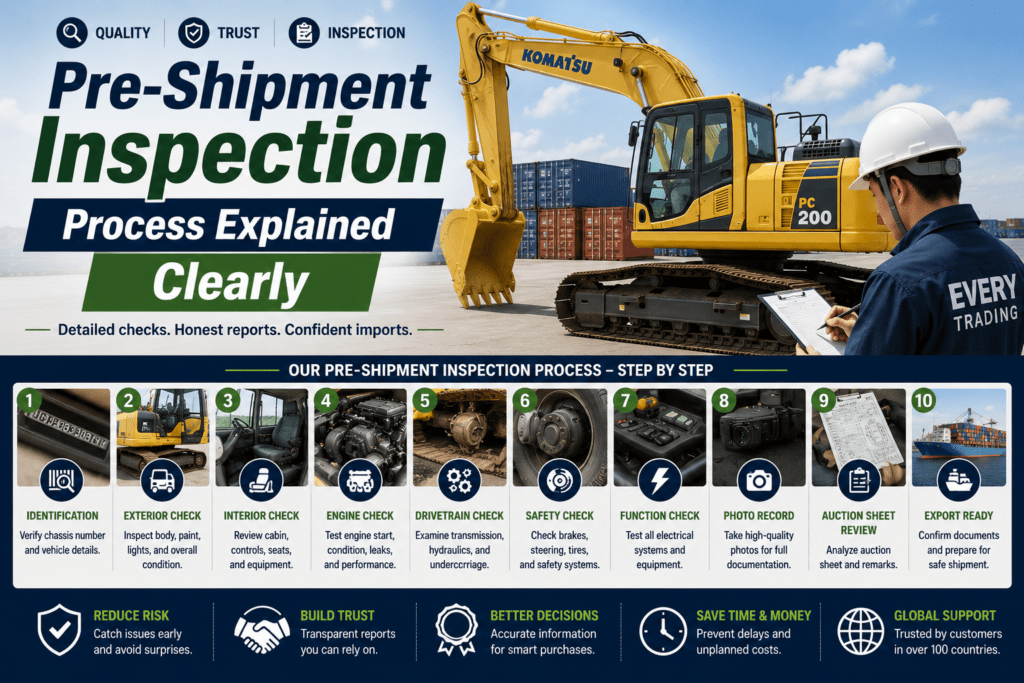

Pre-Shipment Inspection Process Explained: How Buyers Can Import with Confidence
Quality, Trust & Inspection
Buying a used vehicle from another country requires trust. Whether you purchase a truck, bus, tractor, construction machine, or commercial vehicle, you want confidence that the vehicle will arrive in the expected condition.
That is why pre-shipment inspection plays a critical role in the export process.
A professional inspection helps buyers verify vehicle condition before shipping. Moreover, it reduces risks and improves transparency throughout the transaction.
At EVERY, we understand how important trust and quality are for our customers. Therefore, we work hard to provide accurate vehicle information and support buyers before export.
In this guide, we explain the pre-shipment inspection process and show why it is one of the most important steps when importing vehicles from Japan.
What Is a Pre-Shipment Inspection?
A pre-shipment inspection is a vehicle evaluation completed before export.
The purpose is simple.
The inspection helps confirm that the vehicle matches the information provided before shipment.
Furthermore, it allows buyers to identify important details regarding vehicle condition.
As a result, customers can make informed purchasing decisions with greater confidence.
Why Pre-Shipment Inspection Matters
Importing a vehicle involves a significant investment.
Therefore, buyers want assurance before shipping begins.
A proper inspection helps:
- Verify vehicle condition
- Reduce purchasing risks
- Improve transparency
- Prevent misunderstandings
- Increase buyer confidence
Consequently, inspections have become an essential part of international vehicle trading.
Building Trust Through Transparency
Trust is the foundation of every successful export transaction.
Customers cannot always physically inspect vehicles before purchase.
Therefore, professional inspection reports provide valuable information.
Moreover, transparent reporting creates stronger long-term relationships between exporters and buyers.
As a result, buyers feel more comfortable purchasing vehicles from overseas.
Step 1: Vehicle Identification Verification
The first step involves confirming vehicle identity.
Inspectors verify important details such as:
- Chassis number
- Vehicle model
- Engine information
- Registration details
- Manufacturing specifications
This process ensures accuracy and helps prevent documentation issues later.
Therefore, buyers receive correct vehicle information from the beginning.
Step 2: Exterior Inspection
Next, inspectors carefully evaluate the exterior condition.
They examine:
- Body panels
- Paint quality
- Scratches
- Dents
- Rust
- Windshield condition
- Lighting systems
Furthermore, inspectors document visible imperfections when necessary.
As a result, buyers gain a clear understanding of the vehicle's appearance.
Step 3: Interior Inspection
The interior condition also affects vehicle value and usability.
Therefore, inspectors review:
- Seats
- Dashboard
- Steering wheel
- Controls
- Flooring
- Air conditioning system
- Interior cleanliness
Moreover, this evaluation helps buyers understand overall cabin condition before export.
Step 4: Engine Inspection
The engine is one of the most important components of any vehicle.
Consequently, inspectors carefully assess engine condition.
They typically review:
- Engine operation
- Fluid condition
- Visible leaks
- Starting performance
- Engine noise
- General engine cleanliness
Therefore, buyers receive important information regarding vehicle performance.
Step 5: Transmission and Drivetrain Inspection
Reliable power delivery is essential for commercial vehicles.
Inspectors review:
- Transmission operation
- Gear shifting performance
- Drivetrain condition
- Clutch operation
- Differential condition
Furthermore, identifying potential issues before shipping helps reduce surprises after delivery.
Step 6: Brake and Steering Evaluation
Safety remains a top priority.
Therefore, inspectors examine:
- Brake system condition
- Steering performance
- Suspension components
- Wheel condition
- Tire condition
As a result, buyers receive a more complete picture of vehicle safety and drivability.
Step 7: Functional Equipment Check
Modern commercial vehicles often include many operational features.
Inspectors verify important equipment such as:
- Headlights
- Turn signals
- Wipers
- Air conditioning
- Power windows
- Instrument panels
- Electrical systems
Consequently, buyers understand which systems are functioning properly before export.
Step 8: Photographic Documentation
High-quality photographs provide additional transparency.
Therefore, inspectors often document:
- Front views
- Rear views
- Side profiles
- Interior areas
- Engine compartment
- Cargo spaces
- Tires and wheels
Moreover, visual documentation helps customers verify vehicle condition independently.
Step 9: Review of Auction Information
Many Japanese vehicles originate from auction networks.
Auction sheets contain valuable information regarding condition and history.
Therefore, experienced exporters review:
- Auction grades
- Repair records
- Damage notes
- Equipment details
- Inspector comments
As a result, buyers gain a better understanding of the vehicle's background.
Step 10: Final Export Preparation
Inspection is not the final step.
Before shipping, exporters also verify:
- Export documentation
- Shipping schedules
- Vehicle preparation
- Loading arrangements
Consequently, the vehicle moves smoothly through the export process.
Benefits of Pre-Shipment Inspection
Professional inspections create advantages for both buyers and exporters.
Better Purchasing Decisions
Buyers receive detailed information before committing to a purchase.
Reduced Risk
Inspection helps identify concerns before shipping.
Improved Transparency
Customers receive accurate and honest information.
Increased Confidence
Buyers feel more comfortable purchasing internationally.
Stronger Long-Term Relationships
Trust encourages repeat business and long-term partnerships.
Why Japanese Vehicles Benefit from Inspection
Japanese vehicles already enjoy a strong reputation for quality.
Manufacturers such as Toyota, Isuzu, Hino, Mitsubishi Fuso, Nissan, Kubota, Yanmar, and Iseki produce vehicles known for reliability and durability.
However, inspection remains important because every used vehicle has a unique history.
Therefore, professional evaluation adds another layer of protection for buyers.
How EVERY Supports Quality Control
At EVERY, quality and transparency remain core values.
Our team helps customers by providing:
- Vehicle information
- Inspection support
- Auction sheet reviews
- Detailed photographs
- Export documentation assistance
- Professional customer service
Moreover, we respond quickly and help buyers make informed decisions.
As a result, customers can purchase with confidence.
Why Global Buyers Trust Pre-Shipment Inspection
Today, international buyers demand greater transparency than ever before.
Fortunately, professional inspections provide the information needed to reduce uncertainty.
Whether importing to Dominica, Jamaica, Barbados, Kenya, Uganda, Tanzania, Zambia, DR Congo, or any other market, buyers benefit from accurate inspection processes.
Therefore, pre-shipment inspection remains one of the most valuable tools in international vehicle trading.
Final Thoughts
A pre-shipment inspection does far more than evaluate a vehicle. It builds trust, improves transparency, and protects buyers throughout the export process.
From exterior condition and engine performance to documentation and shipping preparation, each step helps ensure a smoother purchasing experience.
At EVERY, we believe confidence begins with accurate information. That is why we continue supporting customers with professional inspection services and transparent communication before every export.
Since 2006, EVERY has exported quality Japanese trucks, buses, tractors, machinery, and commercial vehicles to more than 100 countries worldwide. We remain committed to helping buyers source reliable vehicles from Japan with confidence, trust, and professional support every step of the way.


Browse Reliable Used Trucks & Buses from Japan
Carefully selected vehicles ready for export worldwide
Search 100,000+ Dealer Stock Vehicles from Japan
Access a wide selection of vehicles from Japanese dealers nationwide. Updated daily.
