
How the SEVS Pathway Works for Japanese Vehicles: Complete Guide for Importing Unique Cars into Australia
Australia has long been one of the most attractive destinations for Japanese vehicle imports. Buyers appreciate Japanese vehicles because they offer excellent reliability, low mileage, advanced technology, and strong value.
However, many unique Japanese vehicles are not officially sold in Australia. As a result, importers often look for alternative approval pathways.
One of the most important pathways is the Specialist and Enthusiast Vehicle Scheme, commonly known as SEVS.
The SEVS pathway allows eligible vehicles to enter Australia under specific approval requirements. Consequently, enthusiasts can access special vehicles that would otherwise be difficult to import.
This guide explains how the SEVS pathway works, who can benefit from it, and why it remains popular among Australian buyers.
What Is the SEVS Pathway?
SEVS stands for Specialist and Enthusiast Vehicle Scheme.
The Australian Government created this pathway to allow certain unique vehicles to enter the country.
The scheme focuses on vehicles that offer features not widely available in the Australian market.
Therefore, SEVS supports vehicle diversity while maintaining safety and compliance standards.
As a result, buyers can access rare and desirable Japanese vehicles.
Why SEVS Is Important
Many Japanese vehicles never receive official Australian releases.
Without SEVS, importing these vehicles could become much more difficult.
Fortunately, the scheme provides a structured approval pathway.
Furthermore, it allows buyers to enjoy vehicles that offer:
- Unique performance features
- Advanced technology
- Special engineering
- Limited production models
- Enthusiast appeal
Consequently, SEVS has become highly popular among vehicle enthusiasts and collectors.
Why Australian Buyers Love Japanese Vehicles
Japanese vehicles continue to dominate many import markets.
Several factors contribute to their popularity.
Reliability
Japanese manufacturers have built strong reputations worldwide.
Therefore, buyers often trust Japanese vehicles for long-term ownership.
Low Mileage
Japanese vehicles frequently have lower mileage than similar vehicles in other countries.
As a result, buyers often receive excellent value.
Advanced Technology
Many Japanese domestic market vehicles include features unavailable elsewhere.
Consequently, they attract significant interest from enthusiasts.
Competitive Pricing
Importing directly from Japan can provide access to vehicles at attractive prices.
Furthermore, buyers gain access to a larger inventory.
Types of Vehicles Commonly Imported Through SEVS
Many enthusiast vehicles enter Australia through this pathway.
Popular examples include:
- Performance coupes
- Sports sedans
- High-performance hatchbacks
- Limited edition models
- Luxury performance vehicles
- Specialty Japanese vehicles
These vehicles often attract buyers who want something different from mainstream options.
Therefore, SEVS continues to play an important role in the import industry.
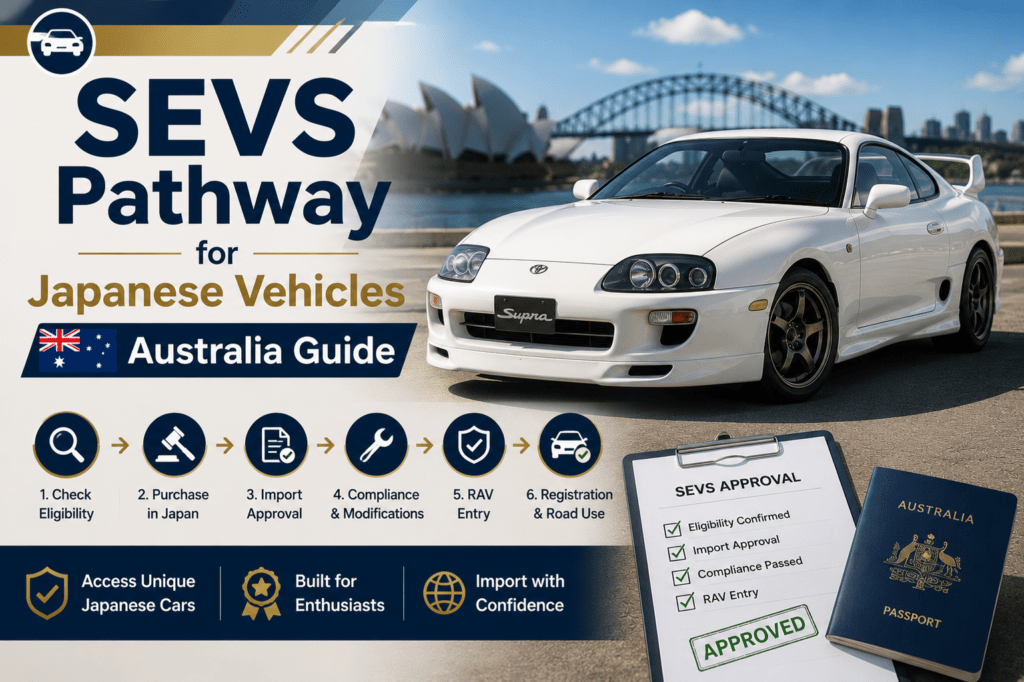
How the SEVS Pathway Works
The process involves several important steps.
Although individual circumstances vary, the general process usually includes:
- Vehicle eligibility confirmation
- Vehicle purchase
- Import approval process
- Compliance work
- Entry into the Register of Approved Vehicles
- Registration
Each stage requires careful planning.
Consequently, successful importers often begin preparations early.
Step 1: Confirm Vehicle Eligibility
The first step is confirming that the vehicle qualifies for the SEVS pathway.
Not every vehicle is eligible.
Therefore, buyers should always verify eligibility before making a purchase.
This simple step can prevent costly mistakes later.
Furthermore, it provides greater confidence throughout the process.
Step 2: Purchase the Vehicle from Japan
Once eligibility is confirmed, buyers can begin sourcing a vehicle.
Many buyers choose Japanese vehicle auctions because they offer:
- Large inventory
- Competitive prices
- Detailed inspection reports
- Transparent vehicle information
As a result, auctions remain one of the most popular sourcing methods.
Experienced exporters can also assist with vehicle selection.
Step 3: Apply for Vehicle Import Approval
Import approval is a critical stage.
Before shipping, buyers should ensure all approval requirements are satisfied.
Proper documentation supports a smoother approval process.
Therefore, organization and preparation are extremely important.
Working with experienced professionals can simplify this stage considerably.
Step 4: Complete Compliance Requirements
Compliance requirements help ensure vehicles meet Australian standards.
This process may include:
- Safety inspections
- Technical assessments
- Vehicle modifications
- Documentation reviews
Consequently, buyers should understand compliance obligations before importing.
Early planning usually reduces delays.
Step 5: Entry into the Register of Approved Vehicles
After successful compliance processing, the vehicle may enter the Register of Approved Vehicles (RAV).
The RAV serves as an official record of approved vehicles.
Therefore, inclusion on the register represents an important milestone.
Furthermore, it brings the vehicle closer to registration.
Step 6: Vehicle Registration
The final stage involves vehicle registration.
Requirements vary between states and territories.
However, buyers generally need:
- Proof of ownership
- Compliance documentation
- Approval records
- Identification documents
Once registration is complete, the vehicle can legally operate on Australian roads.
Benefits of the SEVS Pathway
The scheme offers many advantages.
Access to Rare Vehicles
Buyers can import vehicles unavailable through traditional dealerships.
Consequently, enthusiasts gain access to unique models.
Greater Vehicle Choice
The pathway expands available vehicle options.
Therefore, buyers can select vehicles that better suit their preferences.
Strong Enthusiast Community
Many imported vehicles have passionate owner communities.
As a result, owners often enjoy strong support networks.
Long-Term Value
Certain specialty vehicles maintain strong market demand.
Therefore, some models may retain value exceptionally well.
Common Mistakes to Avoid
Many first-time importers encounter avoidable challenges.
Fortunately, proper preparation helps reduce risk.
Buying Before Checking Eligibility
Some buyers purchase vehicles before confirming SEVS eligibility.
However, verification should always come first.
Incomplete Documentation
Missing paperwork can create unnecessary delays.
Therefore, document preparation is essential.
Ignoring Compliance Costs
Import costs extend beyond the purchase price.
Consequently, buyers should plan a realistic budget.
Choosing Inexperienced Suppliers
Professional support can make a significant difference.
Therefore, selecting an experienced exporter is highly recommended.
Popular Japanese Enthusiast Vehicles
Several Japanese vehicles continue to attract strong demand.
These include:
- Performance sports cars
- Turbocharged coupes
- Limited-production sedans
- High-performance all-wheel-drive vehicles
- Collector-grade Japanese models
Furthermore, many buyers appreciate the engineering and driving experience these vehicles provide.
Why Japanese Vehicle Auctions Are Ideal for SEVS Buyers
Japanese auctions offer several major advantages.
Huge Selection
Thousands of vehicles become available every week.
Transparent Information
Detailed inspection reports help buyers make informed decisions.
Competitive Pricing
Auction pricing often provides excellent value.
Access to Rare Models
Many specialty vehicles appear regularly at auction.
As a result, auctions remain a preferred source for enthusiasts.
How EVERY TRADING Supports Australian Buyers
EVERY TRADING helps customers import Japanese vehicles safely and efficiently.
Our services include:
- Access to Japanese vehicle auctions
- Professional vehicle inspections
- Export documentation support
- Vehicle sourcing assistance
- Worldwide shipping arrangements
- Fast customer communication
Additionally, our experienced team helps buyers understand approval pathways and compliance requirements.
This support reduces uncertainty and improves the overall buying experience.
Frequently Asked Questions
Can Any Japanese Vehicle Qualify for SEVS?
No. Eligibility depends on specific criteria.
Therefore, buyers should verify qualification before purchasing.
Is Compliance Required?
Yes. Compliance remains an important part of the process.
Should I Use a Professional Exporter?
Absolutely. Experienced exporters help buyers avoid mistakes and improve efficiency.
As a result, many importers choose professional support.
Conclusion
The SEVS pathway provides Australian buyers with an excellent opportunity to import unique Japanese vehicles.
Although the process involves several steps, proper planning makes it much easier.
By understanding eligibility requirements, preparing documentation, completing compliance obligations, and working with trusted exporters, buyers can enjoy a smooth importing experience.
Furthermore, the pathway opens access to some of Japan's most desirable vehicles.
If you are looking for professional support, auction access, vehicle inspections, and export expertise, EVERY TRADING is ready to help you import quality Japanese vehicles with confidence.


Browse Reliable Used Trucks & Buses from Japan
Carefully selected vehicles ready for export worldwide
Search 100,000+ Dealer Stock Vehicles from Japan
Access a wide selection of vehicles from Japanese dealers nationwide. Updated daily.
