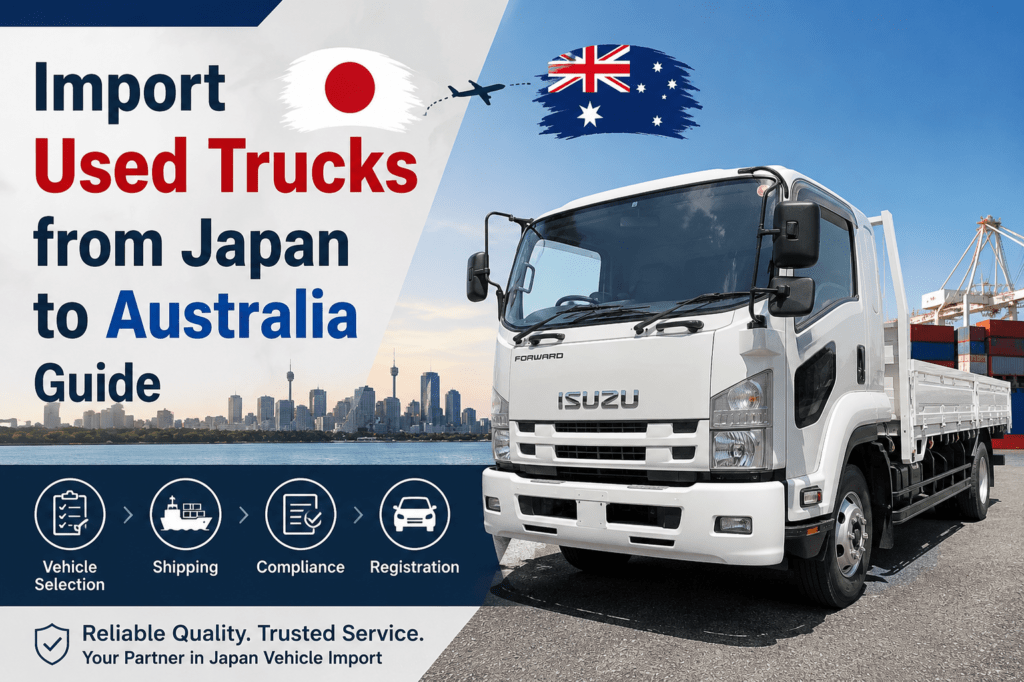

How to Import Used Trucks from Japan to Australia: Complete Guide to Shipping, Compliance, and Registration
Australia has a strong demand for reliable commercial vehicles. Many businesses need dependable trucks for transport, construction, farming, and logistics. Because of this, many buyers look to Japan when searching for quality used trucks.
Japanese used trucks have earned a strong reputation worldwide. They offer excellent durability, low mileage, and reliable performance. In addition, Japanese owners often maintain their vehicles very carefully. As a result, buyers can find trucks in excellent condition at competitive prices.
However, importing a truck into Australia requires more than simply purchasing a vehicle. Buyers must understand import rules, compliance requirements, shipping options, and registration procedures.
This guide explains the complete process of importing used trucks from Japan to Australia. It will help you make informed decisions and avoid costly mistakes.
Why Import Used Trucks from Japan?
Many Australian buyers choose Japanese used trucks for several important reasons.
Excellent Vehicle Condition
Japanese vehicle owners usually follow regular maintenance schedules. Therefore, many trucks remain in excellent mechanical condition even after years of use.
Low Mileage
Compared with vehicles in many other countries, Japanese trucks often have lower mileage. Consequently, buyers can enjoy longer service life.
Competitive Prices
Importing directly from Japan often reduces purchasing costs. Furthermore, buyers gain access to a larger selection of vehicles.
Wide Range of Models
Japanese auctions and exporters offer many truck types, including:
- Light-duty trucks
- Medium-duty trucks
- Heavy-duty trucks
- Flatbed trucks
- Dump trucks
- Refrigerated trucks
- Box trucks
- Crane trucks
As a result, businesses can find vehicles that match their exact needs.
Popular Japanese Truck Brands in Australia
Several Japanese truck manufacturers are highly respected in Australia.
Isuzu Trucks
Isuzu trucks are known for durability, fuel efficiency, and strong resale value. They are popular among transport and construction companies.
Hino Trucks
Hino trucks offer reliability and advanced engineering. Moreover, many models provide excellent driver comfort.
Mitsubishi Fuso
Mitsubishi Fuso trucks perform well in urban and regional operations. They also have strong parts support.
UD Trucks
UD trucks are widely used for freight and commercial transport. Their engines are known for efficiency and long service life.
Understanding Australian Import Regulations
Before purchasing a truck, buyers should understand Australian import requirements.
Australia maintains strict regulations to protect safety, the environment, and road users.
Therefore, not every truck can enter the country.
Buyers should always verify eligibility before placing an order.
Step 1: Select the Right Truck
The first step is choosing a suitable truck.
Consider the following factors:
- Vehicle age
- Engine size
- Gross vehicle mass
- Intended use
- Compliance requirements
- Budget
Additionally, check whether replacement parts are available in Australia.
A truck that is easy to maintain will reduce future operating costs.
Step 2: Work with a Trusted Japanese Exporter
Choosing a professional exporter is one of the most important decisions.
A trusted exporter can help with:
- Vehicle inspections
- Auction purchases
- Documentation
- Shipping arrangements
- Export procedures
Furthermore, experienced exporters can identify potential problems before purchase.
This reduces risk and improves buyer confidence.
Step 3: Verify Import Eligibility
Before purchasing, confirm that the truck qualifies for import into Australia.
Import rules can change over time. Therefore, buyers should always check current regulations before committing to a purchase.
This step helps prevent delays and unexpected expenses.
Step 4: Inspect the Vehicle Thoroughly
A detailed inspection protects your investment.
Many buyers rely on Japanese auction sheets because they provide valuable information about vehicle condition.
Important inspection points include:
- Engine condition
- Transmission performance
- Chassis condition
- Rust levels
- Accident history
- Tire condition
- Suspension components
Additionally, request detailed photographs whenever possible.
The more information you have, the better your purchasing decision will be.
Step 5: Arrange Shipping from Japan
After purchasing the truck, the next step is shipping.
Two common methods are available.
RORO Shipping
Roll-On Roll-Off shipping is often the most economical option.
Advantages include:
- Lower shipping costs
- Simple loading process
- Fast handling
Therefore, many commercial vehicle buyers prefer RORO shipping.
Container Shipping
Container shipping offers additional protection.
Benefits include:
- Better protection from weather
- Extra security
- Ability to ship spare parts together
Although costs are usually higher, some buyers prefer this option for valuable vehicles.
Step 6: Prepare Required Documents
Accurate documentation is essential.
Common documents include:
- Commercial invoice
- Bill of lading
- Export certificate
- Vehicle information documents
- Purchase records
Proper paperwork helps ensure a smooth customs process.
Therefore, always double-check every document before shipment.
Step 7: Customs Clearance in Australia
When the truck arrives, customs clearance begins.
Authorities review documentation and verify compliance requirements.
During this stage, buyers may need to provide additional information.
Consequently, keeping all documents organized is extremely important.
Good preparation often speeds up the clearance process.
Step 8: Compliance and Inspection Requirements
Australia applies strict standards to imported vehicles.
Therefore, inspections may be required before registration.
Compliance requirements can include:
- Safety standards
- Lighting requirements
- Environmental standards
- Vehicle modifications
Completing these requirements helps ensure the truck meets Australian road regulations.
Step 9: Register the Truck
Once compliance requirements are completed, registration can begin.
Registration procedures may vary between states and territories.
Generally, buyers will need:
- Proof of ownership
- Compliance documentation
- Inspection certificates
- Identification documents
After registration, the truck can legally operate on Australian roads.
Common Mistakes to Avoid
Many first-time importers make avoidable errors.
Fortunately, proper planning can reduce these risks.
Buying Without Inspection
Never rely only on appearance.
Always review inspection reports and auction information.
Ignoring Compliance Requirements
Some buyers focus only on purchase price.
However, compliance costs can significantly affect the total budget.
Choosing an Inexperienced Exporter
An inexperienced supplier may create delays or paperwork problems.
Therefore, work with a trusted exporter that understands Australian requirements.
Focusing Only on the Lowest Price
The cheapest truck is not always the best value.
Instead, consider condition, maintenance history, and long-term reliability.
Benefits of Buying Through Japanese Vehicle Auctions
Japanese auctions provide access to thousands of vehicles every week.
Advantages include:
- Large inventory
- Competitive prices
- Detailed inspection reports
- Transparent vehicle information
- Direct access to wholesale vehicles
As a result, many Australian importers purchase trucks through Japanese auction networks.
Why Australian Businesses Continue to Buy Japanese Trucks
Japanese trucks have proven their value in Australian conditions.
They perform well in:
- Construction projects
- Freight transportation
- Farming operations
- Mining support activities
- Municipal services
Furthermore, Japanese brands have established strong reputations for reliability and durability.
These qualities help businesses reduce downtime and improve profitability.
How EVERY TRADING Supports Australian Buyers
EVERY TRADING helps buyers import quality used trucks from Japan with confidence.
Our services include:
- Access to Japanese vehicle auctions
- Professional vehicle inspections
- Detailed condition reports
- Export documentation support
- Worldwide shipping arrangements
- Fast customer communication
In addition, our experienced team assists buyers throughout the entire purchasing process.
Whether you need a light-duty truck or a heavy commercial vehicle, we can help you find the right solution.
Conclusion
Importing used trucks from Japan to Australia can provide excellent value for businesses and vehicle buyers.
Japanese trucks offer reliability, durability, and competitive pricing. Moreover, Japan provides access to a vast inventory of commercial vehicles through auction networks and exporter stock.
However, success depends on understanding the import process. Therefore, buyers should carefully review regulations, inspect vehicles thoroughly, prepare proper documentation, and work with experienced exporters.
By following these steps, you can import quality used trucks from Japan and enjoy a smooth purchasing experience.
If you are looking for trusted support, professional inspections, and access to quality Japanese truck inventory, EVERY TRADING is ready to help you source the right truck for your Australian business.


Browse Reliable Used Trucks & Buses from Japan
Carefully selected vehicles ready for export worldwide
Search 100,000+ Dealer Stock Vehicles from Japan
Access a wide selection of vehicles from Japanese dealers nationwide. Updated daily.
