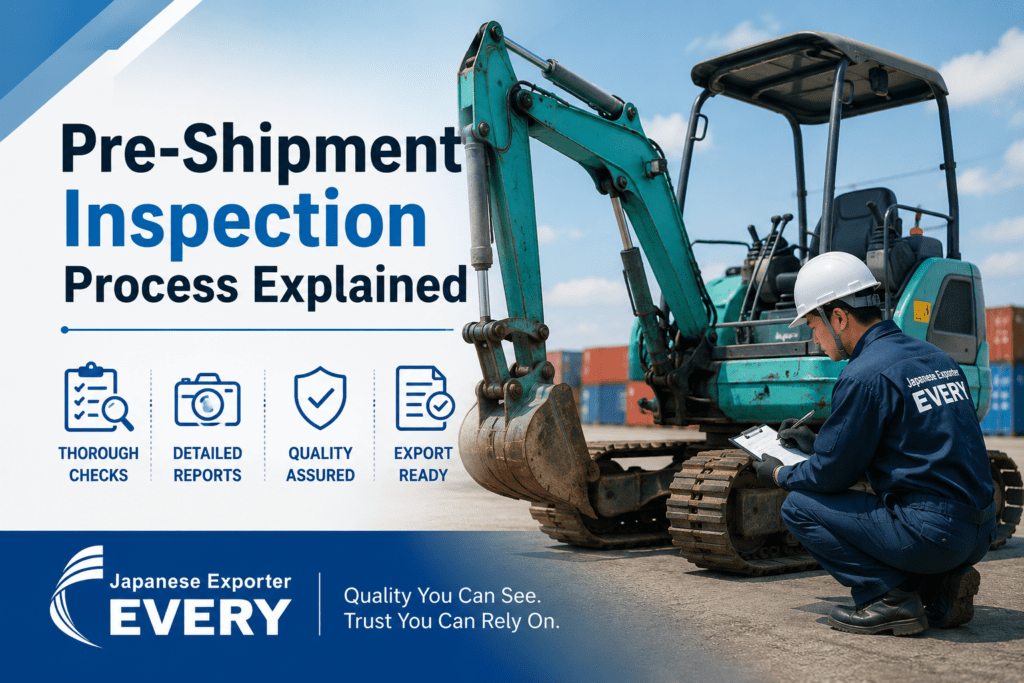

Pre-Shipment Inspection Process Explained: How Every Step Protects Your Japanese Vehicle Before Export
Buying a used vehicle from Japan is a smart investment. However, many overseas buyers have one important question before shipping:
"How can I be sure my vehicle is in the expected condition before it leaves Japan?"
The answer is simple—a professional pre-shipment inspection.
At EVERY, we believe quality control does not end when a vehicle is purchased. Instead, it continues until the vehicle is safely loaded for export. Our inspection process helps reduce risk, improve transparency, and give buyers confidence throughout the entire export journey.
Whether you are importing a truck, bus, tractor, construction machine, or passenger vehicle, understanding the pre-shipment inspection process can help you make better purchasing decisions.
In this guide, we explain every stage of the inspection process and why it is one of the most important parts of buying a Japanese used vehicle.
What Is a Pre-Shipment Inspection?
A pre-shipment inspection, often called a PSI, is a detailed examination of a vehicle before export.
Its purpose is to confirm that the vehicle matches the agreed condition and is ready for international shipping.
Rather than relying only on auction information, exporters perform additional checks before shipment.
This process helps buyers avoid unexpected surprises after arrival.
Why Is a Pre-Shipment Inspection Important?
International buyers cannot inspect vehicles in person.
Therefore, they depend on trusted exporters to verify vehicle condition.
A professional inspection helps:
- Confirm vehicle identity
- Check mechanical condition
- Identify visible damage
- Review safety items
- Verify documentation
- Prepare the vehicle for export
As a result, buyers gain greater confidence before making their final payment.
Step 1: Vehicle Identification Verification
The first step confirms that the correct vehicle has been purchased.
Our team carefully checks:
- Vehicle Identification Number (VIN)
- Chassis number
- Engine number when applicable
- Model code
- Production year
- Color
- Mileage
This prevents paperwork errors and ensures export documents match the actual vehicle.
Accuracy at this stage supports a smooth export process.
Step 2: Exterior Condition Inspection
Next, the vehicle's exterior receives a detailed inspection.
Our staff examines:
- Body panels
- Paint condition
- Scratches
- Dents
- Rust
- Mirrors
- Windows
- Windshield
- Headlights
- Tail lights
- Wheels
If any visible damage exists, we document it honestly.
Consequently, buyers know exactly what to expect.
Step 3: Interior Inspection
A clean and functional interior improves both comfort and resale value.
Therefore, EVERY checks:
- Seats
- Dashboard
- Steering wheel
- Floor mats
- Air conditioning
- Audio system
- Power windows
- Instrument panel
- Warning lights
- Interior cleanliness
We also confirm that important controls operate normally.
Step 4: Mechanical Inspection
Mechanical reliability plays a major role in customer satisfaction.
Our inspection includes:
- Engine start-up
- Engine idle
- Transmission operation
- Brake response
- Steering
- Battery condition
- Cooling system
- Electrical equipment
Although used vehicles naturally show normal wear, we carefully evaluate their operating condition before export.
Step 5: Tire and Suspension Check
Safe transportation begins with stable vehicle handling.
Therefore, we inspect:
- Tire tread
- Tire wear
- Tire pressure
- Suspension condition
- Shock absorbers
- Wheel alignment when necessary
These checks help identify visible issues before shipping.
Step 6: Fluid Level Inspection
Vehicle fluids affect engine performance and reliability.
Our team checks:
- Engine oil
- Coolant
- Brake fluid
- Power steering fluid
- Windshield washer fluid
If maintenance is required before export, we discuss available options with the customer.
Step 7: Battery and Electrical System Inspection
Electrical systems influence daily vehicle operation.
We inspect:
- Battery condition
- Headlights
- Turn signals
- Brake lights
- Reverse lights
- Horn
- Dashboard indicators
- Wipers
Working electrical systems help reduce unexpected issues after arrival.
Step 8: Confirming Optional Equipment
Many buyers request specific equipment.
Therefore, we verify optional features such as:
- Navigation system
- Backup camera
- Air conditioning
- Power windows
- Power mirrors
- PTO equipment
- Hydraulic systems
- Special attachments
This ensures buyers receive the specifications they selected.
Step 9: Vehicle Cleaning Before Export
Clean vehicles create a better first impression.
Before shipment, EVERY prepares the vehicle by:
- Washing the exterior
- Cleaning the interior
- Removing personal belongings
- Removing loose items
- Checking cargo areas
A clean vehicle also makes the final inspection easier.
Step 10: Final Documentation Review
Accurate paperwork is essential for international shipping.
Our export team carefully reviews:
- Export Certificate
- Commercial Invoice
- Bill of Lading information
- Packing details
- Customer information
- Shipping destination
Correct documentation helps avoid customs delays.
Step 11: Final Quality Confirmation
Before loading, our team performs one last quality review.
We confirm:
- Inspection completion
- Vehicle condition
- Documentation accuracy
- Customer requirements
- Shipping schedule
Only after completing these checks does the vehicle move to the export stage.
Special Inspections for Commercial Vehicles
Commercial vehicles require additional inspection points.
For trucks, we inspect:
- Cargo bed
- Chassis
- Hydraulic equipment
- Frame
- PTO systems
For buses, we examine:
- Passenger seating
- Emergency exits
- Interior equipment
- Air conditioning
For tractors and construction machinery, we inspect:
- Hydraulic systems
- Attachments
- Operating controls
- Tires or tracks
- Engine performance
These additional inspections support business customers who depend on reliable equipment.
Honest Inspection Reports Build Customer Trust
EVERY believes honesty creates long-term partnerships.
Therefore, we report:
- Minor scratches
- Small dents
- Rust spots
- Interior wear
- Mechanical observations
- Cosmetic damage
Rather than hiding problems, we explain them clearly.
As a result, buyers can make informed decisions.
Benefits of Choosing EVERY
Our professional inspection process offers several advantages.
Customers receive:
- Detailed condition reports
- Clear vehicle photographs
- Honest communication
- Professional export support
- Fast responses
- Worldwide shipping experience
These services make importing from Japan easier and more reliable.
How Pre-Shipment Inspections Reduce Risk
A quality inspection helps reduce many common import concerns.
It helps buyers:
- Understand vehicle condition
- Confirm vehicle specifications
- Reduce unexpected repairs
- Improve purchasing confidence
- Prepare for customs clearance
- Plan future maintenance
Therefore, inspections provide value far beyond the purchase price.
Frequently Asked Questions
What is a pre-shipment inspection?
It is a detailed vehicle inspection completed before export to confirm condition, documentation, and shipment readiness.
Does EVERY inspect every vehicle?
Yes. We carefully review vehicle condition and documentation before export whenever possible.
Will I receive inspection information?
Yes. We provide clear reports, photographs, and honest communication throughout the export process.
Can commercial vehicles receive additional inspections?
Absolutely. Trucks, buses, tractors, and construction machinery receive inspections that match their specific equipment and intended use.
Why is documentation checked before shipment?
Accurate documents help customs clearance proceed smoothly and reduce the risk of shipping delays.
Buy with Confidence Through EVERY
Importing a vehicle from Japan should feel safe, transparent, and professional.
A thorough pre-shipment inspection helps ensure that the vehicle you purchase is the vehicle that arrives at your destination.
At EVERY, quality control is part of every export. From vehicle identification and mechanical inspections to cleaning and documentation, we carefully manage every stage before shipment.
Our goal is simple: deliver reliable Japanese vehicles with complete transparency and professional support.
If you are looking for a trusted Japanese vehicle exporter that values quality, honesty, and customer satisfaction, EVERY is ready to help you import with confidence.


Browse Reliable Used Trucks & Buses from Japan
Carefully selected vehicles ready for export worldwide
Search 100,000+ Dealer Stock Vehicles from Japan
Access a wide selection of vehicles from Japanese dealers nationwide. Updated daily.
