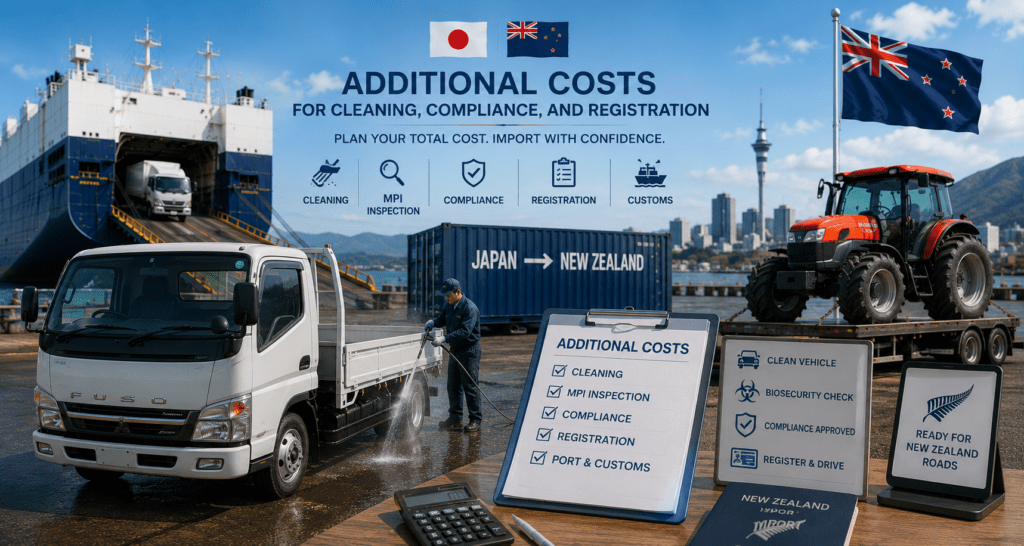

Additional Costs for Cleaning, Compliance, and Registration: The Complete Guide for New Zealand Buyers Importing from Japan
Understand Every Extra Cost Before Importing a Japanese Used Vehicle
Buying a Japanese used vehicle is an excellent investment for many businesses and private buyers across New Zealand.
Japanese trucks, vans, buses, tractors, and passenger vehicles are famous for their quality, fuel efficiency, reliability, and long service life. They support New Zealand's agriculture, construction, forestry, logistics, tourism, delivery services, and many other industries.
However, many first-time importers focus only on the purchase price.
That can lead to unexpected expenses.
After your vehicle arrives in New Zealand, several additional costs may apply before it is ready for daily use. These include cleaning, biosecurity inspection, compliance certification, registration, customs charges, and local transportation.
Understanding these costs before purchasing helps you create an accurate budget and avoid unnecessary surprises.
This guide explains every important expense New Zealand buyers should expect when importing a Japanese used vehicle.
Why Additional Costs Matter
Many buyers compare only the vehicle price.
However, the total import cost includes much more.
A truck that costs less in Japan may eventually cost more after shipping and compliance.
Therefore, experienced importers always calculate the complete landed cost.
Doing this helps businesses:
- Plan budgets accurately
- Improve cash flow
- Avoid unexpected expenses
- Compare vehicles fairly
- Increase long-term profitability
Why New Zealand Continues Importing Japanese Vehicles
Japanese vehicles remain extremely popular throughout New Zealand.
Businesses value them because they provide:
- Excellent fuel economy
- Proven reliability
- Long service life
- Strong diesel engines
- Easy maintenance
- Good parts availability
- High resale value
They also suit New Zealand's diverse driving environments.
Vehicles operate daily on:
- Urban streets
- Rural highways
- Mountain roads
- Forestry tracks
- Dairy farms
- Construction sites
- Coastal routes
This flexibility makes Japanese commercial vehicles an ideal choice.
Popular Japanese Vehicles in New Zealand
Many New Zealand businesses regularly import:
Light Commercial Vehicles
Medium-Duty Trucks
Heavy Trucks
Agricultural Equipment
These vehicles continue serving farms, contractors, delivery companies, councils, and transport operators across New Zealand.
Additional Cost 1: Vehicle Cleaning
Cleaning is often the first additional cost after arrival.
New Zealand protects its agriculture and environment through strict biosecurity rules.
Imported vehicles must arrive free from:
- Soil
- Grass
- Seeds
- Mud
- Insects
- Plant material
- Animal contamination
Even a small amount of dirt underneath a truck or tractor can require additional cleaning.
Therefore, purchasing from an exporter that understands New Zealand's requirements is extremely important.
Why Cleaning Saves Money
A properly cleaned vehicle may:
- Pass inspection faster
- Avoid storage charges
- Reduce treatment costs
- Prevent delivery delays
Paying for professional cleaning before shipment often saves money later.
Additional Cost 2: MPI Biosecurity Inspection
Every imported used vehicle may require inspection by New Zealand's biosecurity authorities.
Inspectors examine:
- Chassis
- Engine compartment
- Wheel arches
- Undercarriage
- Tires
- Cab interior
- Cargo areas
- Agricultural attachments
If contamination is discovered, further cleaning or treatment may be necessary.
Planning for this possibility helps buyers avoid unexpected expenses.
Additional Cost 3: Customs Clearance
After arrival, customs procedures begin.
This process includes reviewing:
- Import documents
- Commercial Invoice
- Bill of Lading
- Export Certificate
- Customs declarations
Many buyers hire customs brokers because they simplify paperwork and reduce delays.
Broker fees become part of the total import cost.
Additional Cost 4: GST
New Zealand imports may require payment of GST.
Because tax rules occasionally change, buyers should always confirm the latest calculation with New Zealand Customs or their customs broker before importing.
Including GST in your budget creates a more accurate estimate.
Additional Cost 5: Port Charges
After unloading, ports may charge several service fees.
Typical charges include:
- Terminal handling
- Documentation
- Storage
- Security
- Release processing
Storage costs can increase quickly if documents are delayed.
Therefore, completing paperwork early is important.
Additional Cost 6: Compliance Inspection
Before many imported vehicles can legally operate on New Zealand roads, they must satisfy compliance requirements.
Inspection areas may include:
- Brakes
- Suspension
- Steering
- Lighting
- Structural integrity
- Seat belts
- Emissions
- Vehicle identity
If repairs become necessary, compliance costs increase.
Choosing high-quality Japanese vehicles often reduces these expenses.
Additional Cost 7: Registration
After compliance, registration allows legal road use.
Registration costs depend on:
- Vehicle type
- Vehicle weight
- Intended use
- Licensing category
Commercial trucks may require additional inspections depending on their classification.
Additional Cost 8: Inland Transportation
Once customs and compliance are complete, your vehicle still needs transportation.
Delivery costs depend on:
- Arrival port
- Delivery distance
- Vehicle size
- Running condition
Businesses should include local transport costs in their budgets.
Additional Cost 9: Initial Maintenance
Even well-maintained Japanese vehicles benefit from basic servicing after arrival.
Many buyers replace:
- Engine oil
- Oil filter
- Fuel filter
- Air filter
- Coolant
- Transmission oil
- Brake fluid
This preventive maintenance protects the vehicle from the beginning.
Why Higher Quality Vehicles Often Cost Less
A higher-quality vehicle may appear more expensive initially.
However, it often requires:
- Less cleaning
- Fewer repairs
- Lower compliance costs
- Less downtime
- Lower maintenance
Consequently, the overall ownership cost may actually be lower.
Smart Budget Formula
Many experienced importers use a simple calculation:
Vehicle Price
- Ocean Freight
- Marine Insurance
- GST
- Customs Clearance
- Broker Fee
- Cleaning
- MPI Inspection
- Port Charges
- Compliance
- Registration
- Inland Transport
- Initial Maintenance
= Total Import Cost
This formula provides a realistic purchasing budget.
How New Zealand Buyers Can Reduce Extra Costs
Several simple strategies help lower expenses.
First, choose vehicles in excellent condition.
Next, request detailed inspection photos.
Also, verify auction information when available.
Furthermore, confirm shipping schedules early.
Finally, work with experienced exporters.
These steps often reduce total ownership costs significantly.
Common Mistakes to Avoid
Avoid these common errors:
- Comparing only vehicle prices
- Ignoring cleaning costs
- Forgetting compliance expenses
- Underestimating port charges
- Delaying documentation
- Buying unsuitable vehicles
Careful planning prevents expensive surprises.
Why EVERY TRADING Co., Ltd. Helps Buyers Save Money
Since 2006, EVERY TRADING Co., Ltd. has exported Japanese vehicles to more than 100 countries.
We support New Zealand customers with:
- Transparent quotations
- Detailed inspections
- High-quality vehicle photographs
- Professional documentation
- Secure payment guidance
- Reliable shipping support
- Friendly customer service
We help buyers understand every cost before purchasing.
Frequently Asked Questions
Are cleaning costs always required?
Not always.
However, imported used vehicles must satisfy New Zealand's biosecurity standards.
Can compliance costs vary?
Yes.
Vehicle condition determines many compliance expenses.
Why should I calculate total landed cost?
Because the purchase price represents only one part of your investment.
Is importing from Japan still worthwhile?
Yes.
High-quality Japanese vehicles continue providing excellent long-term value for New Zealand businesses.
Final Thoughts
Buying a Japanese used vehicle involves more than paying the purchase price.
Cleaning, biosecurity inspection, customs clearance, GST, compliance, registration, inland transport, and initial servicing all contribute to the total investment.
Fortunately, proper planning helps buyers avoid unexpected costs.
For New Zealand businesses, importing directly from Japan remains one of the smartest ways to purchase reliable commercial vehicles at competitive prices.
At EVERY TRADING Co., Ltd., we help New Zealand customers understand every step of the import process.
Our transparent pricing, experienced export team, and professional support allow buyers to import Japanese used vehicles with confidence.


Browse Reliable Used Trucks & Buses from Japan
Carefully selected vehicles ready for export worldwide
Search 100,000+ Dealer Stock Vehicles from Japan
Access a wide selection of vehicles from Japanese dealers nationwide. Updated daily.
