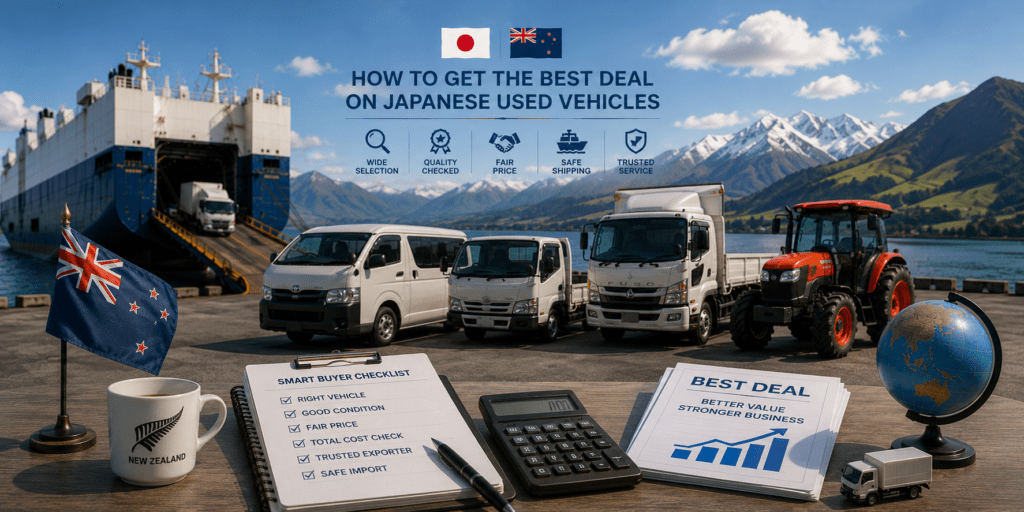

How to Get the Best Deal on Japanese Used Vehicles: A Smart Buying Guide for New Zealand Buyers
Buy Better, Save More, and Import from Japan with Confidence
Japanese used vehicles are a popular choice for New Zealand buyers.
They are reliable, fuel-efficient, and practical. Also, they fit New Zealand’s right-hand-drive market very well.
From Auckland delivery companies to South Island farms, Japanese vehicles support many businesses every day. They are used for construction, agriculture, forestry, tourism, logistics, trade services, and local transport.
However, getting the best deal does not always mean choosing the cheapest vehicle.
A smart deal includes good condition, fair pricing, safe payment, correct documents, suitable shipping, and smooth import planning.
This guide explains how New Zealand buyers can get the best value when buying Japanese used vehicles.
Why Japanese Used Vehicles Are Popular in New Zealand
New Zealand has a long history of importing vehicles from Japan.
Japanese vehicles offer:
- Strong engines
- Good fuel economy
- Reliable daily performance
- Right-hand drive layout
- Wide model selection
- Good parts support
- Strong resale value
Moreover, many mechanics in New Zealand already understand Japanese brands.
This makes maintenance easier.
Popular Japanese Vehicles for New Zealand Buyers
New Zealand buyers often search for:
Commercial Vehicles
- Toyota Dyna
- Toyota Hiace
- Hino Dutro
- Hino Ranger
- Isuzu Elf
- Isuzu Forward
- Mitsubishi Canter
- Mitsubishi Fighter
- Nissan Atlas
- Toyota Coaster
Passenger and Business Vehicles
Farm and Work Vehicles
- Kubota tractors
- Yanmar tractors
- Iseki tractors
- Mitsubishi tractors
- Light trucks
- Utility vehicles
These models suit many New Zealand roads and industries.
The Cheapest Vehicle Is Not Always the Best Deal
Many buyers search for the lowest price first.
However, this can be risky.
A very cheap vehicle may have:
- High mileage
- Accident history
- Rust
- Poor maintenance
- Engine issues
- Transmission problems
- Missing documents
- Compliance problems
Therefore, focus on total value.
A slightly higher-priced vehicle can save more money later.
Check the Total Landed Cost
The best deal depends on the full cost.
New Zealand buyers should calculate:
- Vehicle price
- Export fees
- Shipping
- Marine insurance
- GST
- Customs clearance
- MPI biosecurity inspection
- Cleaning costs
- Port charges
- Compliance
- Registration
- Inland transport
- First service
New Zealand’s import process includes NZTA vehicle requirements, MPI biosecurity checks, and Customs charges such as GST.
Understand New Zealand Import Rules Before Buying
A good vehicle in Japan still needs to suit New Zealand rules.
NZTA explains that imported vehicles must meet entry and compliance requirements before road use.
Also, MPI checks imported vehicles, machinery, and parts for biosecurity risks. Used vehicles can carry soil, seeds, pests, and plant material.
Therefore, check import suitability before payment.
This step can prevent expensive surprises.
Choose the Right Vehicle for Your Work
A good deal starts with the right choice.
For delivery work, choose fuel economy.
For farming, choose strength and easy maintenance.
For construction, choose payload and durability.
For tourism, choose comfort and seating capacity.
For forestry, choose power and heavy-duty design.
The right vehicle reduces repair costs and improves daily profit.
Compare Vehicle Condition, Not Only Price
Always check:
- Mileage
- Engine condition
- Transmission
- Tyres
- Chassis
- Interior
- Exterior panels
- Service history
- Auction grade
- Repair notes
A clean vehicle with clear records often gives better long-term value.
Read the Auction Sheet Carefully
Many Japanese vehicles come from auction.
The auction sheet helps buyers understand:
- Overall grade
- Interior grade
- Mileage
- Damage marks
- Repair history
- Rust notes
- Mechanical comments
Therefore, do not ignore it.
If you do not understand the sheet, ask your exporter to explain it.
Ask for Detailed Photos
Photos help reduce risk.
Request clear images of:
- Front
- Rear
- Both sides
- Cabin
- Dashboard
- Engine room
- Tyres
- Cargo area
- Undercarriage if possible
- Chassis number
More photos create more confidence.
Watch Exchange Rates
Exchange rates affect your final cost.
Japanese vehicles may be priced in Japanese Yen.
Shipping may involve US Dollars.
New Zealand buyers calculate business costs in NZD.
Therefore, currency movement can change the final price.
If the Yen becomes weaker, buyers may save money.
Compare Shipping Options
Shipping affects the total deal.
Common options include:
RORO Shipping
This works well for running vehicles.
It is often practical for trucks, vans, buses, and passenger cars.
Container Shipping
This may suit parts, small vehicles, or higher-protection needs.
However, it can cost more.
Ask your exporter which option fits your vehicle.
Plan for Biosecurity Cleaning
New Zealand protects its farms and environment carefully.
Because of this, cleanliness matters.
A dirty vehicle may need extra cleaning after arrival.
That creates delays and extra costs.
So, choose an exporter who understands New Zealand’s MPI requirements.
Do Not Forget GST and Local Charges
A good deal must include local charges.
New Zealand Customs may require GST and other import charges.
Also, port charges, broker fees, compliance, and registration can affect the final amount.
Therefore, compare the full landed cost, not only the FOB price.
Choose a Trusted Exporter
The exporter matters.
A trusted exporter provides:
- Honest vehicle information
- Clear pricing
- Detailed photos
- Auction sheet support
- Secure payment guidance
- Export documents
- Shipping support
- Friendly communication
This reduces risk and saves time.
Avoid These Common Mistakes
Buying Only by Price
Low price can hide expensive problems.
Ignoring Compliance
A vehicle that cannot meet requirements may cost more later.
Forgetting MPI Cleaning
Biosecurity problems can delay clearance.
Not Checking Documents
Missing documents can create serious issues.
Paying Too Quickly
Always verify the exporter and invoice first.
Choosing the Wrong Vehicle
The wrong size or body type can reduce business value.
Best Deal Tips for New Zealand Buyers
Here are simple tips.
First, decide your total budget.
Next, choose the right vehicle type.
Then, compare several options.
Also, check condition carefully.
After that, calculate the landed cost.
Finally, work with a reliable Japanese exporter.
This process helps you buy smarter.
Why Direct Buying from Japan Can Save Money
Buying directly from Japan gives you access to more stock.
It may also reduce middleman costs.
Moreover, you can compare many vehicles before choosing.
This helps you find better value.
However, direct buying works best with proper support.
A reliable exporter can guide you through payment, shipping, and documents.
Why EVERY TRADING Co., Ltd. Helps Buyers Find Value
EVERY TRADING Co., Ltd. has exported Japanese used vehicles since 2006.
We support customers in more than 100 countries.
For New Zealand buyers, we provide:
- Competitive prices
- Clear quotations
- Vehicle condition details
- Export support
- Shipping arrangement
- Secure payment guidance
- Professional documentation
- Friendly service
We help buyers focus on real value, not just low prices.
Frequently Asked Questions
What is the best deal on a Japanese used vehicle?
The best deal combines fair price, good condition, correct documents, suitable shipping, and low future repair risk.
Should I choose the cheapest vehicle?
Not always.
A better-condition vehicle may save more money over time.
What costs should New Zealand buyers check?
Check vehicle price, shipping, GST, MPI inspection, port charges, compliance, registration, and local transport.
Are Japanese used vehicles good for New Zealand?
Yes.
They offer reliability, fuel economy, right-hand drive layout, and strong parts support.
Final Thoughts
Getting the best deal on a Japanese used vehicle is not only about price.
New Zealand buyers should compare condition, shipping, GST, compliance, biosecurity, documents, and long-term running costs.
A smart buyer looks at the full picture.
That approach helps reduce risk and improve business value.
At EVERY TRADING Co., Ltd., we help New Zealand customers import Japanese used trucks, vans, buses, tractors, and commercial vehicles with confidence.
When you buy with clear information and a trusted exporter, you can save money and choose a vehicle that works hard for years.


Browse Reliable Used Trucks & Buses from Japan
Carefully selected vehicles ready for export worldwide
Search 100,000+ Dealer Stock Vehicles from Japan
Access a wide selection of vehicles from Japanese dealers nationwide. Updated daily.
