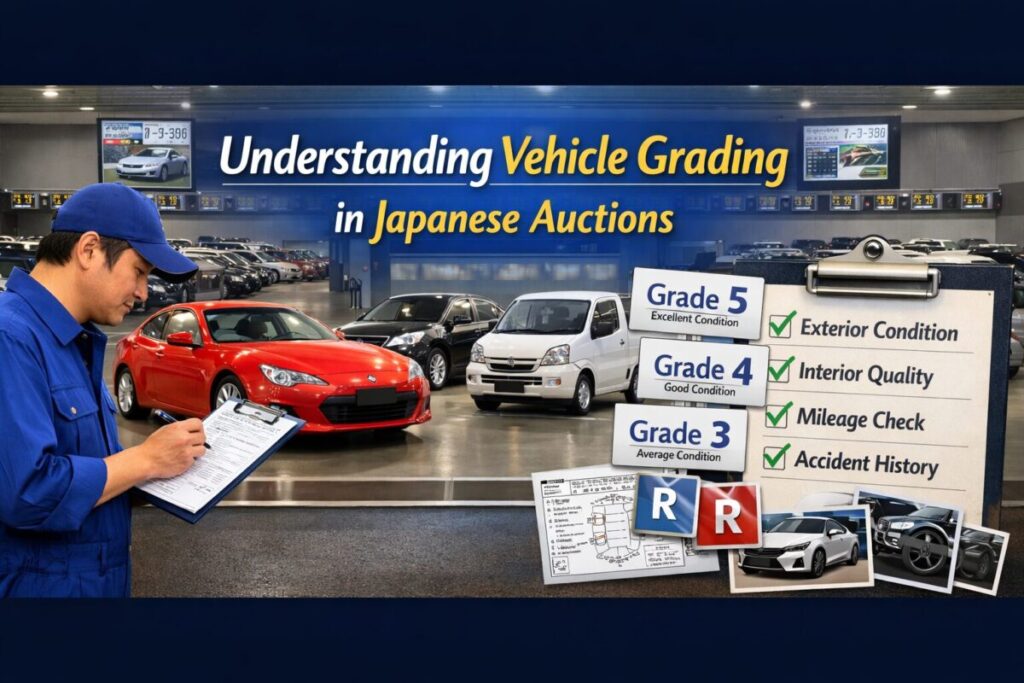

Understanding Japanese Auction Vehicle Grades: The Complete Guide to Buying with Confidence
Japanese used vehicle auctions are trusted by buyers around the world. Every day, thousands of cars, trucks, buses, tractors, and commercial vehicles enter these auctions. However, choosing the right vehicle requires more than simply looking at photos or comparing prices.
One of the most valuable tools available to buyers is the Japanese auction grading system. Auction grades provide a professional evaluation of a vehicle's condition before bidding begins.
At EVERY TRADING, we help customers understand auction grades so they can make informed decisions and import reliable Japanese vehicles with confidence.
This guide explains how Japanese vehicle grading works, what each grade means, and how you can use this information to buy smarter.
What Is a Japanese Auction Grade?
A Japanese auction grade is an overall condition rating assigned by a professional auction inspector.
Before a vehicle enters the auction, inspectors carefully examine it.
They evaluate important areas such as:
- Exterior condition
- Interior condition
- Mileage
- Accident history
- Repairs
- Mechanical appearance
- Overall presentation
The final grade gives buyers a quick summary of the vehicle's condition.
However, smart buyers always review the auction sheet together with the grade.
Why Auction Grades Matter
Buying a vehicle from another country requires trust.
Since most international buyers cannot inspect the vehicle in person, auction grades provide valuable guidance.
They help buyers:
- Compare multiple vehicles
- Understand overall condition
- Estimate future maintenance
- Reduce purchasing risks
- Make faster buying decisions
Therefore, auction grades play an important role in successful vehicle imports.
How Japanese Auction Inspectors Evaluate Vehicles
Auction inspectors follow detailed inspection standards.
They carefully check both cosmetic and visible mechanical conditions.
The inspection usually includes:
- Body panels
- Paint condition
- Interior cleanliness
- Dashboard
- Seats
- Steering wheel
- Engine appearance
- Tire condition
- Visible rust
- Frame condition
- Repair history
Inspectors also record visible scratches, dents, and other defects on the auction sheet.
Understanding Common Japanese Auction Grades
Although grading systems vary slightly between auction houses, most follow similar standards.
Let's look at the most common grades.
Grade 6 – Nearly New Condition
Grade 6 vehicles are extremely rare.
These vehicles usually have:
- Very low mileage
- Outstanding appearance
- Almost no visible wear
- Excellent interior condition
Many buyers consider Grade 6 vehicles almost identical to new vehicles.
Grade 5 – Excellent Condition
Grade 5 vehicles are among the highest-quality used vehicles available.
Typical features include:
- Low mileage
- Very clean interior
- Minimal exterior wear
- Strong overall condition
These vehicles are ideal for buyers seeking premium quality.
Grade 4.5 – Very High Quality
Grade 4.5 vehicles offer excellent value.
They often include:
- Light cosmetic wear
- Clean interiors
- Well-maintained appearance
- Strong mechanical condition
Many international buyers actively search for Grade 4.5 vehicles.
Grade 4 – Very Good Condition
Grade 4 remains one of the most popular auction grades.
These vehicles usually show:
- Normal wear
- Small scratches
- Minor dents
- Clean interiors
- Good maintenance history
Grade 4 vehicles balance quality and affordability.
Grade 3.5 – Good Used Condition
Grade 3.5 vehicles often represent strong value for budget-conscious buyers.
Expect:
- More noticeable wear
- Higher mileage
- Additional cosmetic imperfections
- Good overall drivability
Many commercial buyers choose Grade 3.5 vehicles because of their competitive pricing.
Grade 3 – Average Used Condition
Grade 3 vehicles generally show significant use.
Common characteristics include:
- Visible scratches
- Interior wear
- Higher mileage
- Minor repairs
These vehicles may still perform well but require careful inspection.
Grade 2 – Poor Condition
Grade 2 vehicles often require repairs.
They may have:
- Heavy rust
- Extensive wear
- Accident history
- Structural concerns
Most buyers should carefully evaluate these vehicles before purchasing.
Grade R or RA – Repaired Vehicle
Grade R or RA indicates previous accident repairs.
This does not automatically mean poor quality.
Many repaired vehicles perform very well after professional repairs.
However, buyers should carefully review:
- Repair location
- Repair quality
- Auction comments
- Structural information
Transparency becomes especially important with repaired vehicles.
Grade 0 or A – Special Auction Vehicles
Some auction houses use Grade 0 or A for vehicles with unique conditions.
Examples include:
- Accident vehicles
- Modified vehicles
- Flood damage history
- Incomplete information
These vehicles require additional investigation before bidding.
Interior Grades Matter Too
Japanese auctions also assign interior condition grades.
Common ratings include:
Grade A
- Excellent condition
- Very clean interior
- Minimal wear
Grade B
- Good condition
- Light signs of use
- Clean appearance
Grade C
- Average condition
- Noticeable wear
- Possible stains or minor damage
Interior grades help buyers better understand cabin condition.
Exterior Damage Codes Explained
Auction sheets use simple symbols to identify body damage.
Common examples include:
- A1 – Small scratch
- A2 – Medium scratch
- A3 – Large scratch
- U1 – Small dent
- U2 – Medium dent
- U3 – Large dent
- W1 – Small repair mark
- S1 – Rust
- C1 – Corrosion
These codes provide detailed information beyond the overall grade.
Why Auction Sheets Are Just as Important
The overall grade gives a useful summary.
However, the auction sheet contains much more detail.
It includes:
- Inspector comments
- Damage locations
- Vehicle equipment
- Mileage
- Repair history
- Interior grade
- Exterior damage map
Smart buyers always review the complete auction sheet before bidding.
Mileage Should Match the Grade
A vehicle's mileage often supports its auction grade.
However, mileage alone does not determine quality.
For example:
- A well-maintained high-mileage vehicle may receive a better grade than a neglected low-mileage vehicle.
- Clean maintenance history often improves overall confidence.
Therefore, buyers should evaluate both mileage and condition together.
Why Professional Exporters Help Buyers Understand Auction Grades
Auction reports can appear confusing at first.
Professional exporters explain the details clearly.
At EVERY, our experienced team helps customers understand:
- Auction grades
- Damage codes
- Vehicle condition
- Maintenance information
- Buying recommendations
This guidance allows buyers to purchase with greater confidence.
How EVERY Uses Auction Grades During Vehicle Selection
Auction grades are only one part of our inspection process.
Our specialists also verify:
- Vehicle appearance
- Auction information
- Available maintenance history
- Odometer consistency
- Overall condition
This extra evaluation helps reduce risk for our customers.
Common Mistakes First-Time Buyers Make
Many first-time buyers misunderstand auction grades.
Avoid these common mistakes:
- Choosing only the lowest price
- Ignoring auction comments
- Focusing only on mileage
- Overlooking repair history
- Skipping damage codes
A complete evaluation always produces better buying decisions.
Why Buyers Around the World Trust EVERY
Customers choose EVERY because we combine experience with transparency.
We provide:
- Professional auction support
- Honest vehicle evaluations
- Clear explanations
- Detailed auction sheet reviews
- Fast communication
- Worldwide export experience
Our goal is to help every customer purchase with confidence.
Final Thoughts
Understanding Japanese auction vehicle grades is one of the smartest ways to reduce risk when importing a used vehicle. Auction grades provide valuable information about condition, while auction sheets reveal the details that help buyers make informed decisions.
At EVERY, we carefully review every auction report, explain vehicle grades clearly, and help customers choose the right Japanese cars, trucks, buses, tractors, and machinery for their needs.
When you work with EVERY, you gain more than an exporter—you gain a trusted partner committed to quality, transparency, and long-term success.


Browse Reliable Used Trucks & Buses from Japan
Carefully selected vehicles ready for export worldwide
Search 100,000+ Dealer Stock Vehicles from Japan
Access a wide selection of vehicles from Japanese dealers nationwide. Updated daily.
