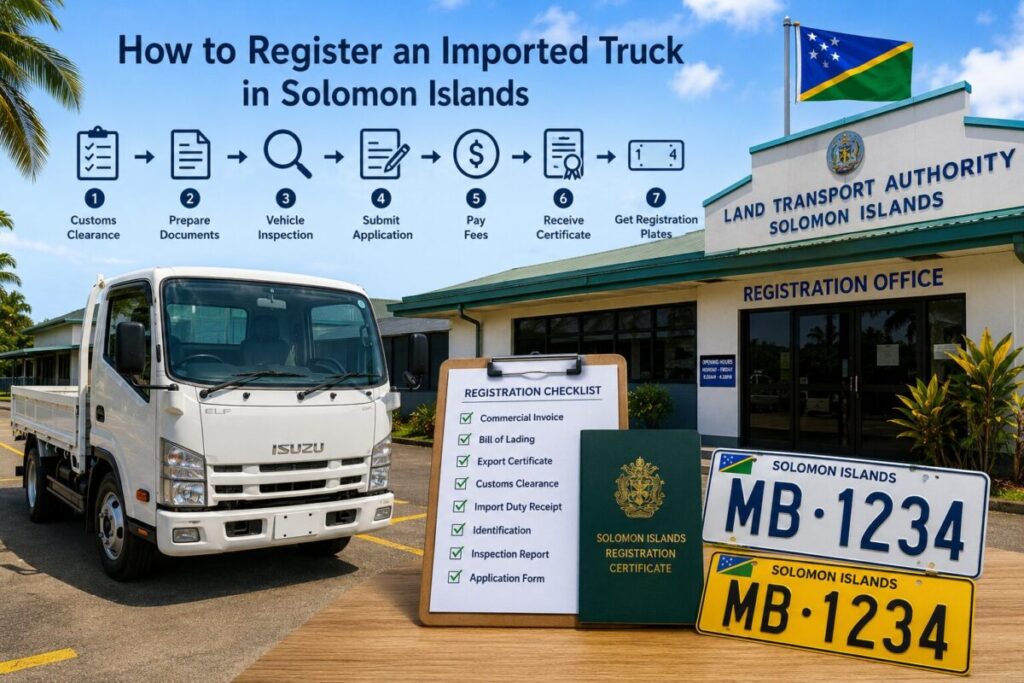

Complete Guide to Registering an Imported Truck in Solomon Islands After Customs Clearance
Importing a Japanese used truck into Solomon Islands is only the beginning of the process. Before you can legally drive your vehicle for business, construction, agriculture, or logistics, you must complete the local registration process.
Many first-time importers believe customs clearance is the final step. However, registration is equally important. Without proper registration, the truck cannot legally operate on public roads.
This guide explains the registration process after customs clearance. It also introduces the required documents, practical tips, and common mistakes to help Solomon Islands buyers complete registration smoothly.
Why Registration Is Important
Truck registration confirms that the imported vehicle complies with Solomon Islands regulations.
After registration, the vehicle can legally operate for commercial activities such as transportation, construction work, agriculture, retail delivery, forestry, and fisheries.
Proper registration also helps protect ownership records and simplifies future resale or fleet management.
Why Japanese Used Trucks Are Popular in Solomon Islands
Businesses throughout Solomon Islands continue choosing Japanese commercial vehicles because they combine excellent reliability with affordable operating costs.
Japanese trucks also perform well on both paved and unpaved roads that are common throughout the country.
Popular models include the Isuzu Elf, Mitsubishi Canter, Toyota Dyna, Hino Dutro, Isuzu Forward, and Hino Ranger.
These trucks support industries including:
- Construction
- Agriculture
- Forestry
- Wholesale distribution
- Retail delivery
- Fishing
- Tourism
- Government projects
Complete Registration Process
Step 1: Complete Customs Clearance
Registration begins only after Customs officially releases the vehicle.
Import duties, taxes, and port charges must be settled before moving to the next stage.
Keep copies of every customs document because registration officers may request them.
Step 2: Collect All Required Documents
Preparing documents before visiting the registration office helps save time.
The required documents commonly include:
- Commercial Invoice
- Bill of Lading
- Japanese Export Certificate
- English Translation of Export Certificate
- Customs Clearance Documents
- Import Duty Payment Receipt
- Identification Documents
- Business Registration (for companies)
- Application Form
Always check whether additional documents are required before visiting the registration office.
Step 3: Vehicle Inspection
The truck may require inspection before registration.
The inspection helps confirm the vehicle's identity and overall condition.
Officials may check:
- Chassis number
- Engine number
- Vehicle dimensions
- Lighting equipment
- Brake system
- Tires
- Steering system
- General roadworthiness
Preparing the truck before inspection helps prevent unnecessary delays.
Step 4: Submit Registration Application
After preparing the documents and completing inspections, submit the registration application.
Officials review the documents and verify the vehicle information.
If everything matches correctly, the application moves to the approval stage.
Step 5: Pay Registration Fees
Registration normally requires payment of government fees.
The amount may differ depending on the vehicle category and current regulations.
Keep every receipt because proof of payment may be required later.
Step 6: Receive Registration Certificate
After approval, the registration authority issues the registration certificate.
This document confirms the vehicle has been officially registered in Solomon Islands.
Store the certificate safely because it may be needed during inspections, insurance applications, or future ownership transfers.
Step 7: Install Registration Plates
After registration is completed, registration plates are issued.
Install the plates correctly before operating the truck on public roads.
Choosing the Right Truck Before Registration
Selecting the correct vehicle before import makes registration and daily operation much easier.
Businesses should consider:
- Payload capacity
- Engine size
- Fuel economy
- Ground clearance
- Wheelbase
- Availability of spare parts
- Ease of maintenance
For example, compact trucks work well in Honiara for deliveries, while medium-duty trucks suit construction and infrastructure projects.
Road Conditions in Solomon Islands
Road conditions vary greatly throughout Solomon Islands.
Major roads around Honiara are generally easier to travel than many provincial roads.
Outside urban areas, drivers may encounter gravel roads, steep hills, heavy rainfall, and muddy surfaces.
Therefore, many businesses prefer durable Japanese trucks with strong suspension systems.
Common Registration Mistakes
Missing Documents
Incomplete paperwork is one of the most common reasons for registration delays.
Always prepare every required document before your appointment.
Incorrect Vehicle Information
Verify the chassis number, engine number, and vehicle model before submitting documents.
Even a small mistake can delay approval.
Late Registration
Complete registration promptly after customs clearance.
Waiting too long may create additional administrative problems.
Poor Vehicle Preparation
A clean and well-maintained truck makes inspection easier.
Inspect lights, brakes, mirrors, and tires before visiting the inspection center.
Practical Tips for Solomon Islands Importers
- Prepare documents before arrival.
- Keep multiple document copies.
- Use an experienced customs broker.
- Inspect the vehicle immediately after delivery.
- Schedule registration early.
- Keep all payment receipts.
- Confirm current registration requirements before importing.
Insurance After Registration
After registration, many owners arrange vehicle insurance before beginning commercial operations.
Insurance helps protect businesses against unexpected accidents and financial losses.
Choose coverage that matches your business activities and vehicle usage.
Maintaining Your Registered Truck
Regular maintenance helps your truck remain reliable throughout Solomon Islands.
Routine servicing should include:
- Engine oil replacement
- Filter replacement
- Brake inspection
- Suspension inspection
- Tire pressure checks
- Cooling system inspection
- Battery inspection
Preventive maintenance usually costs less than major repairs.
How EVERY TRADING Supports Solomon Islands Buyers
EVERY TRADING Co., Ltd. has exported Japanese commercial vehicles worldwide since 2006.
We assist customers from vehicle selection through export documentation and international shipping.
Our experienced staff helps buyers choose trucks that match Solomon Islands' industries, transportation needs, and road conditions.
Whether you need one truck or an entire fleet, we are ready to support your business.
Conclusion
Registering an imported truck in Solomon Islands is a straightforward process when you prepare properly.
Complete customs clearance first, organize every document, pass the required inspections, and submit your application promptly.
With careful preparation and support from experienced exporters, your Japanese used truck can begin serving your business quickly and efficiently.


Browse Reliable Used Trucks & Buses from Japan
Carefully selected vehicles ready for export worldwide
Search 100,000+ Dealer Stock Vehicles from Japan
Access a wide selection of vehicles from Japanese dealers nationwide. Updated daily.
