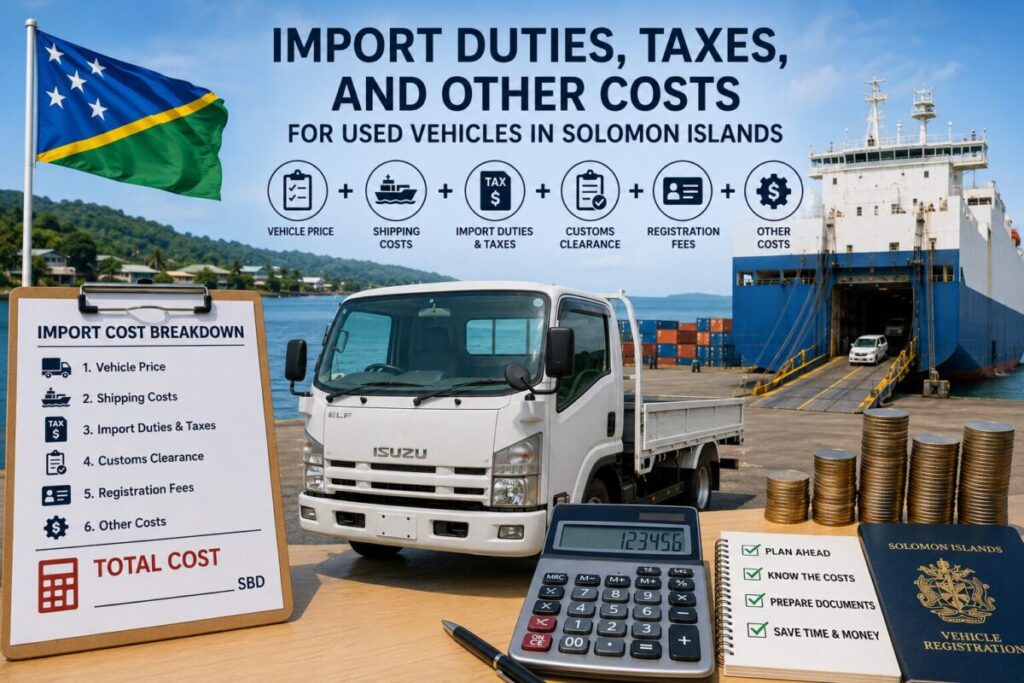

Complete Guide to Import Duties, Taxes, and Total Import Costs for Used Vehicles in Solomon Islands
Buying a Japanese used truck is an excellent investment for businesses in Solomon Islands. Japanese commercial vehicles are well known for their reliability, durability, and affordable maintenance. However, the purchase price is only one part of the total investment. Importers should also understand import duties, taxes, shipping costs, customs fees, and registration expenses before placing an order.
Many first-time buyers focus only on the vehicle price. As a result, they sometimes underestimate the total landing cost. Fortunately, careful planning helps businesses avoid unexpected expenses and manage their budgets more effectively.
This guide explains the major import costs for Japanese used commercial vehicles entering Solomon Islands. It also provides practical advice to help buyers estimate their total investment before shipping.
Why Cost Planning Is Important
Solomon Islands depends heavily on imported commercial vehicles because domestic production is extremely limited.
Businesses involved in construction, agriculture, forestry, fisheries, wholesale distribution, and tourism require dependable trucks every day. Therefore, understanding the complete import cost helps companies make better purchasing decisions.
A lower purchase price does not always mean a lower overall cost. Instead, buyers should calculate every expense from Japan to their final destination.
Popular Japanese Trucks Imported into Solomon Islands
Japanese trucks are widely used throughout Solomon Islands because they offer excellent fuel economy, strong resale value, and dependable performance.
Popular commercial models include the Isuzu Elf, Mitsubishi Canter, Toyota Dyna, Hino Dutro, Isuzu Forward, and Hino Ranger.
These vehicles support many industries including:
- Building construction
- Road maintenance
- Agriculture
- Logging operations
- Retail distribution
- Fishing businesses
- Government projects
- Hotel and tourism services
Main Import Costs
1. Vehicle Purchase Price
The purchase price is the starting point of your import budget.
The price depends on several factors.
- Vehicle age
- Condition
- Mileage
- Model
- Body type
- Auction demand
- Market availability
Well-maintained trucks often provide better long-term value than the cheapest available option.
2. Inland Transportation in Japan
After purchasing the vehicle, it must be transported from its location to the export port.
The transportation cost depends on the distance between the vehicle and the shipping port.
Vehicles purchased farther from major export ports generally require higher inland transport costs.
3. Export Documentation Fees
Professional exporters prepare several export documents before shipment.
These commonly include:
- Commercial Invoice
- Bill of Lading
- Japanese Export Certificate
- English Translation
- Shipping Documents
These documents are essential for customs clearance in Solomon Islands.
4. Ocean Freight
Ocean freight usually represents one of the largest import expenses.
The freight cost depends on:
- Vehicle size
- Vehicle weight
- Shipping method
- Available shipping space
- Seasonal demand
RoRo shipping is commonly used for complete commercial vehicles because it provides an efficient loading process.
5. Marine Insurance
Marine insurance protects the vehicle while it travels by sea.
Although insurance is optional in many cases, it offers valuable financial protection against unexpected incidents during transport.
Import Duties and Taxes
After the vehicle arrives at Honiara Port, Solomon Islands Customs calculates import duties and taxes according to the current regulations.
The final amount depends on several factors including the vehicle classification, customs value, and applicable tariff schedule.
Government regulations may change over time. Therefore, buyers should always confirm the latest duty rates before shipping.
Working with a licensed customs broker helps importers obtain the most accurate cost estimate.
Port Charges
Besides customs duties, importers usually pay additional port-related charges.
These expenses may include:
- Terminal handling fees
- Port storage charges
- Documentation fees
- Delivery Order fees
- Container handling fees (if applicable)
Completing customs procedures quickly helps minimize storage charges.
Customs Broker Fees
Many businesses hire licensed customs brokers to manage import procedures.
Professional brokers prepare customs declarations, calculate taxes, and coordinate with government authorities.
Their experience often saves valuable time while reducing administrative errors.
Vehicle Registration Costs
After customs clearance, the truck must be registered before operating on public roads.
Registration costs may include:
- Registration fees
- License plate fees
- Inspection fees
- Administrative charges
Requirements may change over time. Therefore, buyers should confirm the latest registration procedures before importing.
Domestic Transportation Costs
Many imported trucks remain on Guadalcanal after customs clearance.
However, businesses located on other islands usually require domestic shipping.
This additional transportation should be included in your overall budget.
Maintenance Costs After Import
Every imported truck requires regular maintenance after arrival.
Businesses should prepare a maintenance budget covering:
- Engine oil
- Oil filters
- Fuel filters
- Brake maintenance
- Tires
- Battery replacement
- Cooling system service
Preventive maintenance helps reduce long-term operating costs.
Example of Total Import Cost
A complete import budget usually includes:
- Vehicle purchase price
- Inland transportation in Japan
- Export documentation
- Ocean freight
- Marine insurance
- Import duties
- Taxes
- Port charges
- Customs broker fees
- Registration fees
- Domestic transportation
- Initial maintenance
Considering every expense before purchasing helps businesses avoid unexpected financial pressure.
How to Reduce Import Costs
Choose the Right Truck
Selecting a truck that matches your business needs prevents unnecessary operating expenses.
Buy from a Reliable Exporter
Experienced exporters prepare accurate documents and help avoid costly delays.
Prepare Documents Early
Early preparation speeds customs clearance and reduces storage charges.
Plan Domestic Transportation
If your business is located outside Guadalcanal, arrange domestic shipping before the vehicle arrives.
Maintain Your Truck Regularly
Routine maintenance helps prevent expensive repairs and extends vehicle life.
Why Japanese Trucks Offer Excellent Value
Although importing requires several expenses, Japanese trucks continue providing excellent long-term value.
Businesses benefit from dependable engines, good fuel economy, durable construction, and high resale value.
These advantages often outweigh the initial import costs over many years of operation.
How EVERY TRADING Supports Solomon Islands Buyers
EVERY TRADING Co., Ltd. has exported Japanese commercial vehicles since 2006.
We help customers understand vehicle pricing, shipping costs, export documentation, and international logistics before purchase.
Our experienced team works closely with buyers to recommend vehicles suitable for Solomon Islands' industries, road conditions, and business requirements.
Conclusion
Understanding import duties, taxes, and total import costs allows Solomon Islands businesses to make smarter purchasing decisions.
Instead of focusing only on the purchase price, successful importers calculate every expense from Japan to final registration.
With careful planning and support from experienced exporters, importing Japanese commercial vehicles remains a cost-effective solution for businesses throughout Solomon Islands.


Browse Reliable Used Trucks & Buses from Japan
Carefully selected vehicles ready for export worldwide
Search 100,000+ Dealer Stock Vehicles from Japan
Access a wide selection of vehicles from Japanese dealers nationwide. Updated daily.
