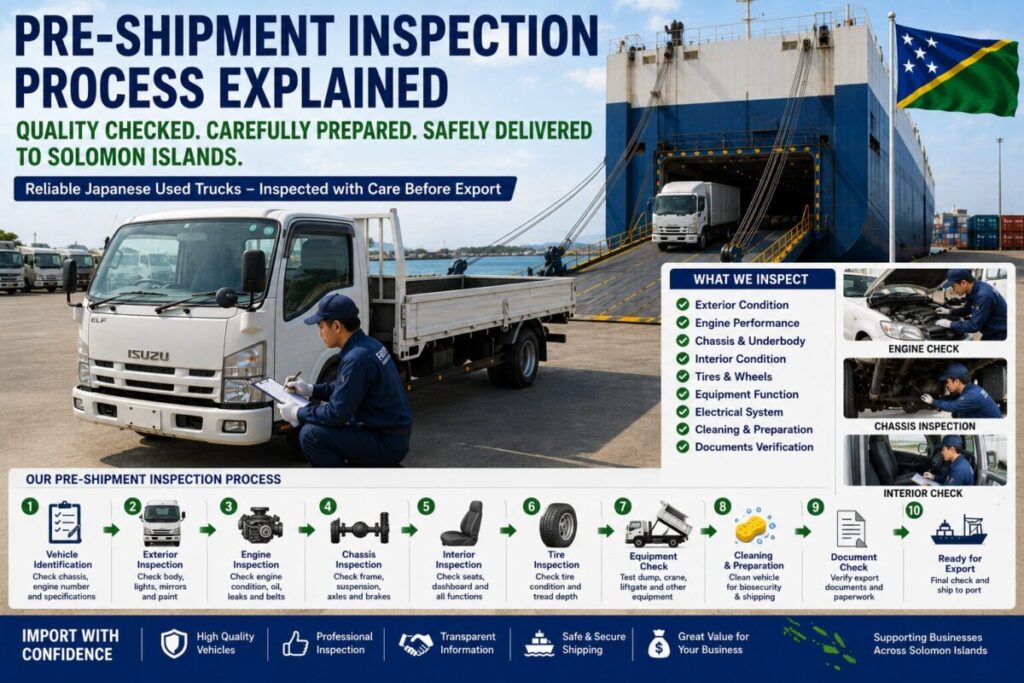

Pre-Shipment Inspection Process Explained: How Japanese Used Trucks Are Checked Before Export to Solomon Islands
Purchasing a Japanese used truck is a major investment for businesses in Solomon Islands. Whether the vehicle will support construction projects, agricultural operations, forestry work, fisheries, or retail distribution, buyers want confidence that it will arrive in excellent condition.
One of the most important steps before international shipping is the pre-shipment inspection. This inspection helps verify the vehicle's condition before it leaves Japan. As a result, buyers receive accurate information and can purchase with greater confidence.
This guide explains the complete pre-shipment inspection process and why it is essential for businesses importing Japanese commercial vehicles into Solomon Islands.
What Is a Pre-Shipment Inspection?
A pre-shipment inspection is a detailed examination of a vehicle before export.
The inspection confirms the vehicle's identity, checks its overall condition, and verifies that the vehicle matches the export documents.
Professional exporters perform these inspections to improve quality control and reduce the possibility of problems after arrival.
Why Pre-Shipment Inspection Is Important
Businesses in Solomon Islands depend on reliable transportation every day.
Construction companies transport materials across project sites. Farmers deliver crops to markets. Fisheries move seafood quickly, while wholesalers supply products throughout Honiara and surrounding islands.
Therefore, every truck should be carefully inspected before shipping.
A proper inspection helps buyers:
- Understand the actual vehicle condition.
- Reduce unexpected repair costs.
- Avoid documentation problems.
- Receive accurate vehicle information.
- Import with greater confidence.
Popular Japanese Trucks Exported to Solomon Islands
Japanese commercial vehicles are respected worldwide because of their excellent durability, fuel economy, and long service life.
Popular models include the Isuzu Elf, Mitsubishi Canter, Toyota Dyna, Hino Dutro, Isuzu Forward, and Hino Ranger.
These vehicles continue supporting industries such as:
- Construction
- Agriculture
- Forestry
- Fishing
- Retail distribution
- Tourism
- Government infrastructure
Step 1: Vehicle Identification
The inspection begins by confirming the vehicle's identity.
The inspector verifies:
- Chassis number
- Model code
- Engine number
- Vehicle specifications
- Year of manufacture
Matching these details with the export documents helps prevent customs problems later.
Step 2: Exterior Inspection
The entire exterior receives a careful visual inspection.
Inspectors examine:
- Body panels
- Paint condition
- Doors
- Roof
- Mirrors
- Windows
- Headlights
- Tail lights
Visible scratches, dents, corrosion, or damage are carefully recorded.
Step 3: Engine Compartment Inspection
The engine is one of the most important components of every commercial truck.
The inspection normally includes:
- Engine oil condition
- Cooling system
- Battery
- Belts
- Visible fluid leaks
- General engine cleanliness
This inspection helps confirm the truck is ready for export.
Step 4: Chassis and Undercarriage Inspection
The underbody is carefully examined because many trucks operate under demanding conditions.
Inspectors check:
- Frame condition
- Suspension components
- Axles
- Brake lines
- Visible corrosion
- Structural condition
A strong chassis is especially valuable for Solomon Islands, where road conditions vary significantly.
Step 5: Interior Inspection
The vehicle interior is also inspected carefully.
Inspection items include:
- Seats
- Dashboard
- Instrument panel
- Steering wheel
- Air conditioning
- Windows
- Seat belts
A clean interior improves driver comfort and demonstrates careful ownership.
Step 6: Tire Inspection
Tires play an important role in vehicle safety.
The inspection includes:
- Tread depth
- Wear condition
- Sidewall damage
- Tire size
- Overall condition
Proper tire condition allows buyers to begin operations more quickly after arrival.
Step 7: Functional Equipment Inspection
Many commercial vehicles include specialized equipment.
Depending on the truck, inspectors may examine:
- Dump body operation
- Crane function
- Liftgate operation
- Refrigeration equipment
- Hydraulic systems
- PTO equipment
Functional testing provides valuable information before export.
Step 8: Cleaning Before Shipment
Every vehicle receives careful cleaning before export.
Cleaning removes:
- Mud
- Dust
- Plant material
- Organic residue
- Loose debris
This preparation also supports international biosecurity requirements during import.
Step 9: Photographing the Vehicle
Professional exporters normally photograph the truck after inspection.
These photographs allow buyers to review the vehicle before shipment.
Images usually include multiple exterior angles, the interior, engine compartment, cargo area, and important identification numbers.
Step 10: Final Export Preparation
Before transportation to the export port, the exporter performs one final review.
This final check confirms that the vehicle, documents, and shipping arrangements are all ready.
The truck is then transported to the port and loaded onto the scheduled vessel.
Benefits of a Professional Pre-Shipment Inspection
- Greater buyer confidence.
- Accurate vehicle information.
- Reduced risk of unexpected problems.
- Smoother customs clearance.
- Better long-term reliability.
- Improved transparency.
Why Solomon Islands Buyers Trust Japanese Exports
Japanese commercial vehicles continue supporting businesses across Solomon Islands because they combine dependable engineering with careful maintenance and professional export preparation.
Reliable trucks reduce downtime while helping businesses improve productivity and control operating costs.
How EVERY TRADING Supports Customers
EVERY TRADING Co., Ltd. has exported Japanese commercial vehicles to customers around the world since 2006.
Our experienced staff carefully inspects vehicles, prepares accurate export documents, and provides detailed photographs before shipment.
By maintaining high inspection standards, we help Solomon Islands buyers receive reliable Japanese trucks that are ready to support their businesses.
Conclusion
A thorough pre-shipment inspection is one of the most important steps in the export process.
By confirming vehicle condition, verifying documentation, and completing careful inspections before shipping, buyers receive greater confidence throughout the purchasing process.
With professional preparation and experienced export support, importing a Japanese used truck into Solomon Islands becomes safer, easier, and more reliable.


Browse Reliable Used Trucks & Buses from Japan
Carefully selected vehicles ready for export worldwide
Search 100,000+ Dealer Stock Vehicles from Japan
Access a wide selection of vehicles from Japanese dealers nationwide. Updated daily.
