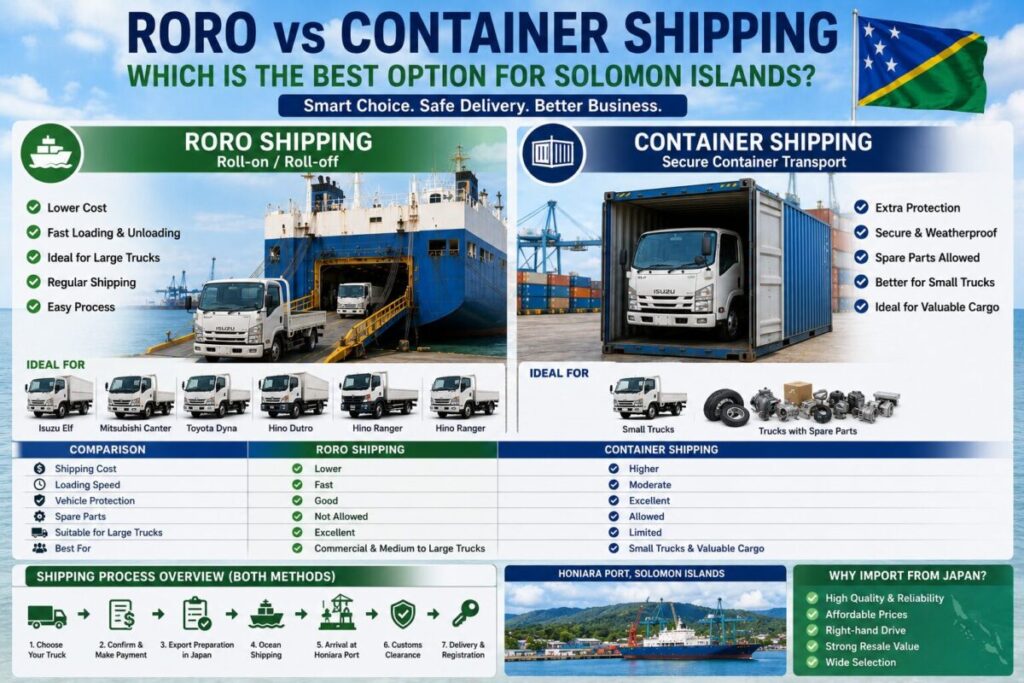

RoRo vs Container Shipping: Which Is the Best Option for Importing Japanese Trucks to Solomon Islands?
Choosing the right shipping method is one of the most important decisions when importing a Japanese used truck into Solomon Islands. Your shipping option affects transportation costs, delivery time, cargo protection, and the overall import experience.
Most commercial vehicles shipped from Japan travel either by Roll-on/Roll-off (RoRo) vessels or by container shipping. Both methods have advantages, but the best choice depends on your vehicle type, budget, shipment size, and business requirements.
This guide explains the differences between RoRo and container shipping and helps Solomon Islands buyers choose the most suitable transportation method.
Why Shipping Method Matters
Businesses across Solomon Islands rely on imported Japanese trucks for construction, agriculture, forestry, fishing, wholesale distribution, tourism, and infrastructure projects.
Choosing the correct shipping option can reduce transportation costs, shorten delivery time, and minimize handling risks.
Furthermore, selecting the most suitable shipping method helps businesses improve long-term operating efficiency.
Popular Japanese Trucks Imported into Solomon Islands
Japanese commercial vehicles have earned an excellent reputation throughout Solomon Islands because they offer high reliability, low maintenance costs, and outstanding fuel efficiency.
Popular models include the Isuzu Elf, Mitsubishi Canter, Toyota Dyna, Hino Dutro, Isuzu Forward, and Hino Ranger.
These trucks serve many industries throughout the country and perform well under Solomon Islands' tropical climate and varied road conditions.
What Is RoRo Shipping?
Roll-on/Roll-off Explained
RoRo shipping stands for Roll-on/Roll-off.
Under this method, vehicles are driven directly onto a specialized vehicle carrier in Japan and driven off after arriving at Honiara Port.
Because no container loading is required, the process remains simple and efficient.
Main Advantages of RoRo Shipping
- Lower shipping costs for complete vehicles.
- Simple loading and unloading.
- Fast port handling.
- Suitable for medium and large trucks.
- Regular shipping schedules.
Things to Consider
- No personal cargo inside the vehicle.
- Vehicle must be operational.
- Limited protection compared with containers.
What Is Container Shipping?
Container shipping transports vehicles inside sealed steel containers.
The vehicle is carefully secured before departure, reducing exposure to weather and external conditions during transport.
Although container shipping generally costs more than RoRo, it offers additional flexibility for certain shipments.
Main Advantages of Container Shipping
- Excellent protection during transportation.
- Suitable for valuable vehicles.
- Additional spare parts may be loaded together.
- Better protection from sea salt and weather.
Things to Consider
- Higher transportation costs.
- Additional loading and unloading work.
- Vehicle size limitations.
- Longer preparation time.
Direct Comparison
| Feature | RoRo | Container |
|---|---|---|
| Shipping Cost | Lower | Higher |
| Loading Speed | Fast | Moderate |
| Vehicle Protection | Good | Excellent |
| Spare Parts | Not Allowed | Allowed |
| Large Trucks | Excellent | Limited |
| Small Vehicles | Suitable | Suitable |
Which Method Is Better for Solomon Islands?
For most commercial trucks imported into Solomon Islands, RoRo shipping is usually the preferred option.
Many businesses import complete trucks ready for immediate operation. RoRo shipping allows these vehicles to travel efficiently while keeping transportation costs competitive.
Container shipping becomes attractive when buyers need additional cargo space for spare parts or when shipping smaller commercial vehicles that fit safely inside a container.
Road Conditions and Business Needs
Road conditions vary significantly across Solomon Islands.
While Honiara has relatively developed roads, many provincial areas include gravel roads, muddy surfaces, steep hills, and rural transportation routes.
Businesses operating in construction, logging, agriculture, and fisheries often prefer medium-duty trucks because of their durability.
RoRo shipping works particularly well for these larger commercial vehicles.
Estimated Costs
The total shipping cost depends on several factors.
- Vehicle dimensions.
- Vehicle weight.
- Shipping method.
- Available vessel space.
- Fuel prices.
- Seasonal demand.
- Destination port charges.
Requesting a detailed quotation from your exporter allows you to compare total costs accurately.
Required Shipping Documents
Regardless of the shipping method, importers usually require the following documents.
- Commercial Invoice.
- Bill of Lading.
- Japanese Export Certificate.
- English Translation.
- Insurance Certificate (if applicable).
- Packing List (for container shipments when necessary).
Preparing these documents before vessel arrival helps speed customs clearance.
Tips for First-Time Solomon Islands Buyers
- Choose an experienced Japanese exporter.
- Compare both shipping methods before purchasing.
- Calculate total landed costs instead of shipping costs alone.
- Confirm customs requirements before shipment.
- Prepare registration documents early.
- Book a licensed customs broker before vessel arrival.
- Inspect the truck immediately after delivery.
Why Japanese Trucks Continue to Be the Best Choice
Japanese trucks continue supporting Solomon Islands businesses because they provide outstanding quality, dependable engines, strong resale value, and affordable maintenance.
Whether operating in agriculture, construction, retail delivery, forestry, or tourism, businesses benefit from reliable transportation every day.
Combined with efficient international shipping, importing directly from Japan remains a practical long-term investment.
How EVERY TRADING Supports Solomon Islands Buyers
EVERY TRADING Co., Ltd. has exported Japanese used commercial vehicles since 2006.
We help customers compare RoRo and container shipping, prepare export documentation, arrange international transportation, and support buyers throughout the entire export process.
Our experienced team recommends the most suitable shipping method based on your vehicle, destination, and business requirements.
Conclusion
Both RoRo and container shipping provide reliable ways to import Japanese trucks into Solomon Islands.
RoRo remains the preferred choice for most commercial vehicles because it offers lower costs, efficient handling, and regular shipping schedules.
Container shipping provides additional protection and flexibility for specific situations.
By understanding the advantages of both options, Solomon Islands buyers can confidently choose the shipping method that best supports their business.


Browse Reliable Used Trucks & Buses from Japan
Carefully selected vehicles ready for export worldwide
Search 100,000+ Dealer Stock Vehicles from Japan
Access a wide selection of vehicles from Japanese dealers nationwide. Updated daily.
