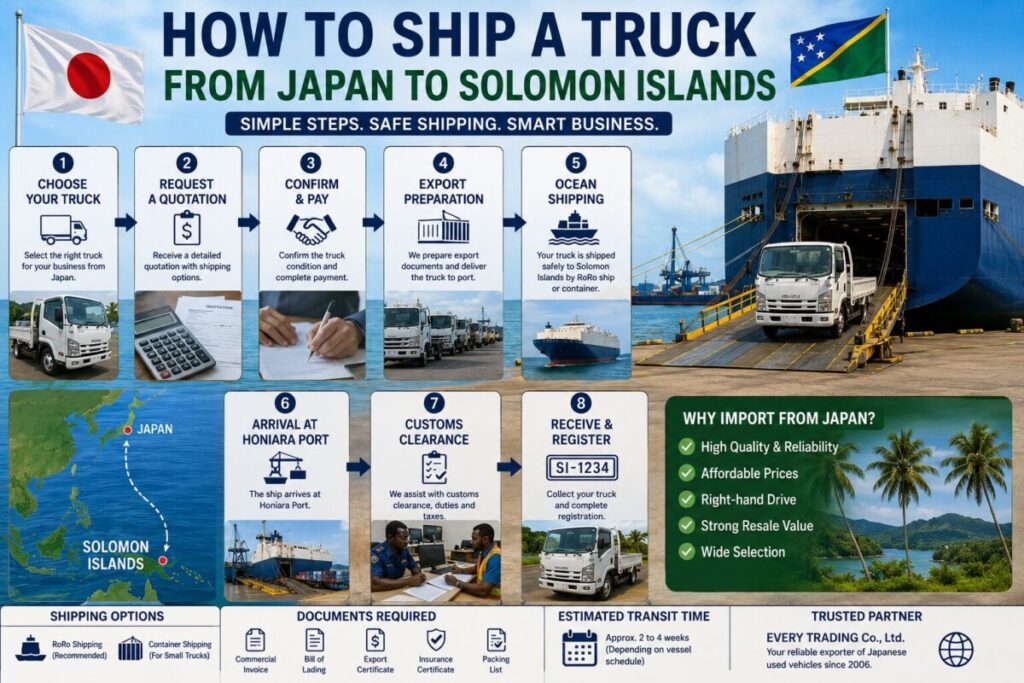

Complete Guide to Shipping a Truck from Japan to Solomon Islands: Step-by-Step Import Process
Importing a Japanese used truck into Solomon Islands is one of the best ways to purchase reliable commercial vehicles at competitive prices. Japanese trucks are trusted worldwide because they offer excellent durability, fuel efficiency, and long service life. However, successful importing requires more than simply buying a truck. Understanding the shipping process helps buyers avoid delays, reduce costs, and receive their vehicles smoothly.
This guide explains every step of shipping a truck from Japan to Solomon Islands. Whether you are importing your first vehicle or expanding your commercial fleet, this article will help you understand the complete process.
Why Import Trucks from Japan?
Businesses across Solomon Islands rely on commercial vehicles every day. Construction companies transport building materials, farmers move agricultural products, retailers deliver goods, and logging companies require dependable transport for remote operations.
Japanese used trucks have earned an excellent reputation because they combine quality with affordable pricing.
Popular commercial vehicles include the Isuzu Elf, Mitsubishi Canter, Toyota Dyna, Hino Dutro, Isuzu Forward, and Hino Ranger.
These models are widely used throughout Solomon Islands because they perform well on both paved roads around Honiara and rougher provincial roads.
Step 1: Choose the Right Truck
The shipping process starts with selecting the right vehicle.
Before purchasing, consider:
- Business purpose
- Payload capacity
- Body type
- Engine size
- Fuel economy
- Road conditions
- Maintenance requirements
- Available spare parts
Choosing the correct truck before shipment reduces future operating costs.
Step 2: Receive a Quotation
After selecting your vehicle, the exporter prepares a quotation.
The quotation normally includes:
- Vehicle price
- Shipping term (FOB, C&F, or CIF)
- Export documentation
- Estimated shipping schedule
- Destination port
Read the quotation carefully and confirm which services are included.
Step 3: Complete Payment
Once the quotation has been accepted, payment is completed according to the agreed terms.
Professional exporters confirm receipt of payment before preparing the vehicle for export.
Keep payment records because they may be required during customs procedures.
Step 4: Export Preparation
Before shipping, the exporter prepares the truck for international transport.
This process usually includes:
- Vehicle inspection
- Cleaning
- Photographs
- Export documentation
- Transportation to the port
Cleaning is particularly important because biosecurity inspections are carried out after arrival in Solomon Islands.
Step 5: Choose the Shipping Method
RoRo Shipping
Roll-on/Roll-off shipping is the most common method for transporting commercial vehicles.
The truck is driven directly onto the vessel in Japan and driven off after arriving at Honiara Port.
Advantages include:
- Lower handling costs
- Simple loading process
- Suitable for operational vehicles
- Efficient scheduling
Container Shipping
Some compact trucks can be transported inside shipping containers.
This option provides additional protection during transport.
However, container shipping may involve higher loading costs and vehicle preparation.
Step 6: Ocean Transportation
After loading, the vessel departs Japan and begins its journey toward Solomon Islands.
Shipping schedules depend on vessel availability, weather conditions, and shipping routes.
Professional exporters provide vessel information and estimated arrival dates after departure.
Step 7: Shipping Documents
While the truck is at sea, the exporter prepares the original shipping documents.
These commonly include:
- Commercial Invoice
- Bill of Lading
- Japanese Export Certificate
- English Translation
- Insurance Certificate (if applicable)
Send these documents to your customs broker before the vessel arrives whenever possible.
Step 8: Arrival at Honiara Port
Most imported commercial vehicles enter Solomon Islands through Honiara Port.
After arrival, Customs begins the import clearance process.
Importers should prepare all documents before the vessel reaches port.
Step 9: Customs Clearance
Customs officers verify the shipping documents and calculate applicable duties and taxes.
Biosecurity inspections may also take place.
After all requirements have been completed and payments have been made, Customs authorizes vehicle release.
Step 10: Vehicle Registration
After customs clearance, buyers should complete local registration before operating the truck on public roads.
Registration requirements may change. Therefore, buyers should always confirm the latest regulations with the appropriate authorities.
Shipping Costs
The total shipping cost depends on several factors.
- Vehicle size
- Vehicle weight
- Shipping method
- Shipping season
- Port charges
- Insurance
- Destination
Request a complete quotation before making your purchasing decision.
Tips for Solomon Islands Buyers
- Choose an experienced exporter.
- Confirm the shipping method.
- Prepare documents early.
- Keep communication with your customs broker.
- Track the vessel schedule.
- Prepare import duties before arrival.
- Arrange domestic transportation if necessary.
- Inspect the truck immediately after collection.
Why Japanese Trucks Suit Solomon Islands
Solomon Islands has a growing demand for dependable commercial vehicles.
Construction projects continue expanding around Honiara. Agriculture and forestry remain major industries. Tourism is also growing, creating additional transportation demand.
Because many roads outside urban areas remain challenging, durable Japanese trucks continue to provide excellent long-term value.
How EVERY TRADING Supports Solomon Islands Buyers
EVERY TRADING Co., Ltd. has exported Japanese used vehicles worldwide since 2006.
Our experienced export team supports customers throughout the purchasing process, from vehicle selection to shipping arrangements and export documentation.
We help buyers understand shipping methods, prepare export paperwork, and select commercial vehicles that match Solomon Islands' business environment.
Conclusion
Shipping a truck from Japan to Solomon Islands becomes much easier when every step is carefully planned.
Choosing the right exporter, selecting the appropriate shipping method, preparing documents early, and understanding customs procedures all contribute to a successful import.
With proper preparation, businesses throughout Solomon Islands can enjoy reliable Japanese commercial vehicles that support long-term growth and efficient transportation.


Browse Reliable Used Trucks & Buses from Japan
Carefully selected vehicles ready for export worldwide
Search 100,000+ Dealer Stock Vehicles from Japan
Access a wide selection of vehicles from Japanese dealers nationwide. Updated daily.
