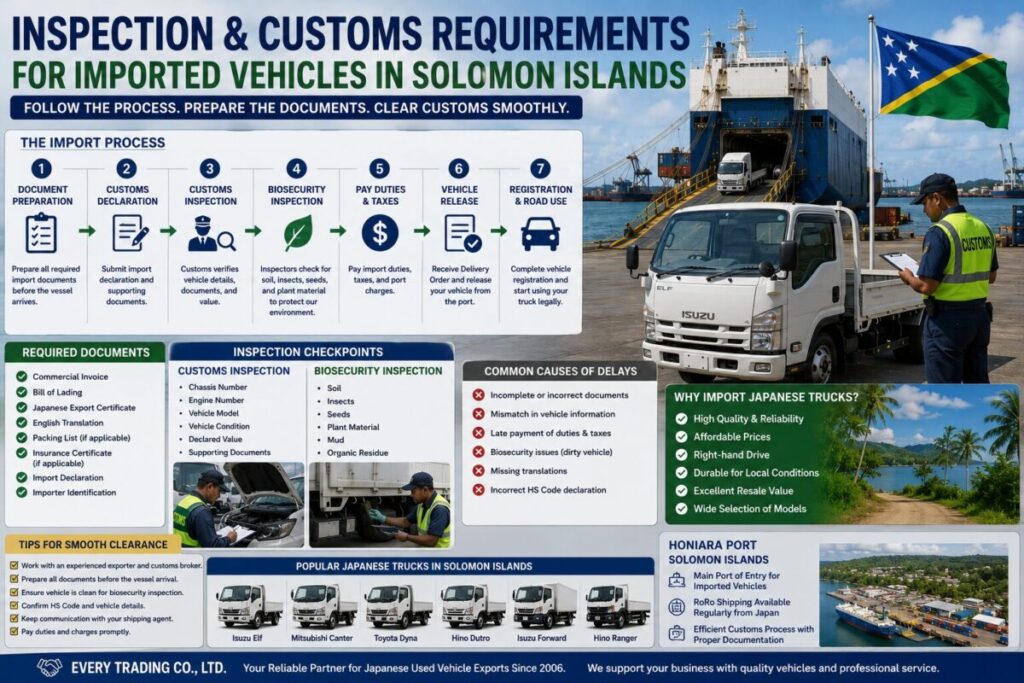

Complete Guide to Inspection and Customs Requirements for Imported Vehicles in Solomon Islands
Importing a Japanese used commercial vehicle into Solomon Islands is an excellent investment for businesses in construction, agriculture, forestry, fisheries, tourism, and transportation. However, before your vehicle can legally operate on public roads, it must successfully complete customs clearance and all required inspections.
Many first-time importers focus mainly on purchasing the right truck. Nevertheless, understanding inspection and customs requirements is equally important. Proper preparation helps buyers avoid delays, reduce unexpected expenses, and receive their vehicles much faster.
This guide explains the inspection procedures, customs requirements, required documents, and practical tips for importing Japanese commercial vehicles into Solomon Islands.
Why Customs and Inspections Are Important
Customs procedures protect national trade while ensuring imported vehicles comply with Solomon Islands regulations.
Meanwhile, inspections help verify vehicle identity, assess documentation accuracy, and protect the country's environment through biosecurity measures.
Completing these procedures correctly allows businesses to register and operate imported vehicles without unnecessary delays.
Japanese Trucks Widely Used in Solomon Islands
Businesses throughout Solomon Islands continue choosing Japanese commercial vehicles because they offer excellent durability, reliable performance, strong resale value, and affordable maintenance.
Popular models include the Isuzu Elf, Mitsubishi Canter, Toyota Dyna, Hino Dutro, Isuzu Forward, and Hino Ranger.
These vehicles support industries including:
- Construction
- Agriculture
- Forestry
- Fishing
- Wholesale distribution
- Retail delivery
- Tourism
- Infrastructure development
Step 1: Prepare All Required Documents
Successful customs clearance begins with complete documentation.
Before the vessel arrives, prepare the following documents carefully.
- Commercial Invoice
- Bill of Lading
- Japanese Export Certificate
- English Translation of Export Certificate
- Packing List (if applicable)
- Marine Insurance Certificate (if applicable)
- Import Declaration
- Importer Identification
Submitting accurate documents helps customs officers process your shipment more efficiently.
Step 2: Customs Declaration
After your vehicle arrives at Honiara Port, the importer or licensed customs broker submits an import declaration.
The declaration normally includes vehicle details, customs value, importer information, and shipping information.
Customs officers compare this information with the supporting documents before calculating import duties and taxes.
Step 3: Customs Inspection
Customs officers may inspect imported vehicles before approving release.
The inspection helps verify that the vehicle matches the submitted documents.
Officials commonly check:
- Chassis number
- Engine number
- Vehicle model
- Vehicle condition
- Declared value
- Supporting documents
Accurate documentation usually makes this process much smoother.
Step 4: Biosecurity Inspection
Biosecurity inspections are an important part of the import process.
Authorities inspect imported vehicles for contamination that could affect Solomon Islands' environment.
Inspectors may look for:
- Soil
- Seeds
- Plant material
- Insects
- Mud
- Organic residue
Therefore, exporters should clean every vehicle thoroughly before shipment.
This is especially important for trucks previously used in farming, forestry, or construction.
Step 5: Payment of Duties and Taxes
After Customs completes its assessment, the importer pays the required duties, taxes, and government charges.
Payment must normally be completed before the vehicle can leave the port.
Preparing funds before vessel arrival helps prevent unnecessary storage charges.
Step 6: Port Charges
Importers should also prepare for additional port-related expenses.
These may include:
- Terminal handling charges
- Port storage fees
- Documentation fees
- Delivery Order fees
- Handling charges
Completing customs procedures promptly helps reduce these costs.
Step 7: Vehicle Release
After Customs and the port authority complete all procedures, the shipping company issues a Delivery Order.
The importer can then collect the vehicle from Honiara Port.
Before leaving the port, inspect the truck carefully.
Check the following items:
- Exterior condition
- Interior condition
- Lights
- Tires
- Windows
- Accessories
- Keys
- Shipping damage
Road Conditions in Solomon Islands
Road conditions differ greatly across Solomon Islands.
Although Honiara has relatively well-developed roads, many provincial routes remain unpaved or gravel.
Heavy rainfall, steep terrain, and rural transportation routes create additional challenges.
Consequently, businesses often choose durable Japanese trucks designed for demanding working environments.
Common Reasons for Customs Delays
Incomplete Documents
Missing paperwork is one of the most common causes of customs delays.
Always review every document before shipment.
Incorrect Vehicle Information
Verify that the chassis number, engine number, and model code match every document.
Late Payment
Delays in paying duties or port charges may postpone vehicle release.
Biosecurity Issues
Vehicles requiring additional cleaning may remain at the port longer than expected.
Tips for Faster Customs Clearance
- Choose an experienced Japanese exporter.
- Prepare all documents before vessel arrival.
- Use a licensed customs broker.
- Keep multiple copies of every document.
- Confirm shipping schedules regularly.
- Prepare customs payments in advance.
- Request thorough vehicle cleaning before export.
How EVERY TRADING Supports Solomon Islands Buyers
EVERY TRADING Co., Ltd. has exported Japanese commercial vehicles since 2006.
We support customers throughout every stage of the export process, including vehicle selection, documentation, shipping arrangements, and export procedures.
Our experienced team prepares accurate documents and helps buyers understand customs requirements before shipment, making the import process smoother and more efficient.
Conclusion
Inspection and customs procedures play a vital role when importing Japanese commercial vehicles into Solomon Islands.
By preparing accurate documents, understanding biosecurity requirements, and working with experienced exporters and customs brokers, buyers can complete the clearance process efficiently.
Careful preparation reduces delays, controls costs, and allows businesses to begin operating their imported vehicles as quickly as possible.


Browse Reliable Used Trucks & Buses from Japan
Carefully selected vehicles ready for export worldwide
Search 100,000+ Dealer Stock Vehicles from Japan
Access a wide selection of vehicles from Japanese dealers nationwide. Updated daily.
