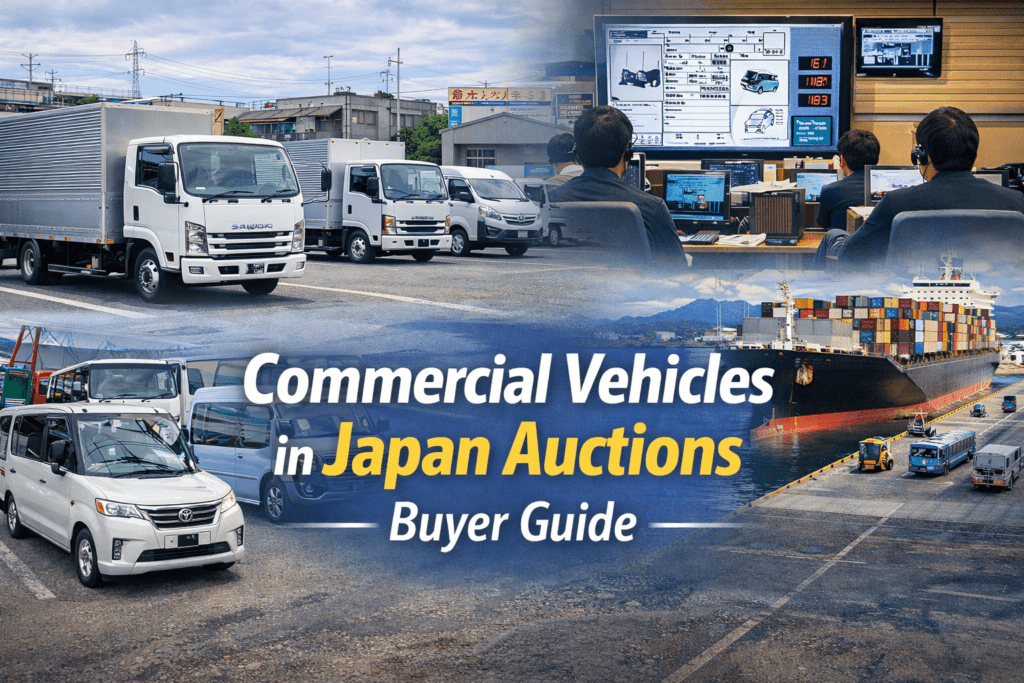

Commercial Vehicles in Japan Auctions
Search available auction vehicles here:
Browse Auction Vehicles
Japanese vehicle auctions are one of the best sourcing channels for overseas buyers who want commercial vehicles from Japan. These auctions are not limited to passenger cars. They also include trucks, vans, buses, tractors, and other work vehicles used for transport, farming, construction, and business operations.
For importers, dealers, and fleet buyers, this market offers strong value. You can compare many units in one place, check basic condition data, and buy through a structured bidding system. That said, success depends on understanding how the auction system works and using the right export partner.
This guide explains how commercial vehicles are sold in Japan auctions, why overseas buyers use them, how the purchase flow works, what risks to watch, and why a professional export company makes the process safer and easier.
What Are Commercial Vehicles in Japan Auctions?
Commercial vehicles in Japan auctions include many types of business-use vehicles. Some are used for transport and delivery. Others are used in agriculture, passenger service, or site work. Because Japan has a large replacement market, auctions often receive vehicles from dealers, companies, leasing firms, farms, and fleet operators.
This gives overseas buyers access to a broad mix of stock at different prices and specifications.
Common Commercial Vehicles Found in Japan Auctions
- Light-duty trucks for delivery work
- Medium-duty and heavy-duty trucks
- Vans for cargo and business transport
- Mini trucks for local work and compact transport needs
- Buses and minibuses for passenger service
- Tractors and farm machinery for agricultural use
- Special-purpose vehicles for site or utility work
Because of this range, Japanese auctions are useful for many business models. A dealer may search for resale stock. A contractor may need work trucks. A farmer may want a compact tractor. A hotel operator may look for a shuttle bus. All of these buyers can benefit from auction access.
How the Japanese Used Vehicle Auction System Works
Japanese vehicle auctions are dealer-based marketplaces. In most cases, the general public cannot bid directly. Instead, licensed dealers and export companies access the auction network and place bids for their customers.
Each listed vehicle comes with a basic data sheet. This often includes the make, model, year, mileage or operating hours, transmission type, fuel type, and photos. Many listings also include an auction inspection sheet with condition notes.
For commercial vehicles, this is very important. A work vehicle must match the buyer’s business needs. A low price alone is not enough. Buyers also need to know whether the vehicle is suitable for route conditions, local regulations, and future maintenance.
How Bidding Happens
Vehicles are sold through bidding on the auction day. Buyers place offers through the auction system. If the highest bid meets the seller’s target, the vehicle is sold.
Some units attract strong demand and sell quickly. Others do not meet the reserve and remain unsold. Because of this, overseas buyers should prepare in advance. They should know their target model, budget, shipping plan, and market needs before the bidding starts.
What Information Buyers Usually Check
- Model and grade
- Year of registration or production
- Mileage or machine hours
- Engine size and drivetrain
- Body condition and visible damage
- Interior wear
- Rust or corrosion notes
- Auction inspection comments
When buyers understand these details, they can compare stock more accurately and reduce risk.
Why Overseas Buyers Use Japan Auctions for Commercial Vehicles
Japanese auctions are popular with overseas buyers for several practical reasons. The system gives access to large vehicle volume, structured information, and a steady flow of commercial units that are hard to match in many local markets.
1. Large Selection in One Place
Instead of waiting for one supplier to offer a limited number of vehicles, buyers can review many auction listings across different dates and auction groups. This improves the chance of finding the right unit at the right price.
2. Strong Japanese Brands
Many commercial vehicles sold in Japan come from trusted brands with strong export demand. Buyers often search for Toyota, Isuzu, Hino, Nissan, Mitsubishi Fuso, Kubota, Yanmar, and Iseki depending on the vehicle type.
3. Better Price Opportunities
Auction buying can create better sourcing opportunities than retail buying. In some cases, buyers secure vehicles below dealer retail levels. This helps importers protect margin and build better stock for resale.
4. Structured Basic Information
Buyers can review standard listing details and compare many units quickly. This helps them sort stock by year, use condition, body type, or business purpose.
5. Useful for Many Industries
Commercial vehicles from Japan auctions support many industries, including:
- Delivery and logistics
- Construction and contracting
- Agriculture and farm operations
- Tourism and shuttle transport
- Retail business delivery
- Private fleet expansion
Step-by-Step Process to Buy Commercial Vehicles from Japan Auctions
Most overseas buyers use an export company to handle the purchase. This is the normal and safest route because the exporter manages both the bidding side and the export side.
Step 1: Define the Right Vehicle Type
Start by deciding exactly what kind of commercial vehicle you need. Think about payload, passenger capacity, road conditions, climate, fuel preference, parts availability, and business purpose.
A small urban delivery business may need a compact truck or van. A construction company may need a dump truck or heavier commercial unit. A farmer may focus on compact tractors with the right horsepower and attachment compatibility.
Step 2: Search Auction Listings
Next, search available auction vehicles through a trusted exporter platform. Filter the listings by type, make, model, year, price range, and other conditions that matter to your market.
This step saves time and helps you focus only on stock that matches your needs.
Step 3: Review the Auction Sheet and Photos
Before bidding, check the condition notes carefully. For commercial vehicles, this step is critical because work vehicles often show signs of heavy use.
Buyers should look for:
- Engine condition notes
- Transmission concerns
- Rust and corrosion
- Body repair history
- Cabin or interior wear
- Hydraulic or attachment issues for machinery
- Undercarriage damage or structural concerns
Step 4: Set a Clear Total Budget
Do not focus only on the auction hammer price. A proper budget should also include auction fees, inland transport in Japan, port handling, freight, insurance if needed, destination charges, import duty, and local registration or compliance costs.
Smart buyers always calculate the landed cost before they bid.
Step 5: Bid Through the Exporter
Your export company places the bid on auction day. If you win, the vehicle is secured. If not, you can continue searching for another unit without disrupting your buying plan.
Step 6: Payment and Export Preparation
After a successful purchase, the exporter arranges payment, collects the vehicle, prepares the export documents, and books shipment.
Step 7: Shipping and Delivery
The vehicle is then shipped to your destination country. Once it arrives, the buyer completes customs clearance, tax payment, and local registration based on local rules.
Important Points to Check Before You Buy
Buying commercial vehicles from auctions can be very effective, but buyers must stay careful. A work vehicle that looks cheap at first can become expensive after repair, shipping, and downtime.
Condition and Wear
Commercial vehicles often work hard. That means buyers should check for signs of heavy use. Look at the chassis, engine, cabin, suspension, and lower body areas.
Rust and Corrosion
Rust is one of the most important risk points. This matters even more if the vehicle will operate in a humid or coastal market after import.
Correct Vehicle Specification
Always confirm that the vehicle matches your real business need. A truck with the wrong body type, a tractor with the wrong power range, or a bus with the wrong layout can create problems after arrival.
Parts and Maintenance Support
Before buying, confirm that spare parts and repair support exist in your country. A reliable export vehicle should also be practical to maintain.
Local Import Rules
Every country has its own rules. Some markets control age limits, emissions, right-hand drive use, machinery rules, or commercial registration requirements. Buyers should check these in advance.
Why You Should Use a Professional Export Company
This is one of the most important parts of the process. Japanese auctions are efficient, but they are not designed for first-time overseas buyers to manage alone. A professional export company adds access, experience, and safety at every stage.
Auction Access
Most overseas buyers cannot directly enter dealer-only auction systems. An exporter solves that problem by giving practical access to available stock and placing bids on the buyer’s behalf.
Condition Review Support
Exporters help buyers understand auction sheets, condition notes, and listing risks. This is especially useful when inspection comments are technical or written in Japanese.
Better Cost Control
An experienced exporter helps you estimate the full cost before bidding. This prevents mistakes caused by looking only at the auction price.
Export and Shipping Management
The exporter handles the paperwork, inland transport, shipping booking, and process communication. This makes the purchase smoother and reduces delays.
Smarter Buying Decisions
Professional support helps buyers choose vehicles that fit their market, business purpose, and budget. That reduces risk and improves long-term value.
Common Mistakes Overseas Buyers Should Avoid
- Buying only because the price looks low
- Ignoring auction inspection comments
- Not calculating the full landed cost
- Choosing the wrong body type or specification
- Skipping checks on local import rules
- Working with an exporter that has weak communication
The best purchase is not always the cheapest unit. It is the vehicle that fits your market and performs well after import.
How to Source Commercial Vehicles More Safely from Japan
Good buyers follow a disciplined process. First, they define the right target vehicle. Next, they compare several listings. Then, they review condition notes carefully, estimate full costs, and use a trusted exporter to place bids and handle shipping.
This method improves buying accuracy and helps reduce expensive mistakes. It also supports better resale value or better business use after arrival.
Conclusion
Commercial vehicles in Japan auctions offer strong opportunities for overseas buyers. The market gives access to trucks, vans, buses, tractors, and other work vehicles through a structured system with useful listing data and competitive price potential.
Still, smart buying requires more than fast bidding. Buyers need to understand the auction system, check condition carefully, plan the full landed cost, and follow local import rules.
EVERY TRADING is a Japanese used vehicle export company serving customers around the world. We support overseas buyers who want to source reliable stock from Japan, and we also provide access to Japanese auction vehicle search so you can find commercial vehicles that match your business needs.
Learn more about Japanese auctions:
Japanese Car Auction Guide
Start searching your vehicle from Japan today:
Search Auction Vehicles Now
If you are looking for any Japanese vehicles, cars and truck and bus for sale, please check our list.
The list of Japanese Used Truck, Bus, cars, and tractor exporter EVERYCAR.jp (*Click to open).We do our best work for all customer's partnership.
It's for SDGs goal number 17 "PARTNERSHIP FOR THE GOALS".
Let's work together!


