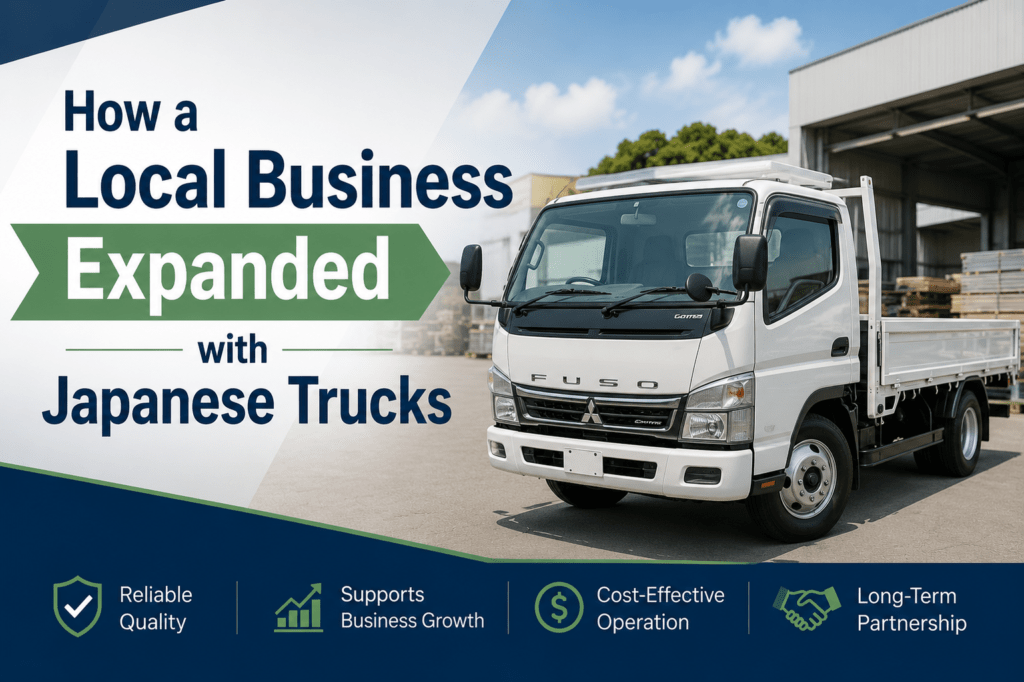

How a Local Business Expanded with Japanese Trucks
For many growing companies, transport is not just a support function. It is the engine behind sales, delivery, customer service, and daily operations. When trucks are unreliable, business slows down. Deliveries get delayed, repair costs rise, and customers lose confidence. However, when the right trucks are in place, a local business can grow faster, serve more customers, and build a stronger reputation.
This is one reason why many overseas buyers choose Japanese used trucks. They want quality, durability, fuel efficiency, and long-term value. More importantly, they want vehicles that can work hard every day and still keep costs under control.
In this article, we share how a local business expanded with Japanese trucks and why that decision created long-term results. We also explain what other buyers can learn from this case if they plan to import commercial vehicles from Japan.
Why Transport Capacity Can Limit Business Growth
Many local businesses reach the same turning point. Demand increases, customer numbers grow, and new opportunities appear. Yet transport capacity stays small. As a result, the company cannot move goods fast enough. Drivers make too many trips. Vehicles break down more often. Delivery schedules become harder to manage.
That was exactly the challenge for one growing business in the Caribbean region. The company handled local supply and delivery work for shops, contractors, and small commercial customers. Orders kept increasing. Even so, their older trucks were causing serious problems.
They faced several issues:
- High repair costs every month
- Poor fuel economy
- Frequent downtime during busy periods
- Limited loading capacity
- Delayed deliveries to customers
- Difficulty planning future expansion
Because of these problems, the business owner knew that growth would stall without better vehicles. Buying brand-new trucks was one option, but the cost was too high. Therefore, the company started looking at Japanese used trucks for export.
Why the Business Chose Japanese Used Trucks
The owner did not choose based on price alone. Instead, he looked at the total value of the vehicle over time. That included reliability, maintenance cost, parts availability, and how quickly the truck could start generating profit after arrival.
Japanese used trucks stood out for several reasons.
1. Proven Reliability
Japanese commercial vehicles are known for strong build quality and dependable engines. This matters a lot for overseas businesses. A truck that starts every morning and works without trouble is far more valuable than a cheaper truck that spends time in the workshop.
2. Better Long-Term Cost Performance
At first, some buyers focus only on the purchase price. However, smart business owners look at the full operating cost. Japanese used trucks often help reduce total cost because they have good fuel efficiency, solid durability, and lower downtime.
3. Wide Choice of Models
Another big advantage is selection. Buyers can choose from many body types, engine sizes, and loading capacities. For example, they can source flatbed trucks, box trucks, dump trucks, refrigerated trucks, and small delivery trucks from Japan.
4. Suitable for Many Business Uses
Japanese trucks support many industries. They work well for construction, retail delivery, agriculture, wholesale supply, tourism support, and regional transport. Because of that flexibility, buyers can match the vehicle to their exact business needs.
5. Strong Export Support from Japan
A reliable exporter makes the process much easier. From vehicle sourcing to inspection, shipping, and document support, the right partner can reduce risk and save time. That is especially important for first-time importers.
The Business Goal: Expand Delivery Capacity Without Losing Control of Costs
The company’s main goal was simple. It wanted to increase delivery capacity and take on more customers without creating financial pressure. In other words, it needed trucks that could support expansion, not create new problems.
The owner set clear priorities before buying:
- Strong condition and low risk of breakdown
- Good loading capacity for daily delivery work
- Easy maintenance after import
- Reasonable fuel consumption
- Competitive purchase cost
- A truck size suitable for local roads and customer locations
This approach is important for any overseas buyer. When you define the business purpose first, it becomes much easier to choose the right Japanese used truck.
Choosing the Right Truck from Japan
After reviewing several options, the buyer focused on practical trucks that matched daily business use. Instead of buying the biggest or cheapest vehicle available, the company selected trucks that offered balance.
The selection process included:
Checking the Truck Type
The business mainly needed trucks for regular cargo movement, local delivery, and supply runs. Therefore, practical light-duty and medium-duty Japanese trucks made the most sense.
Reviewing Vehicle Condition
Auction sheets, inspection details, mileage, and service condition all mattered. The buyer wanted to avoid hidden risk. As a result, condition checks became a major part of the buying process.
Comparing Running Costs
Fuel use, engine reputation, and parts access were reviewed before final selection. This helped the owner estimate the true cost of operation after import.
Matching Load Capacity to Daily Work
Overbuying can hurt profit. If the truck is larger than necessary, fuel and operating costs may rise. On the other hand, a truck that is too small will limit growth. So the company focused on vehicles that fit its normal cargo volume while leaving room for expansion.
The Import Process and Delivery from Japan
Once the business selected the right units, the next step was shipping the trucks from Japan. This part is where professional support makes a major difference.
A good export partner can help with:
- Vehicle sourcing from auction or stock
- Inspection and condition confirmation
- Export paperwork
- Shipping arrangements
- Bill of lading and invoice preparation
- Communication before and after shipment
- Advice on destination-side import procedures
For this business, smooth communication was very important. The owner wanted quick updates, clear answers, and confidence that the trucks would arrive as promised. Fast response and accurate information helped reduce stress during the buying process.
What Changed After the Japanese Trucks Arrived
The biggest change was operational stability. Before the purchase, the company often had to adjust delivery plans because of vehicle trouble. After adding Japanese trucks to the fleet, daily work became more consistent.
1. More Deliveries Per Day
Because the trucks were dependable and matched the business workload, the company could complete more deliveries each day. That immediately improved productivity.
2. Lower Repair Pressure
The older vehicles had created constant repair bills. In contrast, the Japanese trucks gave the business a more stable starting point. As a result, maintenance became easier to plan.
3. Better Customer Service
On-time delivery improved customer trust. When a business keeps promises and delivers without delay, customers notice. That reliability helped strengthen relationships with existing clients.
4. Greater Confidence to Accept New Orders
The company no longer had to worry about whether a truck would fail during a busy week. Therefore, the owner felt more comfortable taking on new work and serving a larger customer base.
5. Stronger Business Image
Commercial vehicles also affect how customers see a company. Clean, reliable trucks create a more professional image. In many markets, that matters more than people think.
How Japanese Trucks Supported Long-Term Business Growth
The story did not end with one shipment. As the business became more efficient, it started thinking more strategically. The trucks were no longer just transport tools. They became part of a long-term growth plan.
Improved Cash Flow Management
When repair costs are unpredictable, cash flow becomes difficult to manage. Reliable trucks helped reduce surprise expenses. That gave the owner better control over monthly business planning.
Easier Route Expansion
With stronger delivery capacity, the company could serve more areas and add new customers. This created room for regional growth.
Better Use of Staff Time
Drivers and staff spent less time dealing with breakdowns and scheduling problems. Instead, they could focus on customer service and daily operations.
More Confidence in Future Vehicle Investment
A positive first import experience often leads to long-term purchasing relationships. Once the business saw the value of Japanese used trucks, it became easier to plan the next fleet upgrade.
Why This Matters for Other Overseas Buyers
This story reflects a common situation in many countries. A local business wants to grow, but weak vehicles slow everything down. The company does not necessarily need luxury or brand-new trucks. Instead, it needs dependable commercial vehicles that create profit, reduce downtime, and support daily operations.
That is why Japanese used trucks remain popular with importers, dealers, and business owners worldwide.
If you are in logistics, retail delivery, agriculture, construction, tourism support, or supply distribution, Japanese commercial vehicles can be a smart solution. They often offer the right balance of price, condition, durability, and resale value.
Key Lessons from This Customer Story
There are several important lessons in this case.
Buy for Business Use, Not Just for Price
The cheapest truck is not always the best deal. A better approach is to look at total business value over time.
Choose a Vehicle That Matches Your Real Workload
Think about your cargo, routes, road conditions, and daily operating hours. Then choose a truck that fits those needs.
Reliability Creates Growth
When your trucks work consistently, your business can grow with fewer interruptions. That leads to better customer service and stronger revenue opportunities.
Work with an Exporter Who Understands Commercial Buyers
Fast communication, honest condition checks, and proper export support make a major difference. This is especially true for buyers importing vehicles for business use.
Think Beyond One Purchase
A good truck purchase can become the first step in a long-term fleet strategy. If the first import goes well, future expansion becomes easier.
Best Japanese Used Trucks for Growing Local Businesses
The right truck depends on your business type, but several Japanese truck categories are often popular with growing companies.
Light-Duty Trucks
These are ideal for city delivery, retail supply, and smaller cargo jobs. They are practical, easy to drive, and efficient for daily use.
Medium-Duty Trucks
These work well for larger delivery routes, building materials, wholesale supply, and mixed commercial use.
Flatbed Trucks
Flatbeds are useful for construction materials, equipment transport, and bulky cargo.
Box Trucks
These are a good option for secure cargo transport, food distribution, retail goods, and weather-sensitive products.
Refrigerated Trucks
Businesses that handle frozen or chilled goods often prefer refrigerated units from Japan because of their reliability and practical design.
How to Choose the Right Japanese Truck for Your Business
Before importing, ask yourself a few important questions:
- What kind of goods will the truck carry?
- How many trips will it make each day?
- What road conditions will it face?
- Do you need a light-duty or medium-duty truck?
- Is fuel economy a major priority?
- Are spare parts available in your market?
- Will the truck support future business growth?
These questions help buyers move from simple browsing to smart business purchasing.
Why Long-Term Partnership Matters in Truck Importing
A truck purchase should not feel like a one-time transaction. For many business buyers, it is the start of a long-term relationship. That relationship matters because importing vehicles involves more than choosing stock. Buyers also need advice, updates, export support, and a partner who understands their market goals.
At EVERY TRADING, we believe that strong support creates strong results. We do not only ship vehicles from Japan. We support business buyers who want to grow with the right trucks, buses, tractors, and machinery.
That means helping customers:
- Find vehicles that match their business model
- Understand condition and specification details
- Manage export paperwork smoothly
- Plan long-term fleet purchasing
- Build trust through clear communication
For many overseas businesses, that kind of support is just as important as the vehicle itself.
Final Thoughts
This customer story shows a simple but powerful truth: the right truck can help a business move to the next stage. When a company chooses reliable Japanese used trucks, it can reduce downtime, improve delivery performance, control operating costs, and take on more work with confidence.
Growth does not always begin with a huge investment. Sometimes it begins with one smart vehicle decision.
If your business needs dependable commercial vehicles, Japanese used trucks are worth serious attention. With the right truck and the right export partner, you can build a stronger fleet, serve more customers, and create long-term business growth.
At EVERY TRADING, we support buyers around the world with Japanese used trucks, buses, tractors, and machinery. If you are planning your next import, our team is ready to help you find practical, reliable vehicles that match your business goals.


Browse Reliable Used Trucks & Buses from Japan
Carefully selected vehicles ready for export worldwide
Search 100,000+ Dealer Stock Vehicles from Japan
Access a wide selection of vehicles from Japanese dealers nationwide. Updated daily.
