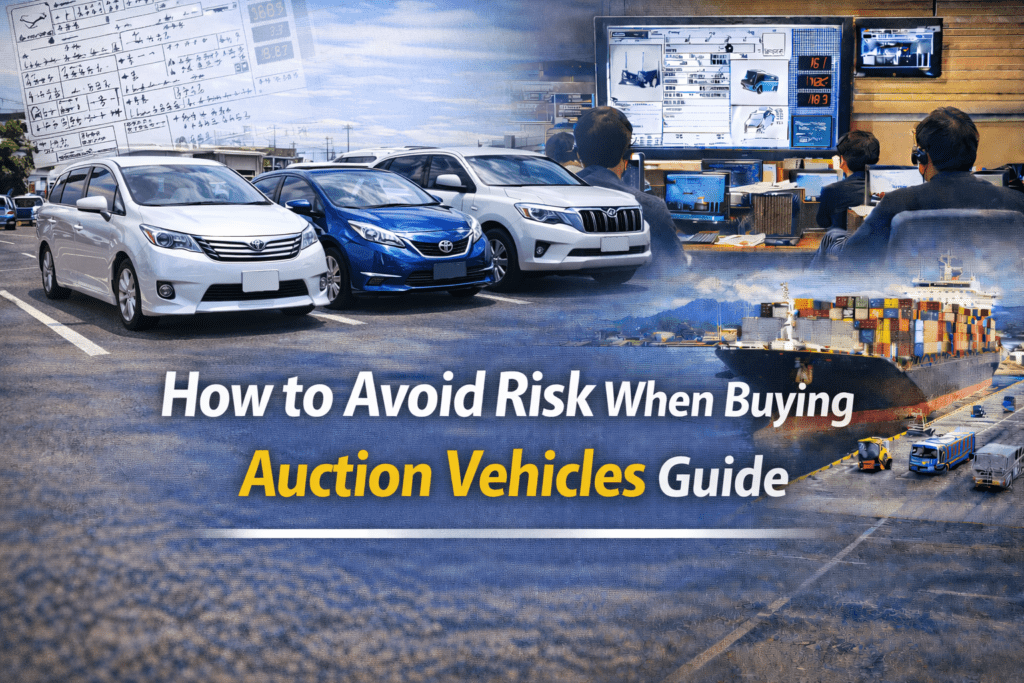

How to Avoid Risk When Buying Auction Vehicles
Search available auction vehicles here:
Browse Auction Vehicles
Buying vehicles from Japanese auctions is one of the most effective ways for overseas buyers to access a large and diverse used vehicle market. Every week, Japanese auction houses list many passenger cars, SUVs, vans, trucks, buses, and other vehicles. This creates real business opportunities for dealers, importers, and fleet buyers around the world.
However, auction buying also involves risk. A vehicle may look attractive because the price is low, the model is popular, or the photos look clean. Still, hidden damage, misunderstood auction notes, rust, unsuitable specifications, or local import restrictions can turn a good-looking purchase into an expensive mistake.
This guide explains how the Japanese used vehicle auction system works, why overseas buyers use it, what the main risks are, how to reduce those risks before bidding, how the buying process should be managed, and why working with a professional export company is the safest approach.
How the Japanese Used Vehicle Auction System Works
Japanese vehicle auctions are dealer-based marketplaces. In most cases, overseas buyers cannot directly join and bid on their own. Instead, licensed dealers and export companies access the auction network and place bids on behalf of customers. EVERYCAR’s auction guide series explains that these guides are designed to help overseas buyers understand auction systems, inspection reports, bidding procedures, and the export process.
Each auction listing usually includes key information such as make, model, year, mileage, transmission type, fuel type, photos, and an auction inspection sheet. These inspection sheets are one of the most important tools for buyers because they provide a summary of the vehicle’s visible condition before bidding. :contentReference[oaicite:1]{index=1}
What the Auction Sheet Tells You
The auction sheet often includes:
- Overall vehicle grade
- Interior grade
- Mileage
- Repair history or accident history notes
- Damage marks for scratches, dents, rust, or panel issues
- Short written comments from the inspector
Because these reports matter so much, misunderstanding the symbols or notes can directly increase buying risk. EVERYCAR’s guide on auction report symbols explains that buyers who cannot read these marks correctly may misunderstand vehicle condition and make expensive mistakes. :contentReference[oaicite:2]{index=2}
How Bidding Works
Vehicles are sold on auction day through competitive bidding. If the highest bid reaches the seller’s expected price, the vehicle is sold. If not, it may remain unsold. This process can move very quickly, so buyers need a clear plan before the bidding starts. EVERYCAR’s beginner and bidding-related guides repeatedly emphasize that overseas buyers need to understand the process, manage risk, and work with experienced exporters to buy safely. :contentReference[oaicite:3]{index=3}
Why Overseas Buyers Use Japanese Auctions
Despite the risks, Japanese auctions remain very popular with international buyers. The main reason is simple: they offer large supply, structured information, and access to vehicles that often match global market demand.
1. Large Selection
Japanese auctions list vehicles in many categories, including passenger cars, commercial vehicles, buses, trucks, tractors, and hybrids. This helps overseas buyers compare many options in one system instead of relying on one local supplier. EVERYCAR’s auction hub and related guides highlight the broad range of categories available to buyers. :contentReference[oaicite:4]{index=4}
2. Structured Vehicle Information
Buyers can review auction sheets, grades, and photos in a consistent format. This does not remove risk, but it does make comparison easier and helps buyers act more carefully. :contentReference[oaicite:5]{index=5}
3. Better Buying Opportunities
Auction sourcing often gives access to vehicles at prices below standard retail stock. That can improve margin for resellers or help business buyers control sourcing cost. EVERYCAR’s guide about avoiding overpaying in auctions specifically focuses on how buyers can reduce bidding mistakes and make more profitable decisions. :contentReference[oaicite:6]{index=6}
4. Access Through Exporters
Overseas buyers usually do not enter auctions directly. Instead, they use exporters who already know how the system works. EVERYCAR’s guides on export company handling and auction purchases explain that exporters play a practical role in bidding, evaluation, paperwork, and shipping. :contentReference[oaicite:7]{index=7}
Main Risks When Buying Auction Vehicles
Understanding risk is the first step to reducing it. Most auction mistakes happen not because auctions are random, but because buyers fail to read the available information correctly or fail to match the vehicle to their own market.
Misreading Auction Grades and Symbols
One of the most common risks is misunderstanding the auction report. A buyer may focus only on the overall grade and ignore repair marks, rust notes, or panel replacement comments. This can create surprise repair costs later. :contentReference[oaicite:8]{index=8}
Hidden Mechanical or Condition Problems
Auction sheets are useful, but they are not a full mechanical guarantee. Some issues may not be fully visible in photos or short condition notes. This is why many buyers add extra caution or rely on exporters to review vehicles more carefully. EVERYCAR’s inspection-related guides stress that auction information is valuable, but buyers still need to reduce risk through careful interpretation and exporter support. :contentReference[oaicite:9]{index=9}
Overpaying During Bidding
Risk is not only about condition. It is also about price. A buyer can still lose money by paying too much for a vehicle that does not leave enough resale margin after shipping, tax, and local cost. EVERYCAR’s overpaying guide specifically warns buyers about bidding mistakes and the importance of full cost planning. :contentReference[oaicite:10]{index=10}
Wrong Market Fit
A vehicle can be good in Japan but still be a poor import choice in your country. The model may have weak resale demand, limited spare parts support, or poor suitability for local roads, fuel prices, or regulations.
Import Rule Problems
Some countries have age limits, emissions rules, inspection requirements, or right-hand-drive restrictions. A vehicle that wins successfully at auction can still become a problem if it does not meet import requirements in the destination country.
How to Avoid Risk Before You Bid
The safest buyers follow a disciplined process. They do not chase only price. They compare, verify, and calculate.
1. Study the Auction Sheet Carefully
Always review the inspection report before bidding. Pay close attention to:
- Overall grade and interior grade
- Repair history
- Rust and corrosion marks
- Scratches, dents, and body panel notes
- Inspector comments
If you do not understand the symbols, do not guess. Learn them first or ask your exporter to explain them. EVERYCAR’s symbol guide makes clear that correct reading of auction marks is essential for safer decisions. :contentReference[oaicite:11]{index=11}
2. Check Photos with a Critical Eye
Do not look only at the main photo. Review all images for body damage, uneven paint tone, rust signs, wheel condition, and interior wear. If the photos are unclear, ask for help from the exporter.
3. Set a Maximum Total Cost, Not Just a Bid Price
Smart buyers calculate the full landed cost before the auction. This should include:
- Auction hammer price
- Auction fees
- Inland transport in Japan
- Port and export handling
- Shipping cost
- Insurance if needed
- Import duty and local taxes
- Registration or compliance costs
EVERYCAR’s guide on avoiding overpaying shows that buyers need to think beyond the winning bid and avoid emotional auction decisions. :contentReference[oaicite:12]{index=12}
4. Match the Vehicle to Your Market
Choose stock that fits your actual customer base or business use. Think about road condition, fuel economy, body type, maintenance support, and resale speed in your country.
5. Check Local Import Rules First
Never bid before confirming your country’s age limits, emissions rules, steering regulations, and required paperwork. This is one of the easiest risks to avoid, but many buyers still overlook it.
Step-by-Step Buying Process to Reduce Risk
Risk becomes lower when the buying process is clear and controlled. Most overseas buyers use an exporter from the beginning.
Step 1: Define Your Target Vehicle
Decide the make, model, year range, mileage limit, and budget before searching.
Step 2: Search Auction Listings
Use a trusted exporter platform to browse available vehicles and compare options.
Step 3: Review Auction Information
Check the auction sheet, grade, photos, and notes carefully.
Step 4: Confirm Market and Import Fit
Make sure the vehicle suits your market and can be legally imported.
Step 5: Set a Controlled Bid Limit
Decide your maximum bid based on the full landed cost and resale potential.
Step 6: Bid Through the Exporter
Your exporter places the bid on auction day.
Step 7: Recheck and Export
After purchase, the exporter handles payment, transport, paperwork, and shipping. EVERYCAR’s export-handling guides describe this exporter role as a key part of buying safely and efficiently from Japan. :contentReference[oaicite:13]{index=13}
Important Precautions After Winning
Winning the vehicle is not the end of risk management. Buyers should still stay careful after the auction result.
Confirm Documentation
Make sure all required export and shipping documents are correct and complete.
Stay in Contact with the Exporter
Good communication helps avoid delays, misunderstandings, and missed shipment details.
Review Shipping Options
RORO and container shipping may involve different cost and timing. Choose the method that best suits your vehicle and destination.
Why a Professional Export Company Helps Reduce Risk
A professional export company is one of the strongest ways to reduce auction risk. Japanese auctions move fast, use specialized grading systems, and require dealer-level access. Exporters help bridge that gap for overseas buyers.
Better Auction Access
Exporters can access dealer-only auctions and search more stock than most overseas buyers could reach alone. :contentReference[oaicite:14]{index=14}
Stronger Condition Interpretation
Experienced exporters understand auction reports, inspection symbols, and practical risk signs. This helps buyers avoid poor choices. :contentReference[oaicite:15]{index=15}
Cost Control
They help buyers estimate full costs before bidding and avoid overpaying. :contentReference[oaicite:16]{index=16}
Process Management
They also manage payment, inland transport, export documents, and shipment. That reduces operational mistakes after purchase. :contentReference[oaicite:17]{index=17}
Common Mistakes Buyers Should Avoid
- Looking only at the auction price
- Ignoring auction sheet symbols and notes
- Misunderstanding repair history or rust marks
- Skipping full landed cost calculation
- Buying vehicles that do not fit local market demand
- Forgetting to confirm import rules
- Using an exporter with weak communication
Most auction losses come from preventable mistakes, not from bad luck.
Conclusion
Buying from Japanese auctions can be one of the smartest ways for overseas buyers to source quality used vehicles. The market is large, structured, and full of opportunity. However, success depends on risk control. Buyers need to understand auction sheets, compare vehicles carefully, calculate the full cost, check local regulations, and avoid emotional bidding.
That is why many successful overseas buyers rely on professional exporters. The right exporter helps you read the information correctly, reduce mistakes, and move through the purchase and export process with more confidence. EVERYCAR’s auction guide series consistently presents exporter support as one of the safest and most effective ways to buy from Japan. :contentReference[oaicite:18]{index=18}
EVERY TRADING is a Japanese used vehicle export company serving customers around the world. We support overseas buyers with reliable export service, and we also provide access to Japanese auction vehicle search so you can find vehicles that match your business goals while reducing buying risk.
Learn more about Japanese auctions:
Japanese Car Auction Guide
Start searching your vehicle from Japan today:
Search Auction Vehicles Now
If you are looking for any Japanese vehicles, cars and truck and bus for sale, please check our list.
The list of Japanese Used Truck, Bus, cars, and tractor exporter EVERYCAR.jp (*Click to open).We do our best work for all customer's partnership.
It's for SDGs goal number 17 "PARTNERSHIP FOR THE GOALS".
Let's work together!


