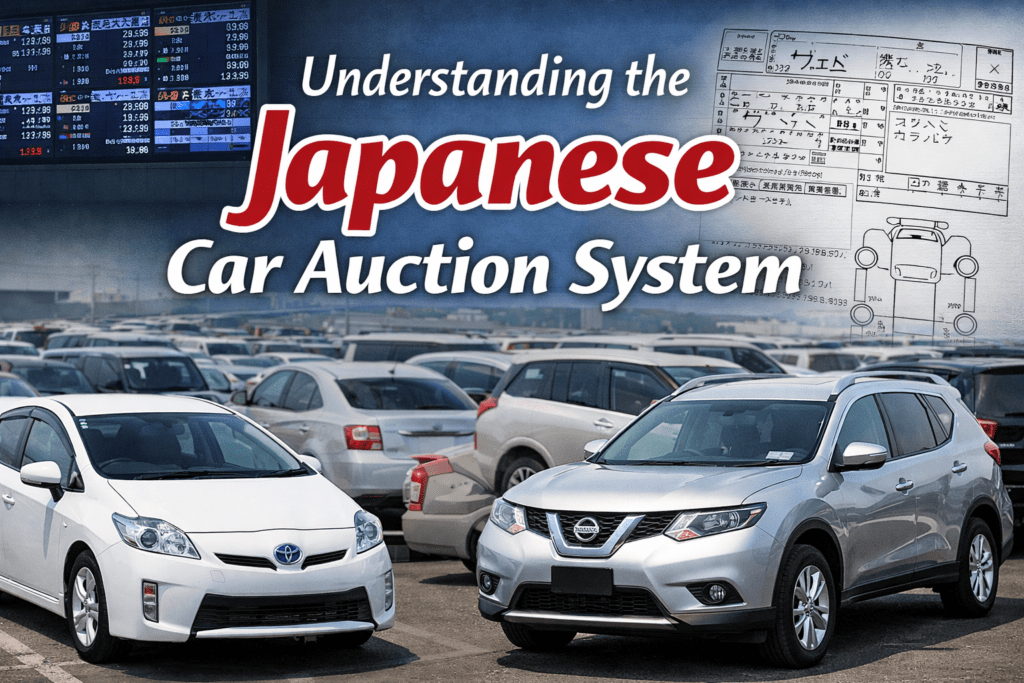

Understanding the Japanese Car Auction System
Japanese car auctions are one of the most important vehicle sourcing channels for overseas buyers. Every week, a large number of used cars, vans, SUVs, trucks, buses, and other vehicles move through auction houses across Japan. Because of this, importers around the world use the auction system to find better stock, better prices, and more choice.
However, the system can feel difficult at first. Many first-time buyers hear terms such as auction sheet, grade, reserve price, bidding lane, and dealer-only access. These words are common in Japan, but they are not always easy for international buyers to understand.
That is why learning the Japanese car auction system is so useful. When you understand how it works, you can make better buying decisions, reduce risk, and improve your export business results.
Search available auction vehicles here:
Browse Auction Vehicles
What Is the Japanese Car Auction System?
The Japanese car auction system is a wholesale marketplace where licensed dealers buy and sell used vehicles through bidding. In most cases, the public cannot join these auctions directly. Instead, dealers and export companies with auction access place bids on behalf of buyers.
Vehicles come into the auction system from many sources. These include dealer trade-ins, lease returns, rental fleets, finance companies, company vehicles, and used car dealers. As a result, auctions offer a very large and diverse stock list every week.
Before a vehicle is sold, the auction house usually inspects it and creates a condition report. This report helps buyers understand the vehicle before bidding starts. Then, on auction day, the vehicle enters a live bidding system. The highest acceptable bid wins the unit.
Main parts of the system
- Auction house: The company that manages listings, inspections, and bidding.
- Seller: The dealer or company offering the vehicle for sale.
- Buyer: A licensed dealer or exporter who places the bid.
- Auction sheet: The inspection report with vehicle details and condition notes.
- Bidding system: The live process used to sell the vehicle to the highest accepted bidder.
This structure makes auctions fast, organized, and efficient. It also gives buyers access to vehicles from many regions of Japan in one market system.
How Japanese Used Car Auctions Work
The process starts when a seller sends a vehicle to an auction house. Staff members inspect the unit, confirm the key details, and prepare an auction sheet. They also photograph the vehicle and enter it into the auction system.
Next, buyers study the information before auction time. They check the make, model, year, mileage, options, condition notes, repair history, and grade. Then they decide whether the vehicle fits their market and budget.
On auction day, the vehicle appears in a bidding lane or digital sale sequence. Buyers place bids very quickly. Therefore, experienced exporters usually prepare target vehicles and maximum bid prices in advance.
Typical auction flow
- The seller lists the vehicle at auction.
- The auction house inspects the vehicle.
- The auction sheet and photos are uploaded.
- Buyers review the listing before sale time.
- Bidding starts in the live auction system.
- The highest acceptable bid wins the vehicle.
- The winner completes payment and export procedures.
Although the process looks simple, each step matters. A small mistake in grade reading, bidding strategy, or cost planning can change the final result.
What is an auction sheet?
The auction sheet is one of the most important documents in the Japanese auction system. It gives a quick summary of the vehicle’s condition before the sale. Buyers should never ignore it.
- Vehicle year and model code
- Mileage
- Engine and transmission type
- Equipment and options
- Interior and exterior condition
- Visible scratches, dents, or repairs
- Repair history or accident history
- Overall auction grade
Still, smart buyers know that a grade is only a guide. They read the detailed comments and damage marks too. That is especially important when buying vehicles for export.
Benefits of Japanese Car Auctions for Overseas Buyers
Japanese auctions offer many advantages for international buyers. This is one reason why the system is so popular worldwide. Instead of depending only on dealer stock, importers can search a much larger vehicle pool every week.
1. Huge vehicle selection
Buyers can find passenger cars, SUVs, vans, pickup trucks, buses, trucks, and other commercial vehicles in one place. This wide choice makes it easier to source stock that fits local demand.
2. Competitive pricing opportunities
Auction prices often reflect real wholesale market conditions. While prices still change based on season, demand, exchange rate, and condition, buyers can often source vehicles more competitively than through retail channels.
3. Useful condition information
Compared with many open used vehicle markets, Japanese auctions provide more structured information. Buyers can review auction sheets, grades, damage notes, and photos before they decide to bid.
4. Regular stock supply
Import businesses need steady supply. Auctions support that need very well. Because fresh stock enters the market every day, buyers can build repeatable sourcing plans and maintain business flow.
5. Strong value for export markets
Japanese used vehicles are known for reliable maintenance history, clean ownership records, and solid condition. Because of that, many auction vehicles perform well in overseas markets where buyers want durability and value.
Step-by-Step Buying Flow for Overseas Buyers
Most overseas customers do not buy from auction on their own. In most cases, they work through a trusted Japanese exporter. This is the most practical way to access dealer-only auction stock and complete the export process smoothly.
Step 1: Choose a trusted exporter
Your exporter becomes your partner in Japan. They search stock, explain vehicle condition, place bids, manage payment, and arrange export. Therefore, choosing the right company is the first major step.
Step 2: Send your vehicle request
You share your target details with the exporter. This usually includes make, model, year range, mileage limit, budget, fuel type, transmission type, and destination country.
Step 3: Review matching auction vehicles
The exporter searches the auction system and sends you possible units. Then you review the auction sheet, photos, specifications, and estimated total cost before deciding whether to bid.
Step 4: Set your maximum bid
This step is very important. A smart buyer calculates the full landed cost before bidding. That means looking beyond the hammer price and adding auction fees, inland transport, export costs, shipping, insurance, and destination charges.
Step 5: Bid at the auction
When the target vehicle enters the auction lane, the exporter places the bid. If your offer becomes the highest accepted bid, the vehicle is secured for you.
Step 6: Complete payment
After the win, the exporter issues an invoice. Payment usually needs to be completed quickly because auction deadlines are strict.
Step 7: Export preparation
Next, the exporter arranges vehicle pickup from the auction house, document processing, and shipping booking. Depending on the destination and vehicle type, the unit may be shipped by RORO or container.
Step 8: Receive shipping documents
Finally, the buyer receives the necessary export documents. These documents are used for customs clearance and vehicle release at the destination port.
Important Points to Check Before Bidding
Buying well from auctions is not only about winning. It is about buying the right vehicle at the right total cost. Because of that, overseas buyers should check several points carefully before giving bid approval.
Key checks before auction
- Mileage: Compare the mileage with age and overall condition.
- Auction grade: Use it as a guide, not as the only decision factor.
- Repair history: Confirm whether the vehicle has accident or structural repair history.
- Rust or corrosion: Pay close attention to vehicles from coastal or snowy regions.
- Interior wear: Cabin condition affects resale value.
- Equipment: Confirm the transmission, fuel type, air conditioning, safety features, and options.
- Local market fit: Make sure the vehicle matches import rules and customer demand in your country.
In addition, it is helpful to compare similar vehicles sold recently. This gives a better view of real market value and reduces the chance of overbidding.
Common Risks and Cautions for International Buyers
Japanese auctions offer great opportunities, but buyers still need to stay careful. A low bid price may look attractive, yet the full business result depends on condition, shipping cost, import rules, and resale demand.
Do not depend on grade alone
Two grade 4 vehicles can still be very different. One may be clean and easy to resell, while the other may have weak paint, interior wear, or hidden repair concerns. Always read the full notes.
Watch the total landed cost
Some buyers focus too much on the auction win price. However, the real cost includes shipping, inland transport, handling fees, repairs, and destination charges. If you ignore those costs, your margin may disappear.
Know your country’s rules
Import rules are different in every market. Some countries have age limits, emissions rules, inspection requirements, or steering restrictions. Buyers should confirm local regulations before bidding, not after purchase.
Translation matters
Many auction comments are written in Japanese. A small wording detail may describe warning lights, smoke, rust, repairs, or missing equipment. Poor translation can lead to poor buying decisions.
Fast auctions require preparation
Auction lanes move quickly. Buyers who are not ready may miss good stock or bid emotionally on the wrong vehicle. That is why planning before auction time is essential.
Why It Is Better to Use a Professional Export Company
For most overseas buyers, the smartest path into Japanese car auctions is through a professional export company. Auction access alone is not enough. Real success comes from experience, judgment, and support on the ground in Japan.
Professional exporters save time
Export companies can search multiple auction houses quickly and narrow the results to units that match your market. This makes the sourcing process faster and easier.
They help reduce buying risk
Experienced exporters know how to read auction sheets, translate comments, identify weak stock, and advise on realistic bidding strategies. This reduces mistakes, especially for first-time importers.
They manage the export process
Winning the vehicle is only part of the job. The exporter also handles inland transport, payment control, document preparation, shipping arrangements, and customer support until the unit is shipped.
They support long-term business growth
Importers who buy regularly need more than one successful purchase. They need stable sourcing and a reliable system. A professional exporter helps build that system over time.
- Access to dealer-only auction stock
- Clear explanation of auction sheets and grades
- Support with maximum bid decisions
- Accurate handling of export documents and shipping
- Better long-term sourcing support for overseas buyers
Simple Tips to Buy Better from Japan Auctions
The best auction buyer is not always the one who buys the cheapest car. Instead, it is the one who buys the right vehicle for the market at the right total cost.
- Focus on models with steady resale demand in your country
- Check the full auction sheet before approving a bid
- Set a clear budget and avoid emotional bidding
- Calculate landed cost before auction day
- Work with a trusted exporter who understands both Japan and your market
These habits improve buying accuracy, reduce risk, and support a healthier import business over time.
Conclusion
The Japanese car auction system is one of the strongest sourcing channels for overseas used vehicle buyers. It offers wide vehicle choice, regular stock flow, useful condition data, and strong business opportunities for importers around the world.
At the same time, auctions require knowledge and discipline. Buyers need to understand auction sheets, grades, bidding speed, export costs, and local import rules. Because of this, working with a professional export company is often the safest and most efficient choice.
EVERY TRADING is a Japanese used vehicle export company that serves customers around the world. We help overseas buyers search Japanese auction stock, review vehicle details, and move from bidding to shipment with confidence.
Whether you are looking for passenger cars, commercial vehicles, or regular auction sourcing for your business, we support you with practical auction access and export experience from Japan.
Learn more about Japanese auctions:
Japanese Car Auction Guide
Start searching your vehicle from Japan today:
Search Auction Vehicles Now
If you are looking for any Japanese vehicles, cars and truck and bus for sale, please check our list.
The list of Japanese Used Truck, Bus, cars, and tractor exporter EVERYCAR.jp (*Click to open).We do our best work for all customer's partnership.
It's for SDGs goal number 17 "PARTNERSHIP FOR THE GOALS".
Let's work together!


