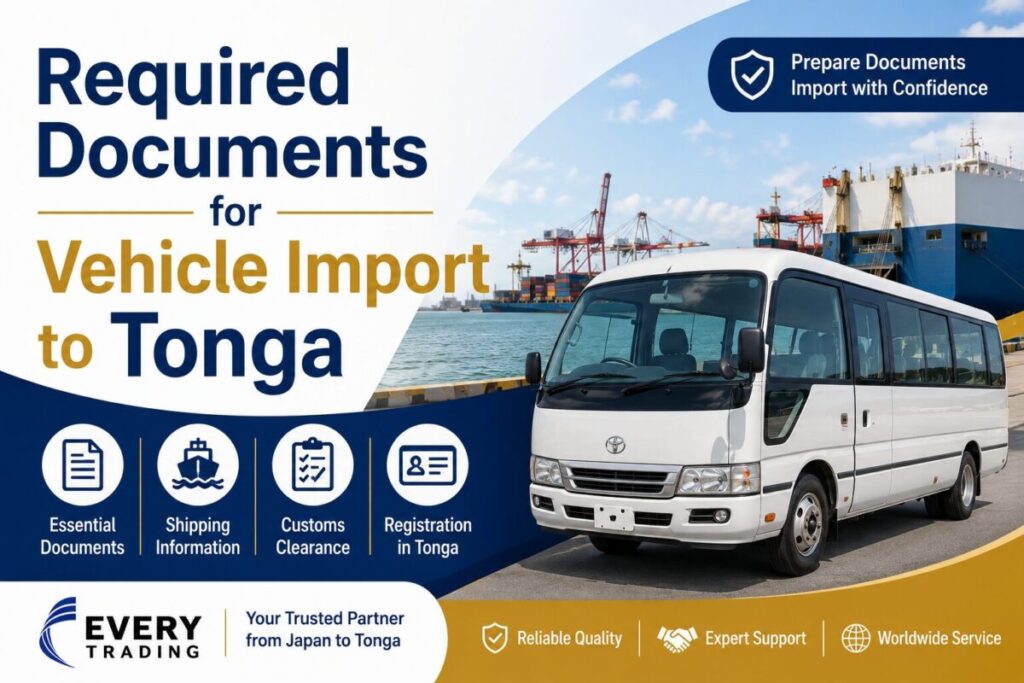

Importing a used commercial vehicle from Japan to Tonga is a practical and cost-effective solution for many businesses. Japanese trucks are popular throughout the Kingdom of Tonga because they offer excellent reliability, fuel efficiency, and long service life. They support agriculture, fisheries, tourism, construction, retail distribution, and government projects across Tongatapu and the outer islands.
However, buying the right vehicle is only one part of the process. Preparing the correct documents is equally important. Missing paperwork can delay customs clearance, increase storage fees, or even postpone vehicle registration.
This guide explains the essential documents required when importing a vehicle from Japan to Tonga and provides useful tips for first-time buyers.
Why Proper Documentation Matters
Every imported vehicle must pass customs procedures before entering Tonga legally. Customs officers review shipping documents, ownership records, and import paperwork to confirm that the vehicle meets all import requirements.
Complete and accurate documentation helps you:
- Reduce customs delays
- Avoid additional storage charges
- Complete vehicle registration faster
- Confirm legal ownership
- Simplify the import process
Therefore, checking every document before shipment is one of the smartest decisions you can make.
Main Documents Required for Importing a Vehicle to Tonga
1. Bill of Lading (B/L)
The Bill of Lading is one of the most important shipping documents. It proves that the shipping company has received your vehicle and transported it by sea.
The document normally includes:
- Vehicle information
- Consignee details
- Exporter information
- Port of loading
- Destination port
- Vessel name
Without the Bill of Lading, collecting your vehicle at the destination port becomes extremely difficult.
2. Commercial Invoice
The Commercial Invoice shows the purchase details between the exporter and the buyer.
It generally includes:
- Purchase price
- Vehicle description
- VIN or chassis number
- Engine information
- Buyer information
- Seller information
Customs authorities use this document when calculating import duties and applicable taxes.
3. Japanese Export Certificate
The Japanese Export Certificate confirms that the vehicle has been legally deregistered in Japan before export.
This document also verifies important vehicle information, including:
- Registration history
- Engine displacement
- Vehicle dimensions
- Model year
- Chassis number
Many registration authorities also require this document after customs clearance.
4. Packing List (When Required)
If spare parts, accessories, or additional equipment travel with the vehicle, the exporter may prepare a Packing List.
This document explains every item included in the shipment and helps customs officers during inspection.
5. Insurance Certificate
If marine cargo insurance has been purchased, you should also receive an Insurance Certificate.
This document protects your financial investment during international transportation.
Additional Documents You May Need
Depending on the shipment and local regulations, customs authorities may request additional documents.
These may include:
- Import application forms
- Identification documents
- Business registration documents for companies
- Power of attorney when using a customs broker
- Payment records
Preparing these documents in advance helps prevent unnecessary delays.
Vehicle Information You Should Always Verify
Before shipping, carefully confirm every vehicle detail shown on the export documents.
- Vehicle make
- Model name
- Chassis number
- Engine number
- Year of manufacture
- Colour
- Mileage
Even small mistakes may require document corrections later.
Choosing the Right Commercial Vehicle for Tonga
Tonga's commercial vehicle market mainly serves agriculture, fisheries, logistics, construction, and retail businesses. Since many roads outside central areas experience heavy rainfall and frequent commercial use, buyers usually prefer durable and easy-to-maintain trucks.
Popular Japanese commercial vehicles include the Isuzu Elf, Toyota Dyna, Hino Dutro, Mitsubishi Canter, and Nissan Atlas because they provide dependable performance and economical operation.
Document Preparation Before Shipping
Before your vehicle leaves Japan, verify every document carefully.
Confirm:
- Your name matches your identification.
- The chassis number is correct.
- The destination port is correct.
- The shipping company information is accurate.
- The invoice value matches your purchase.
- Every original document is included.
Careful preparation helps avoid expensive corrections after shipment.
Working with an Experienced Japanese Exporter
A professional exporter simplifies the entire documentation process. They prepare export paperwork, arrange shipping, and provide support whenever questions arise.
Experienced exporters also understand Pacific shipping requirements and know how to prepare accurate documents for customers in Tonga.
How EVERY TRADING Supports Tongan Buyers
EVERY TRADING has exported Japanese commercial vehicles to customers around the world for many years.
We provide complete document support from purchase to shipment. Our experienced team prepares export documents carefully, explains every step clearly, and helps customers complete the import process with confidence.
Whether you are importing your first truck or expanding your commercial fleet, we work with you from start to finish.
Final Thoughts
Preparing the correct documents is one of the most important steps when importing a used vehicle from Japan to Tonga. Accurate paperwork helps customs clearance move smoothly and allows you to register your vehicle without unnecessary delays.
By working with a trusted Japanese exporter and checking every document before shipment, you can enjoy a simple, safe, and successful importing experience.


Browse Reliable Used Trucks & Buses from Japan
Carefully selected vehicles ready for export worldwide
Search 100,000+ Dealer Stock Vehicles from Japan
Access a wide selection of vehicles from Japanese dealers nationwide. Updated daily.
