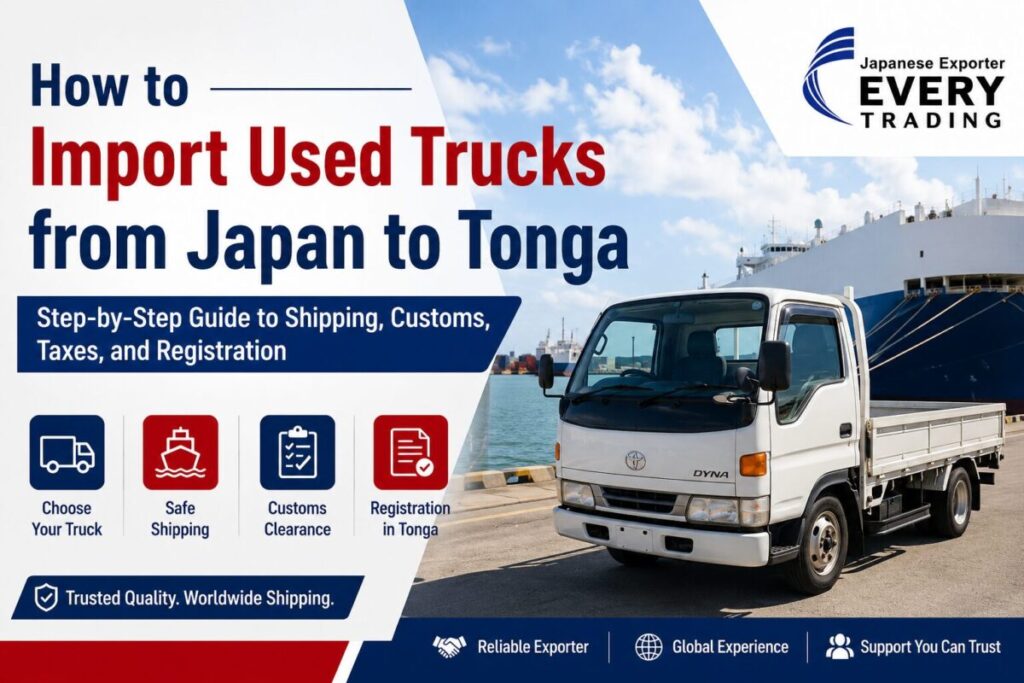

Tonga depends on reliable commercial vehicles every day. Trucks support agriculture, construction, tourism, retail, government projects, and inter-island logistics. Therefore, many businesses choose quality Japanese used trucks because they offer excellent durability, affordable prices, and long service life.
If you plan to import a used truck from Japan to Tonga, understanding the import process before purchasing will save both time and money. This guide explains every major step for Tongan buyers in simple English.
Why Many Buyers in Tonga Choose Japanese Used Trucks
Tonga consists of many islands, and most imported goods arrive through international shipping. As a result, dependable commercial vehicles are essential for transporting cargo between ports, warehouses, farms, shops, and construction sites.
Japanese trucks have earned a strong reputation across the Pacific because they provide excellent fuel economy, reliable diesel engines, and affordable maintenance. Furthermore, Japanese vehicles usually receive regular inspections before export.
Many businesses in Tonga select trucks such as the Isuzu Elf, Toyota Dyna, Hino Dutro, Mitsubishi Canter, and Nissan Atlas because they perform well on both paved roads and rural village roads.
Step 1: Choose the Right Truck for Your Business
First, decide how you will use the truck.
- Delivery services around Nuku'alofa
- Agricultural transportation
- Construction materials
- Government projects
- Retail distribution
- Tourism support businesses
- Inter-island cargo movement
Small and medium-duty trucks often provide the best balance between carrying capacity and operating costs for Tonga.
Step 2: Find a Trusted Japanese Exporter
Next, choose an experienced exporter with a proven record of exporting vehicles worldwide.
A reliable exporter should provide:
- High-quality vehicle photos
- Detailed inspection reports
- Verified mileage
- Auction information when available
- Fast communication
- Clear export procedures
Working with an experienced exporter also reduces unnecessary risks during international transactions.
Step 3: Confirm the Vehicle Before Purchase
Before making payment, carefully check the truck condition.
You should confirm:
- Year of manufacture
- Mileage
- Engine condition
- Transmission
- Rust underneath the chassis
- Tyre condition
- Service history if available
- Accident history
Many exporters can also provide additional videos upon request.
Step 4: Receive Your Quotation
Your quotation normally includes several costs.
- Vehicle price
- Ocean freight
- Export documentation
- Port handling charges in Japan
Always confirm whether your quotation uses FOB, CIF, or another shipping term before completing payment.
Step 5: Prepare Payment
International bank transfer remains the most common payment method for vehicle exports.
After payment arrives, your exporter begins export preparation and books the shipping schedule.
Step 6: Export Procedures in Japan
Before shipment, the exporter completes Japanese export procedures.
This process normally includes:
- Vehicle deregistration
- Export inspection when necessary
- Port transportation
- Shipping booking
- Export customs clearance
Afterward, the exporter sends all required documents.
Important Shipping Documents
Most buyers receive the following documents.
- Bill of Lading (B/L)
- Export Certificate
- Commercial Invoice
- Packing List if required
- Insurance documents when applicable
Please keep every original document safely because customs clearance depends on them.
Step 7: Shipping from Japan to Tonga
Most commercial vehicles travel by Roll-on/Roll-off (RORO) shipping. This method offers lower transportation costs for trucks.
Container shipping is another option. It provides additional protection and allows buyers to ship spare parts together with the vehicle.
Your exporter will recommend the most suitable shipping method according to the truck size and destination.
Arrival at the Port in Tonga
Most imported vehicles arrive through the Port of Nuku'alofa.
After arrival, customs officers inspect the documentation before releasing the vehicle.
Processing times may vary depending on shipping schedules, customs workload, and document accuracy.
Customs Clearance in Tonga
Prepare every document before the vessel arrives.
Missing paperwork often causes unnecessary delays.
Local customs authorities may request:
- Original Bill of Lading
- Commercial Invoice
- Export Certificate
- Identification documents
- Import-related paperwork required by Tongan authorities
Import Duties and Taxes
Import costs vary depending on current Tongan regulations.
Total expenses may include:
- Import duty
- Consumption tax or other applicable taxes
- Port handling charges
- Customs processing fees
Since regulations may change, always confirm the latest information with the appropriate authorities before importing.
Vehicle Registration in Tonga
After customs clearance, register the truck before operating it on public roads.
The registration process generally includes document verification, payment of applicable fees, and vehicle compliance procedures required by local authorities.
Choosing the Best Truck for Tonga
Tonga's road network includes urban roads around Nuku'alofa, coastal routes, rural farming areas, and roads that experience heavy rain during the wet season.
Because of these conditions, buyers usually look for trucks that offer:
- Strong suspension
- Reliable diesel engines
- Easy maintenance
- Good fuel economy
- Available spare parts
- Simple mechanical design
These features help reduce long-term operating costs while improving business efficiency.
Helpful Tips Before Importing
- Compare several vehicle options.
- Ask for extra inspection photos.
- Confirm every shipping cost before payment.
- Verify document accuracy.
- Choose an exporter with extensive Pacific export experience.
- Plan customs clearance before the vessel arrives.
Why Choose EVERY TRADING
EVERY TRADING has exported Japanese commercial vehicles to customers around the world for many years.
Our experienced staff supports buyers throughout the entire import process. We provide detailed inspections, honest vehicle information, fast communication, and professional export services.
Whether you need one truck or a fleet, we help you purchase with confidence.
Conclusion
Importing a used truck from Japan to Tonga becomes much easier when you understand every step beforehand. Careful planning, accurate documentation, and a trusted exporter help avoid delays and unexpected costs.
Japanese commercial vehicles continue to support businesses throughout Tonga because they combine reliability, durability, and excellent value. By following this guide, you can complete your import process smoothly and start using your vehicle with confidence.


Browse Reliable Used Trucks & Buses from Japan
Carefully selected vehicles ready for export worldwide
Search 100,000+ Dealer Stock Vehicles from Japan
Access a wide selection of vehicles from Japanese dealers nationwide. Updated daily.
