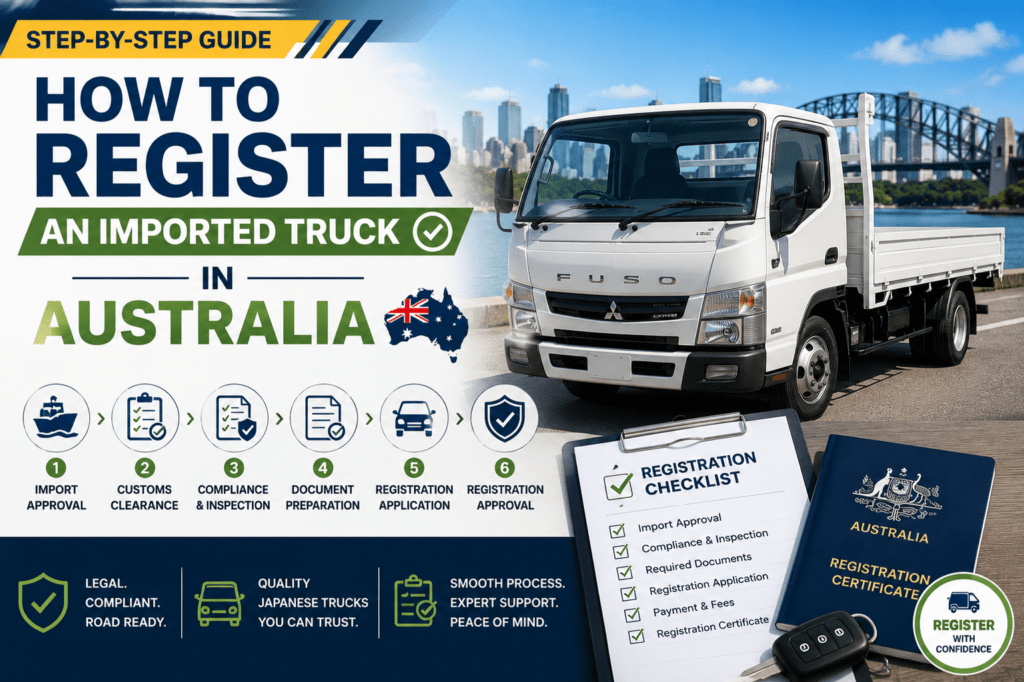

How to Register an Imported Truck in Australia: Complete Step-by-Step Guide for Japanese Truck Buyers
Japanese used trucks continue to grow in popularity across Australia. Businesses, transport operators, farmers, and contractors choose Japanese trucks because they offer reliability, durability, fuel efficiency, and excellent value.
Brands such as Isuzu, Hino, Mitsubishi Fuso, and UD Trucks have built strong reputations throughout Australia. Furthermore, Japanese vehicle auctions provide access to thousands of quality trucks at competitive prices.
However, importing a truck is only part of the process.
Before operating the vehicle on Australian roads, owners must complete the registration process.
Fortunately, registration becomes much easier when you understand each step.
This guide explains how to register an imported truck in Australia, what documents you need, and how to avoid common registration delays.
Why Import Japanese Trucks to Australia?
Many Australian businesses choose Japanese trucks for several important reasons.
Proven Reliability
Japanese trucks are known worldwide for long service life.
As a result, businesses often experience less downtime.
Competitive Pricing
Buying directly from Japan can reduce purchasing costs.
Therefore, buyers often receive better value for money.
Wide Vehicle Selection
Japanese auctions offer:
- Light-duty trucks
- Medium-duty trucks
- Heavy-duty trucks
- Refrigerated trucks
- Flatbed trucks
- Dump trucks
- Crane trucks
Consequently, buyers can find trucks for almost any business purpose.
Strong Parts Availability
Many Japanese truck brands already have support networks in Australia.
Therefore, maintenance becomes easier after purchase.
Why Registration Is Important
Registration is a legal requirement before using an imported truck on public roads.
Without registration, the vehicle cannot operate legally.
Furthermore, registration confirms that the truck satisfies Australian requirements.
Therefore, completing the process correctly is essential.
Understanding the Registration Process
The registration process involves several stages.
Generally, the process includes:
- Import approval
- Vehicle arrival in Australia
- Compliance requirements
- Vehicle inspections
- Documentation review
- Registration application
Each stage plays an important role.
As a result, preparation should begin before the truck arrives.
Step 1: Obtain Vehicle Import Approval
Import approval is one of the first requirements.
Before importing a truck, buyers should ensure the vehicle qualifies for importation.
Approval confirms that the truck can legally enter Australia.
Therefore, buyers should complete this step before arranging shipment.
Early preparation often prevents costly delays.
Step 2: Complete Customs Clearance
After the truck arrives, customs clearance begins.
Authorities review import documents and shipment details.
Important documents may include:
- Commercial invoice
- Bill of Lading
- Export certificate
- Vehicle information records
Consequently, accurate paperwork is extremely important.
Well-prepared documents help speed up processing.
Step 3: Meet Compliance Requirements
Imported trucks must satisfy Australian vehicle standards.
Therefore, compliance checks are an important part of the registration pathway.
Compliance requirements may involve:
- Safety inspections
- Vehicle modifications
- Technical reviews
- Equipment verification
Furthermore, requirements can vary depending on vehicle type and intended use.
Understanding these obligations early helps avoid surprises later.
Step 4: Prepare Registration Documents
Document preparation is critical.
Most registration authorities require supporting paperwork.
Common documents include:
- Proof of ownership
- Import approval records
- Customs documentation
- Identification documents
- Compliance certificates
- Inspection reports
Therefore, keeping organized records is highly recommended.
Digital copies can also simplify the process.
Step 5: Arrange Vehicle Inspections
Many imported trucks require inspections before registration.
The inspection process helps verify:
- Roadworthiness
- Vehicle condition
- Safety equipment
- Vehicle identification information
As a result, authorities can confirm the truck meets local standards.
A successful inspection moves the registration process forward.
Step 6: Submit the Registration Application
Once documents and inspections are complete, registration can proceed.
Applicants submit the required paperwork to the relevant state or territory authority.
Information usually includes:
- Owner details
- Vehicle details
- Compliance information
- Supporting documents
Therefore, accuracy remains very important.
Mistakes can delay approval.
Step 7: Receive Registration Approval
After successful review, registration can be granted.
At this stage, the truck becomes eligible for legal road use.
Consequently, businesses can begin operating the vehicle.
Completing the process properly provides peace of mind and legal compliance.
Registration Requirements May Differ by State
Australia has multiple registration authorities.
As a result, requirements can vary between states and territories.
Some differences may involve:
- Inspection procedures
- Registration fees
- Documentation requirements
- Vehicle classifications
Therefore, buyers should review local requirements before applying.
This preparation helps prevent unexpected issues.
Common Registration Challenges
Many first-time importers encounter similar problems.
Fortunately, most are avoidable.
Missing Documents
Incomplete paperwork remains one of the most common causes of delay.
Therefore, document preparation should begin early.
Incorrect Vehicle Information
VIN numbers, chassis numbers, and ownership details must match.
Even small mistakes can create complications.
Delayed Compliance Work
Waiting too long to address compliance requirements often slows registration.
Consequently, buyers should begin planning as soon as possible.
Lack of Professional Support
Experienced exporters can often identify potential issues before they become serious problems.
Therefore, professional assistance provides valuable benefits.
Tips for Faster Truck Registration
Several simple strategies can improve the registration experience.
Organize Documents Early
Maintain a complete file containing every important record.
Verify Vehicle Information
Double-check all vehicle details before submitting paperwork.
Understand Compliance Requirements
Research compliance obligations before importing the truck.
Work With Experienced Exporters
Professional exporters understand Australian import and registration procedures.
As a result, buyers often avoid costly mistakes.
Why Australian Businesses Prefer Japanese Trucks
Japanese trucks continue to dominate many commercial sectors.
Popular industries include:
- Transportation
- Construction
- Agriculture
- Logistics
- Municipal services
- Mining support
Furthermore, Japanese trucks perform well under demanding conditions.
Their reliability helps businesses improve productivity and reduce operating costs.
Why Buy Trucks Through Japanese Vehicle Auctions?
Japanese vehicle auctions provide significant advantages.
Massive Inventory
Thousands of trucks become available every week.
Transparent Inspections
Detailed auction reports help buyers understand vehicle condition.
Competitive Pricing
Auction purchases often deliver strong value.
Nationwide Sourcing
Vehicles come from all regions of Japan.
Consequently, buyers enjoy more options and greater flexibility.
How EVERY TRADING Supports Australian Truck Buyers
EVERY TRADING helps customers import and register Japanese trucks with confidence.
Our services include:
- Access to Japanese truck auctions
- Professional vehicle inspections
- Export documentation support
- Truck sourcing assistance
- Worldwide shipping arrangements
- Fast customer communication
Additionally, our experienced team helps buyers prepare the documents needed for smooth import and registration procedures.
This support reduces risk and improves efficiency.
Frequently Asked Questions
Can I Register My Truck Immediately After Arrival?
Registration usually requires customs clearance, compliance procedures, inspections, and documentation review.
Therefore, preparation should begin before shipment.
Do All Trucks Need Inspections?
Many imported trucks require inspections before registration.
Requirements may vary depending on the vehicle and location.
Is Professional Support Helpful?
Yes. Experienced exporters can simplify the process and help prevent common mistakes.
Consequently, many buyers choose professional assistance.
Conclusion
Registering an imported truck in Australia is an important step toward legal road use.
Although the process involves several stages, proper preparation makes everything much easier.
Buyers should focus on import approval, customs clearance, compliance requirements, inspections, and accurate documentation.
Furthermore, working with experienced exporters can significantly reduce delays and improve the overall experience.
If you are looking for reliable Japanese trucks, professional inspections, auction access, export documentation support, and shipping expertise, EVERY TRADING is ready to help you import and register quality trucks directly from Japan with confidence.


Browse Reliable Used Trucks & Buses from Japan
Carefully selected vehicles ready for export worldwide
Search 100,000+ Dealer Stock Vehicles from Japan
Access a wide selection of vehicles from Japanese dealers nationwide. Updated daily.
