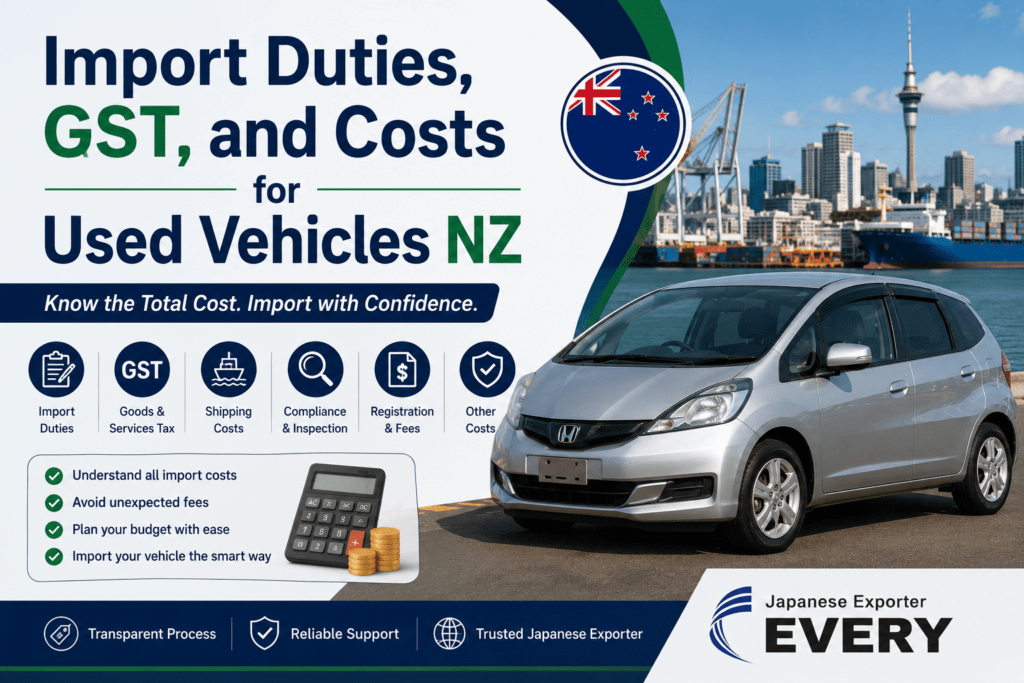

Import Duties, GST, and Other Costs for Used Vehicles in New Zealand: Complete Cost Guide Before You Buy
Buying a used vehicle from Japan is an excellent way to save money while getting a reliable, high-quality car, truck, van, bus, or commercial vehicle. Japanese vehicles are well known for their low mileage, excellent maintenance, and long service life. As a result, many buyers in New Zealand choose to import directly from Japan every year.
However, the vehicle price is only one part of the total cost. Before importing, you should understand import duties, Goods and Services Tax (GST), port fees, compliance costs, and registration expenses.
Fortunately, these costs are easy to understand when you know what to expect.
This guide explains every major cost involved in importing a used vehicle into New Zealand. It also shares practical tips to help you budget accurately and avoid unexpected expenses.
Why Understanding Import Costs Matters
Knowing the total import cost helps you make better buying decisions.
It allows you to:
- Compare vehicles accurately
- Plan your budget
- Avoid unexpected fees
- Calculate resale profit
- Prepare business expenses
- Import with confidence
Furthermore, understanding the full cost helps you choose the right vehicle for your needs.
Main Costs When Importing a Vehicle
Most importers pay several different costs during the import process.
The main expenses include:
- Vehicle purchase price
- Shipping cost
- Marine insurance (optional)
- Customs charges
- Goods and Services Tax (GST)
- Biosecurity inspection
- Port service fees
- Compliance inspection
- Registration and licensing
- Vehicle insurance
Let's examine each cost in detail.
1. Vehicle Purchase Price
The purchase price is the amount you pay for the vehicle in Japan.
Several factors influence pricing:
- Vehicle age
- Mileage
- Condition
- Model
- Equipment
- Auction grade
- Market demand
Fortunately, Japanese used vehicles often provide outstanding value compared with many local markets.
2. Shipping Costs
Shipping is one of the largest import expenses.
The total shipping cost depends on:
- Shipping method
- Vehicle size
- Departure port
- Destination port
- Current freight rates
Two common shipping methods are:
RoRo Shipping
Roll-on Roll-off shipping offers:
- Lower freight costs
- Faster loading
- Simple transportation
- Excellent value for most vehicles
Container Shipping
Container shipping offers:
- Extra protection
- Better security
- Space for spare parts
- Multiple vehicle transport
Although container shipping costs more, many commercial buyers prefer this option.
3. Marine Insurance
Marine insurance is optional, but many buyers choose it.
Insurance protects your investment during international shipping.
Coverage often includes:
- Storm damage
- Fire
- Theft
- Accidental damage
- General shipping risks
The cost is usually small compared with the vehicle's value.
4. Customs Charges
After arrival in New Zealand, your vehicle enters customs.
Customs officers review:
- Vehicle documents
- Purchase value
- Shipping information
- Import declarations
Correct paperwork helps speed up customs clearance.
Working with an experienced customs broker often makes this process easier.
5. Goods and Services Tax (GST)
GST is one of the most important import costs.
It applies to most imported vehicles entering New Zealand.
GST is generally calculated using the total landed value, including:
- Vehicle price
- Shipping costs
- Insurance, if applicable
- Other qualifying import charges
Therefore, buyers should include GST in their overall import budget from the beginning.
6. Biosecurity Inspection Costs
New Zealand has strict biosecurity rules.
Every imported vehicle must meet high cleanliness standards.
Inspectors check for:
- Soil
- Grass
- Leaves
- Seeds
- Insects
- Animal contamination
If your vehicle arrives clean, inspection usually finishes quickly.
Professional cleaning before export often reduces extra costs.
7. Port Service Fees
After your vehicle arrives, the port charges handling fees.
These fees may include:
- Cargo handling
- Storage
- Documentation
- Vehicle movement
- Port administration
Prompt customs clearance helps reduce storage charges.
8. Compliance Inspection Costs
Every imported vehicle must complete compliance before registration.
Inspectors examine:
- Vehicle identity
- Structural condition
- Braking system
- Steering
- Suspension
- Lighting
- Seat belts
- Tyres
- Odometer
If repairs are necessary, repair costs become part of your total budget.
Therefore, choosing a well-maintained vehicle from Japan often saves money later.
9. Registration and Licensing Fees
Once your vehicle passes compliance, registration becomes the next step.
Registration usually includes:
- Vehicle registration
- Number plates
- Licensing
- Administrative processing
After registration, you can legally drive your imported vehicle on New Zealand roads.
10. Vehicle Insurance
Insurance protects both you and your investment.
Many owners arrange insurance immediately after registration.
Coverage may include:
- Collision damage
- Theft
- Fire
- Storm damage
- Third-party liability
Insurance costs vary according to the vehicle type and coverage level.
Additional Costs to Consider
Some buyers also include additional expenses in their budget.
These may include:
- Customs broker fees
- Local transport
- Vehicle cleaning
- Repairs
- Accessories
- Maintenance
- Fuel
- Warrant of Fitness (WoF) inspections
Planning ahead helps prevent surprises.
How to Reduce Import Costs
Saving money does not mean sacrificing quality.
Instead, smart planning makes a big difference.
Buy a quality vehicle.
A well-maintained truck or car usually needs fewer repairs.
Prepare documents early.
Complete paperwork prevents unnecessary delays.
Choose the right shipping method.
RoRo often offers better value for standard vehicles.
Clean the vehicle before export.
Professional cleaning reduces biosecurity costs.
Work with an experienced exporter.
Reliable exporters help buyers avoid expensive mistakes.
Common Cost Mistakes
Many first-time buyers overlook several expenses.
Avoid these common mistakes.
Looking only at the purchase price
The vehicle price is only one part of the total cost.
Forgetting GST
Always include GST when calculating your import budget.
Ignoring compliance costs
Some vehicles require repairs before registration.
Delaying customs clearance
Extra storage charges can increase total costs quickly.
Choosing an inexperienced exporter
Professional support often saves both time and money.
Why Japanese Used Vehicles Still Offer Great Value
Even after shipping and import costs, Japanese used vehicles remain highly competitive.
Buyers continue choosing them because they offer:
- Excellent reliability
- Low mileage
- High build quality
- Strong resale value
- Long engine life
- Fuel efficiency
- Wide availability of parts
These advantages often outweigh the additional import expenses.
Why Choose EVERY TRADING?
EVERY TRADING has supplied quality Japanese used vehicles to customers around the world for many years.
Our experienced team helps buyers understand every stage of the import process, including total import costs before purchase.
We provide:
- Carefully inspected Japanese vehicles
- Competitive export prices
- Complete export documentation
- Fast international shipping
- Honest communication
- Professional customer support
- Guidance from purchase to delivery
Whether you are buying your first imported vehicle or expanding a commercial fleet, we help you make informed decisions with confidence.
Final Thoughts
Importing a used vehicle into New Zealand involves more than just paying the purchase price. Shipping, GST, customs charges, biosecurity inspections, compliance, registration, and insurance all contribute to the total cost. Fortunately, these expenses become much easier to manage when you understand them in advance.
By planning your budget carefully and working with an experienced exporter like EVERY TRADING, you can avoid unexpected costs and enjoy a smooth importing experience. With the right preparation, importing a reliable Japanese used vehicle remains one of the smartest investments for both private buyers and businesses.


Browse Reliable Used Trucks & Buses from Japan
Carefully selected vehicles ready for export worldwide
Search 100,000+ Dealer Stock Vehicles from Japan
Access a wide selection of vehicles from Japanese dealers nationwide. Updated daily.
