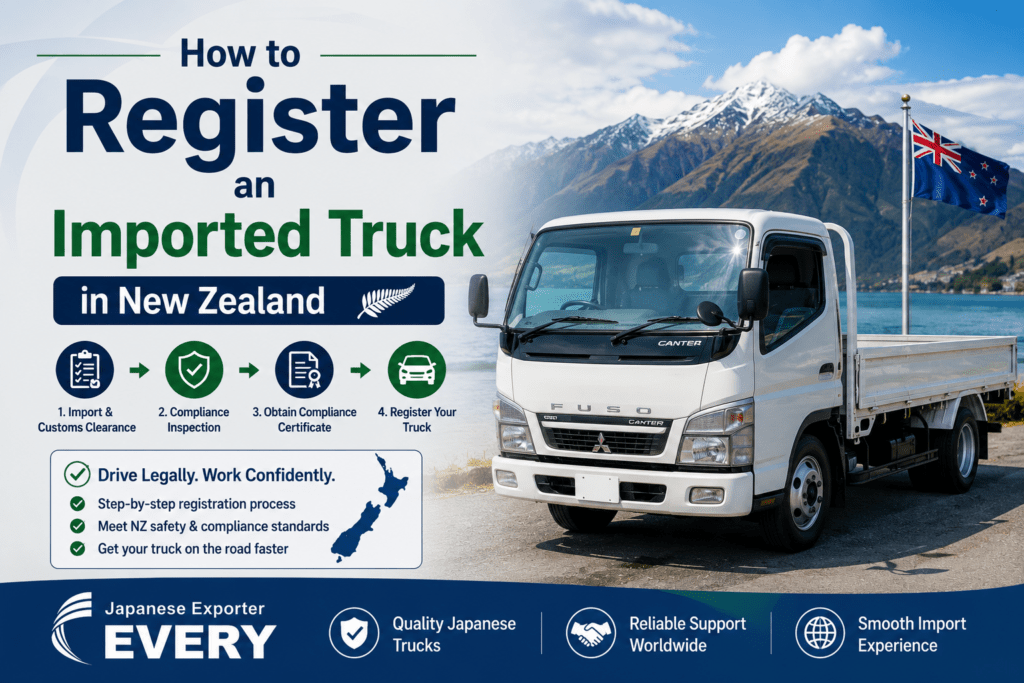

How to Register an Imported Truck in New Zealand: A Complete Step-by-Step Guide for Fast and Easy Registration
Importing a used truck from Japan is an excellent way to expand your business while reducing costs. Japanese trucks are famous for their reliability, fuel efficiency, strong performance, and long service life. Whether you need a light-duty truck for deliveries or a heavy-duty truck for construction, Japanese vehicles offer outstanding value.
However, importing your truck is only part of the journey. Before you can legally drive it on New Zealand roads, you must complete the registration process.
Many first-time buyers believe registration is complicated. Fortunately, the process becomes simple when you understand each step and prepare the correct documents in advance.
This guide explains everything you need to know about registering an imported truck in New Zealand, from arrival at the port to receiving your registration plates.
Why Registration Is Important
Truck registration confirms that your vehicle meets New Zealand's legal and safety requirements.
Registration allows you to:
- Drive legally on public roads
- Obtain vehicle licensing
- Purchase insurance
- Transfer ownership easily
- Operate your truck for business purposes
- Maintain resale value
Most importantly, registration gives you confidence that your truck complies with New Zealand regulations.
Step 1: Import Your Truck into New Zealand
The registration process starts after your truck arrives from Japan.
First, complete customs clearance.
Authorities check:
- Import documents
- Vehicle ownership
- Shipping paperwork
- Customs declarations
- Biosecurity requirements
Once customs and biosecurity approvals are complete, your truck can move to the next stage.
Step 2: Prepare the Required Documents
Good preparation saves time.
Before visiting a compliance inspection center, gather all necessary documents.
These usually include:
- Bill of Lading
- Commercial Invoice
- Japanese Export Certificate
- Certified English Translation
- Proof of ownership
- Identification documents
- Customs clearance documents
Always check that every document contains the correct chassis number and vehicle details.
Step 3: Complete Biosecurity Clearance
New Zealand protects its environment with strict biosecurity standards.
Inspectors carefully examine imported vehicles for:
- Mud
- Grass
- Seeds
- Leaves
- Insects
- Animal contamination
Professional cleaning before shipment often helps trucks pass inspection more quickly.
As a result, many importers avoid additional cleaning costs and unnecessary delays.
Step 4: Pass the Compliance Inspection
Every imported truck must complete a compliance inspection before registration.
During the inspection, technicians check:
- Chassis number
- Vehicle identity
- Structural condition
- Braking system
- Steering
- Suspension
- Lighting
- Seat belts
- Tyres
- Odometer
- General roadworthiness
If repairs become necessary, complete them before returning for reinspection.
Passing compliance is one of the most important steps toward registration.
Step 5: Obtain Compliance Certification
After your truck passes inspection, you receive a compliance certificate.
This document confirms that your imported truck satisfies New Zealand's safety requirements.
Keep this certificate in a safe place because you will need it during registration.
Step 6: Register Your Truck
Now you are ready to register the vehicle.
During registration, authorities verify:
- Compliance certificate
- Ownership documents
- Identification
- Registration application
- Applicable fees
Once everything is approved, your truck receives:
- Registration number
- Registration plates
- Vehicle licence
After that, your truck becomes legal to drive on New Zealand roads.
Step 7: Arrange Vehicle Insurance
Insurance is an important part of responsible truck ownership.
Many owners arrange insurance immediately after registration.
Insurance helps protect you against:
- Accidents
- Theft
- Fire
- Storm damage
- Third-party liability
Choosing suitable coverage gives you greater peace of mind.
Step 8: Begin Operating Your Truck
After registration and insurance, your truck is ready for work.
Many businesses use imported Japanese trucks for:
- Freight transport
- Construction projects
- Agriculture
- Landscaping
- Municipal services
- Food distribution
- Delivery businesses
Because Japanese trucks have an excellent reputation, many companies enjoy years of dependable service.
Common Documents Required for Registration
Although requirements may vary slightly, most truck registrations require:
- Compliance certificate
- Japanese Export Certificate
- English translation
- Bill of Lading
- Commercial Invoice
- Proof of ownership
- Customs clearance documents
- Personal identification
Preparing these documents before your appointment makes the process much smoother.
Common Registration Mistakes to Avoid
Many delays happen because of simple mistakes.
Fortunately, they are easy to prevent.
Incorrect Chassis Number
Always compare the chassis number across every document.
One incorrect character can delay registration.
Missing Export Certificate
Keep the original Japanese Export Certificate.
Replacing missing documents often takes considerable time.
Incomplete Compliance Repairs
Do not schedule registration before completing required repairs.
Finish all repairs first.
Late Document Preparation
Gather paperwork before your truck arrives whenever possible.
Early preparation reduces stress.
Poor Communication
Reply quickly if inspectors or registration staff request additional information.
Fast communication helps keep the process moving.
Tips for Faster Truck Registration
Several simple habits can speed up registration.
Prepare documents early.
Do not wait until inspection day.
Work with a professional exporter.
Experienced exporters understand New Zealand's requirements.
Keep digital copies.
Electronic copies are easy to send if needed.
Schedule inspections promptly.
Early appointments often reduce waiting time.
Clean the truck before export.
Clean vehicles usually move through biosecurity more efficiently.
Why Japanese Trucks Are Popular in New Zealand
Japanese trucks continue to grow in popularity for several reasons.
Buyers appreciate:
- Excellent reliability
- Low operating costs
- Strong fuel efficiency
- Durable diesel engines
- High resale value
- Wide parts availability
- Comfortable driving experience
These advantages make Japanese trucks an excellent choice for both private owners and commercial businesses.
Why Choose EVERY TRADING?
EVERY TRADING has supplied high-quality Japanese used trucks to customers worldwide for many years.
Our experienced export team supports buyers throughout the entire purchasing process.
We provide:
- Carefully inspected Japanese trucks
- Complete export documentation
- Fast worldwide shipping
- Honest communication
- Professional customer support
- Assistance with import preparation
- Reliable service before and after shipment
Whether you need one truck or an entire fleet, we help make importing simple, safe, and efficient.
Final Thoughts
Registering an imported truck in New Zealand becomes much easier when you understand each stage of the process. By preparing the correct documents, completing customs and biosecurity clearance, passing compliance inspections, and submitting your registration application, you can avoid unnecessary delays and get your truck on the road quickly.
Most importantly, choosing an experienced Japanese exporter helps you enjoy a smooth importing experience from purchase to registration. With careful planning and expert support, your imported Japanese truck can begin serving your business for many years.


Browse Reliable Used Trucks & Buses from Japan
Carefully selected vehicles ready for export worldwide
Search 100,000+ Dealer Stock Vehicles from Japan
Access a wide selection of vehicles from Japanese dealers nationwide. Updated daily.
